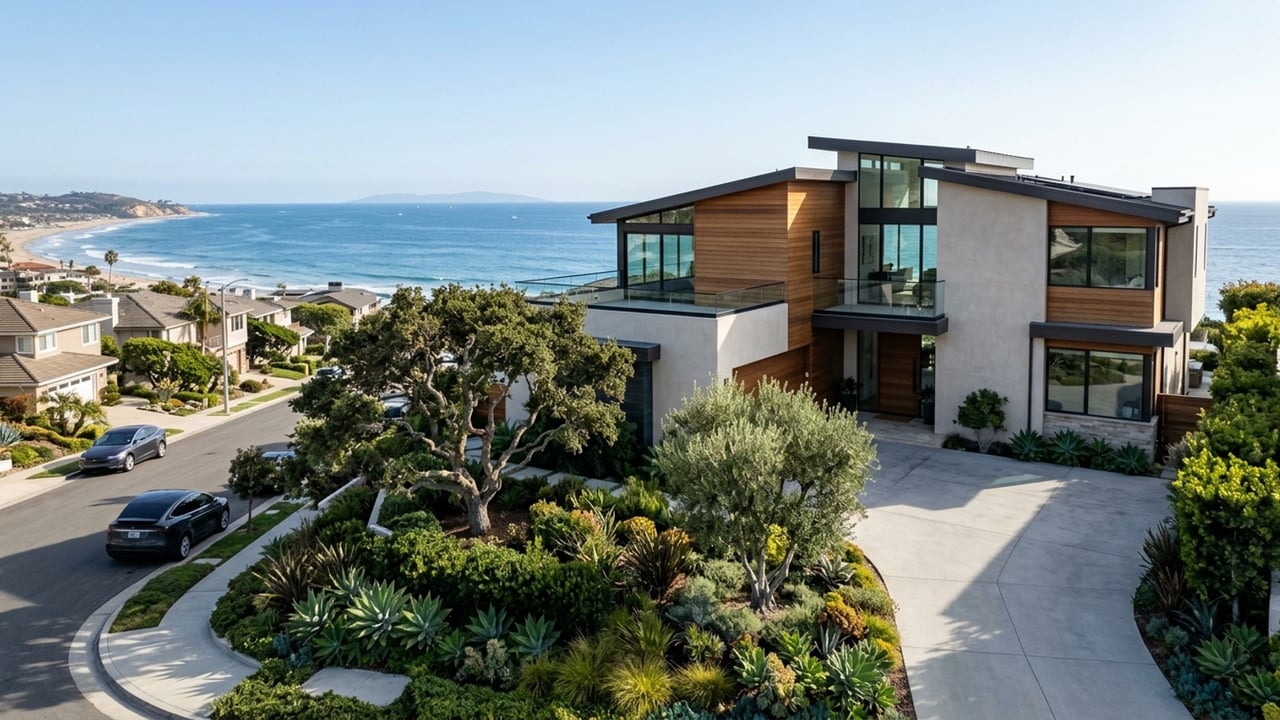
Corona del Mar is a coastal neighborhood inside Newport Beach, CA - not a separate city, though it feels like one. It carries some of the highest price tags in Orange County, and if you're seriously considering buying a home in Corona del Mar in 2026, the median sale price of around $4,400,000 is the first thing you need to sit with. Inventory is thin, and homes are spending roughly 3 days on the market before going under contract.
Relocating here means weighing more than ocean views. Pacific Coast Highway traffic, proximity to employment in Irvine and beyond, and the compounding cost of coastal living all factor in. What follows is a straight look at the data - housing costs, climate exposure, commute realities - so you can make a clear-eyed decision.
The Quick Verdict on Corona del Mar
If you can clear the financial bar, the lifestyle is genuinely hard to replicate. Homes have been selling at about 100.2% of list price, per recent MLS data, which tells you everything about how fast you need to move when the right property appears. Well-priced listings rarely survive a weekend.
That said, beach access and walkable shopping don't offset the full picture on their own. Dense summer traffic and a thin supply of available homes are real constraints, and the carrying costs don't stop at the purchase price.
Benefits of the Area
You're walking distance from Corona del Mar State Beach, and the Pacific Coast Highway corridor puts restaurants, retail, and groceries within easy reach. Orange County's commercial centers in Newport Beach and Irvine are a straightforward drive - when traffic cooperates.
The climate stays temperate year-round, which matters if you're coming from somewhere with actual winters. Municipal services are well-established, and the area falls within the Newport-Mesa Unified School District.
Drawbacks to Consider
Cost is the obvious one. Salary.com data from 2025 puts the local cost of living at roughly 43% above the U.S. national average; Redfin estimates it as high as 64% above the national baseline. Those aren't rounding errors.
PCH traffic during summer tourist season is a genuine quality-of-life issue, not just an inconvenience. And buyers looking at bluff-adjacent or waterfront properties need to do their homework on coastal hazard disclosures - bluff erosion and localized flooding are real exposures here, not theoretical ones.
Location and Population Basics
Corona del Mar sits in Orange County as a distinct neighborhood within Newport Beach's city limits - just south of the main peninsula, with the Pacific Ocean to the west and the San Joaquin Hills to the east.
The total population is 10,992 residents, according to the 2019-2023 American Community Survey 5-year estimates. The median age is approximately 52 years. About 17.6% of residents fall in the 25-to-44 age range, while 30% are 65 or older - a demographic split that shapes everything from the pace of the neighborhood to the types of services available locally.
The median household income in the 92625 ZIP code is $174,904 as of 2024. That figure is up 55.2% since 2011, tracking closely with the steady climb in both housing costs and everyday living expenses over that stretch.
Crime Statistics and Local Data
The Newport Beach Police Department publishes crime data through its NIBRS-based Crime Data Portal for the city as a whole. Corona del Mar doesn't appear as a separate reporting district in the top-line summaries, so you're working with city-wide numbers when you go to the primary source.
Third-party aggregators like Niche and NeighborhoodScout report crime rates here as generally lower than the national average. The official city-wide crime rate for Newport Beach, though, is higher than 74% of California cities. That's worth understanding before you lean too hard on any single data point. Go to the primary sources directly.
How to Research Local Figures
The Newport Beach Police Department's online crime map gives you current incident-level data. The Orange County Sheriff's Department and the FBI's Uniform Crime Reporting (UCR) program publish annual statistics for the broader region if you want a wider frame of reference.
For a street-by-street picture, the local police blotter is more useful than any aggregator score. Property crime - auto theft, burglary - does tend to move seasonally along the main tourist corridors, so timing matters when you're pulling that data.
Housing Costs and Everyday Expenses
There's no softening the numbers here. Recent MLS data from early 2026 confirms the median sale price at $4,400,000, with available inventory that can only be described as scarce.
Zillow's Home Value Index puts the typical home value at roughly $3,413,982 - down slightly over the past year - while other brokerages report median listing prices closer to $4 million. Properties routinely go under contract within days, which means buyers don't get the luxury of sleeping on a decision.
Income Needed to Buy
Based on a $4.64 million listing price with a 25% down payment, you're looking at roughly $24,700 per month just to cover housing expenses. Cap housing at 35% of total monthly income, and you're implying a required annual income of around $848,000 to buy here.
Outside of the mortgage, 2025 estimates put a single person's monthly living expenses at about $3,527, and a family of four at around $7,767 per month. Those figures don't include the mortgage.
Climate, Amenities, and Things to Do
The climate is the headline that sells itself - mild temperatures through most of the year, and year-round access to Corona del Mar State Beach and the smaller coves along the shoreline. For buyers coming from harsher climates, that part is exactly what it looks like.
The Pacific Coast Highway corridor handles most of the daily commercial activity: restaurants, retail, grocery. Corona del Mar High School is located in the neighboring Eastbluff area and is part of the Newport-Mesa Unified School District.
Environmental and Utility Factors
If you're buying near the water, natural hazard disclosures aren't a formality - read them. Coastal erosion and seasonal flooding are documented factors for properties on the bluffs or near the sand, and your lender's insurance requirements will reflect that.
Utilities and municipal services run through the city of Newport Beach. Factor local utility rates and property tax assessments into your monthly carrying cost calculation before you get too attached to any particular listing.
Comparing Corona del Mar to Neighboring Communities
Buyers frequently compare Corona del Mar to the broader Newport Beach market or to Laguna Beach to the south. The differences come down to lot size, density, and how much time you want to spend in a car to reach the sand.
The Village area of Corona del Mar is dense - homes on smaller lots, close together, with genuine walkability to the beach. Other parts of Newport Beach trade that walkability for larger lots and more architectural variety, but you're driving to get to the water.
Commute and Traffic Tradeoffs
PCH is essentially your only route for daily transit if you live here. In summer, tourist traffic turns that into a real issue, not just a minor annoyance - it adds meaningful time to any trip that requires the highway.
If you're commuting to Irvine or Los Angeles, drive it during peak hours before you make an offer. Some buyers ultimately choose northern Newport Beach specifically to avoid the PCH bottleneck. That's a legitimate tradeoff worth pricing out.
Specialized Housing and Local Services
With 30% of the population aged 65 or older, the local service landscape reflects that reality. Senior living options in Corona del Mar, CA range from independent living communities to higher-care facilities, and they're generally well-positioned near the main commercial district for access to medical offices.
Assisted living in Corona del Mar, CA is part of that same network. It's worth knowing what's available if you're buying with aging family members in mind, or if you're planning to age in place yourself.
Sober Living Options
Orange County has a well-documented network of recovery facilities, and sober living options in Corona del Mar, CA exist within the broader residential fabric here. These residences operate under state and local zoning regulations, and licensing and capacity information is managed at the state level.
If this is relevant to your search, you'll find these options integrated into standard residential neighborhoods rather than concentrated in any single district.
Frequently Asked Questions
Is the cost of living in Corona del Mar higher than the rest of Newport Beach?
Yes. Housing costs in this ZIP code frequently exceed the broader city average, with a 2026 median sale price around $4,400,000. General living expenses run an estimated 43% to 64% above the national average, depending on the source.
How walkable is Corona del Mar for daily errands, restaurants, and beach access?
The Village area is genuinely walkable - most residents can reach the Pacific Coast Highway commercial strip and Corona del Mar State Beach on foot. Homes further up the hills are a different story; you'll need a car for most daily errands from those locations.
Is it difficult to find homes with adequate parking in the Corona del Mar Village?
It is. Lots are small, street parking fills up fast, and summer beach traffic makes it worse. This is worth evaluating property by property, not just neighborhood-wide.
How much do summer tourist crowds and PCH traffic impact daily life in Corona del Mar, CA?
More than most buyers expect until they've lived through a summer here. From late spring through early fall, PCH delays are consistent, not occasional. Build extra travel time into any trip requiring the highway during those months.
Does the John Wayne Airport flight path noise noticeably affect residents living in Corona del Mar?
It depends on the specific property - flight paths shift with weather and air traffic control. Spend time at the home during peak departure hours before you commit. That's the only way to know.
Do most neighborhoods in Corona del Mar have strict HOAs or additional Mello-Roos taxes?
Newer and gated developments typically carry HOA dues; older Village homes often don't. Review each property's individual disclosures to confirm what applies - HOA fees and special tax assessments can vary significantly from one street to the next.