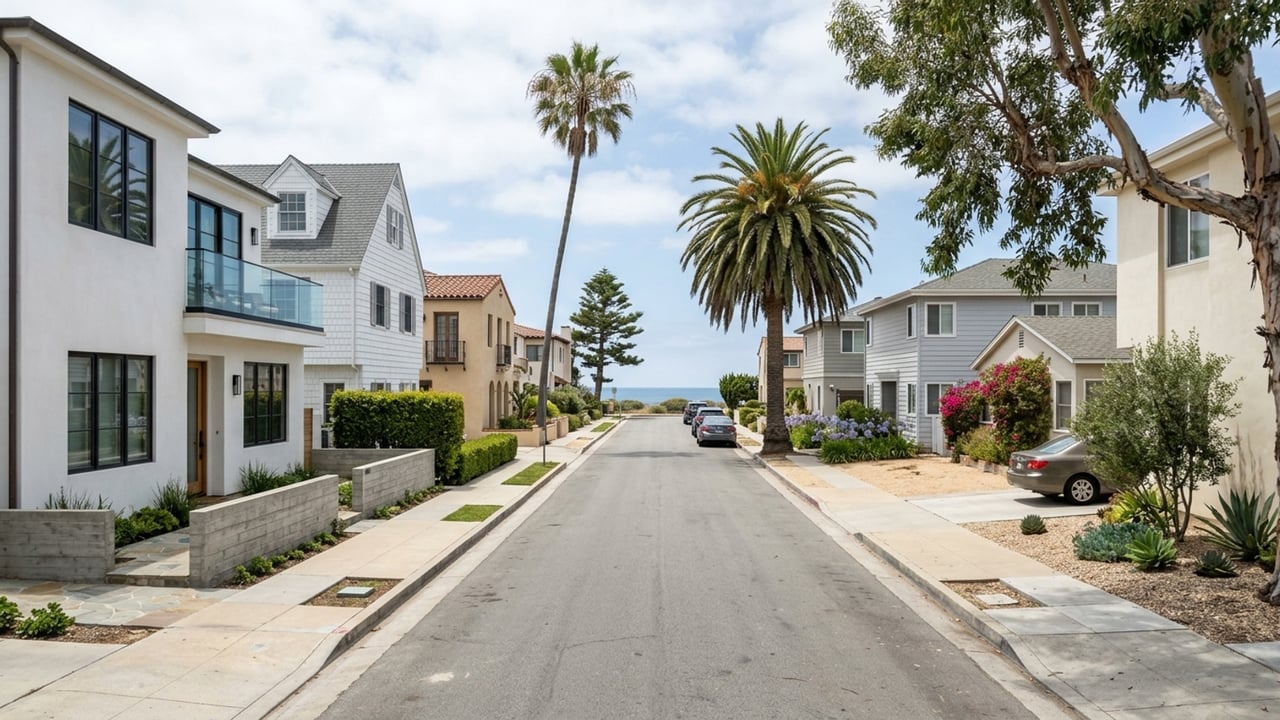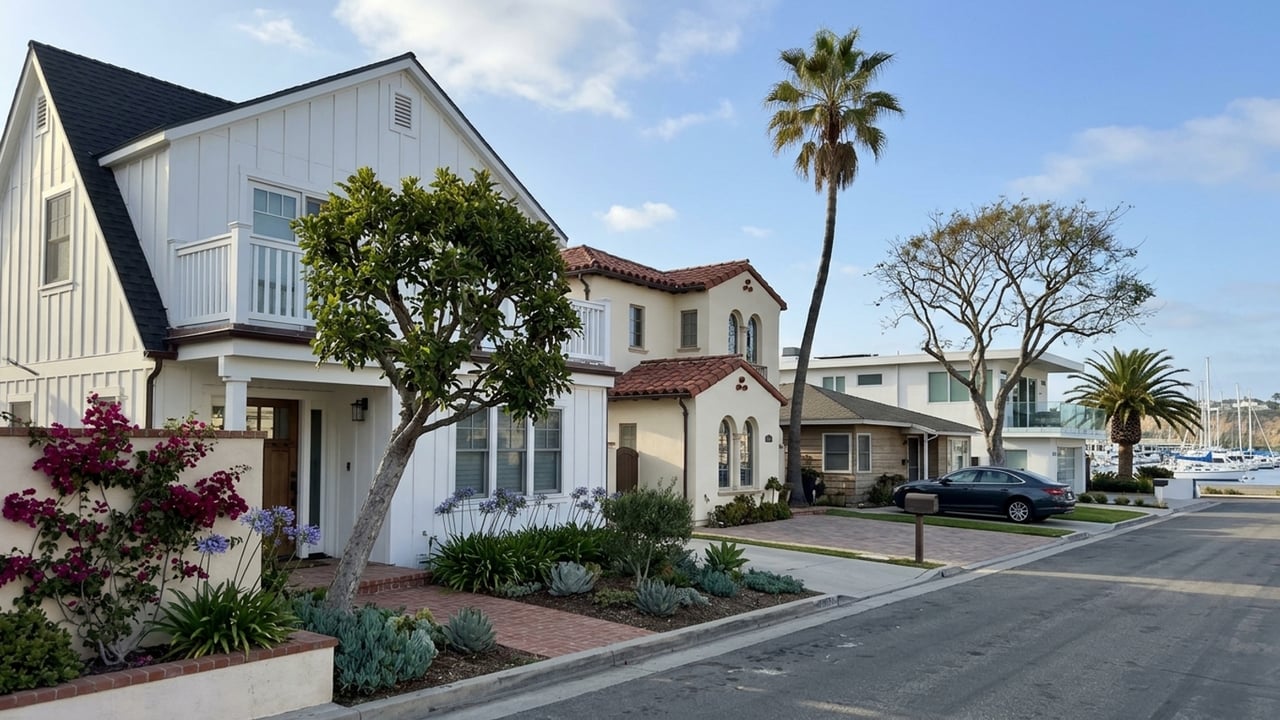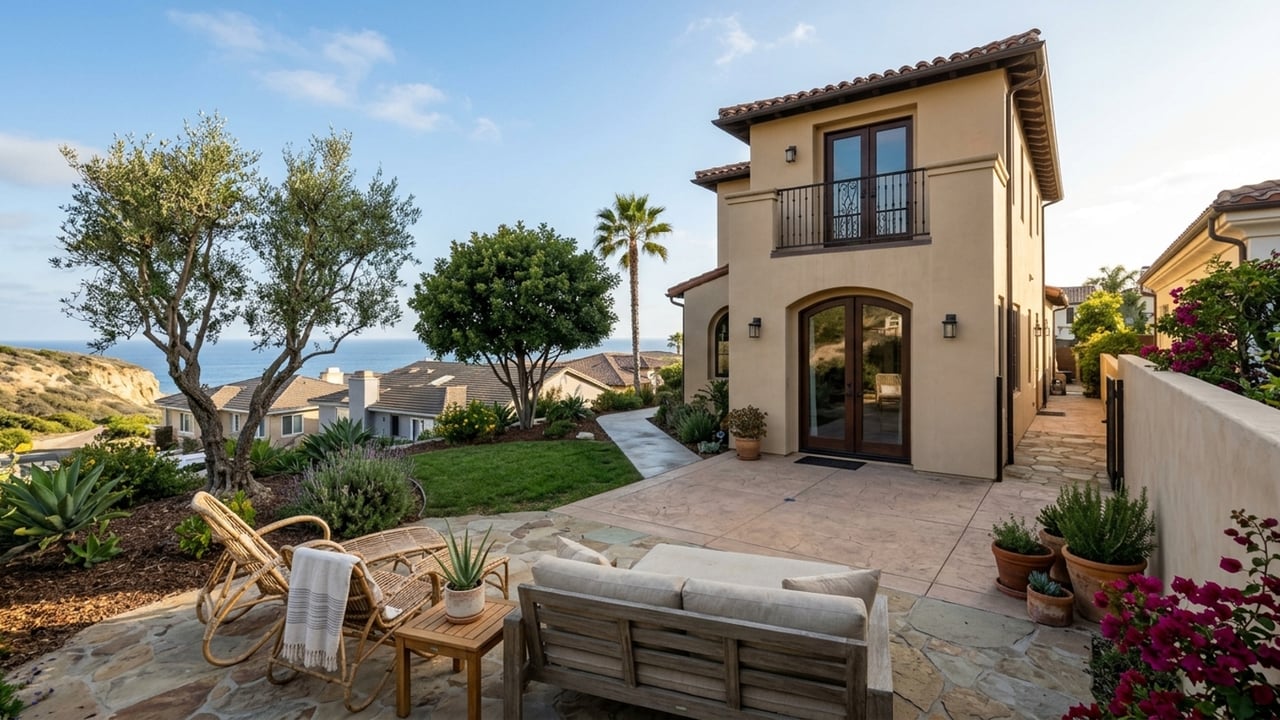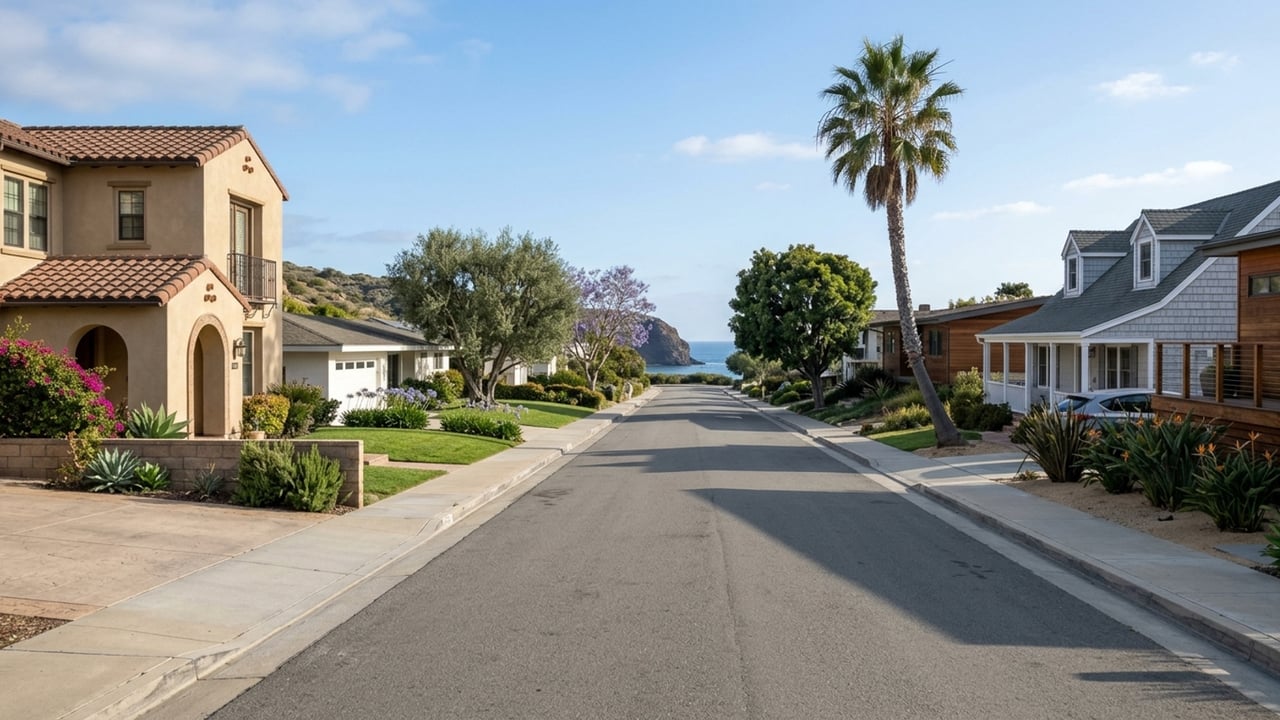
The median home in Dana Point recently sold for $2,099,000, and at that price point, the fees deducted from your proceeds on closing day add up to tens of thousands of dollars. Selling a house here means planning for two major percentage-based expenses alongside a handful of smaller, predictable fixed fees.
Your closing costs determine the list price that yields the cash you need for your next purchase. You can estimate most of your net proceeds long before a buyer ever tours the property.
Key takeaway
Commission and any price or repair credit you give the buyer will make up most of what you pay to sell in Dana Point, so negotiate those first. Every 1% of a median Dana Point sale is about $21,000. Escrow, owner's title insurance, and the county transfer tax are smaller and can be quoted before you list. Condo sellers should also add HOA document and transfer fees to their initial estimates.
Who this guide is for
You own a house or condo in Dana Point and want to know what closing will cost and what you'll net before you set a price or sign a listing agreement.
How much it costs to sell a home in Dana Point
In Dana Point, where about 71% of sales closed at or below list, a seller's closing bill is driven by two percentage items: the real estate commission and the price reduction or credit given back after the buyer's inspection. Single-family homes recently sold below list by roughly $51,000 at the median.
These negotiated terms move your final payout by real money. Escrow, title, and the county transfer tax are smaller and can be quoted to the dollar before you list.
To understand the other side of the transaction, you can review how buyer closing costs work. For a broader look at the steps involved in getting your property ready for the market, check our overview on the selling process.
Which seller closing costs apply to your sale?
Four questions dictate which fees you'll see on your final settlement statement.
Have you signed a listing agreement yet? If not, commission terms are the largest number still open, so start there. Is the property a condo or in an HOA? If yes, add the resale package and transfer fees, detailed in the HOA document and transfer fees section. Will an inspection likely turn up repair items, such as older systems, missing smoke alarms, or water heater straps? If yes, read about disclosure reports and required retrofits, then review repair credits and price concessions.
Do you still have a mortgage, a home equity line of credit, or leased solar on the property? If yes, review the loan payoff and property tax prorations section before running the worked example.
Seller costs you can get quoted before you list
Written escrow and title quotes plus a loan payoff statement give you a dependable net number before listing. These fixed lines can be quoted to the dollar, leaving commission and credits as the only open variables.
Because these fees scale predictably with your sale price, they're comparatively small at Dana Point prices. Gather these numbers early and focus your attention on the larger negotiated terms.
Escrow fees
Orange County uses neutral escrow companies rather than closing attorneys to handle real estate transactions. The fee is tiered by price and is often split between buyer and seller by local custom. Specifically, the customary allocation splits escrow charges 50/50 between buyer and seller.
That split is a custom, not a law, so a buyer can ask you to cover their half. Escrow companies also charge small seller add-ons: document preparation, courier or wire fees, notary services, and recording the reconveyance. The Orange County Clerk-Recorder charges $12.00 for the standard first page and $3.00 for each additional standard page to record documents like reconveyances. These add-on charges only appear on an itemized quote, so ask an escrow company for one at your expected sale price.
Owner's title insurance policy
In Orange County, it's usually the seller who pays for the buyer's owner's title policy. The premium comes from filed rate tables and scales with the sale price. Old Republic National Title Insurance Co.'s standard rate schedule, for example, charges $3,050 for a policy amount of one million dollars and $5,050 for a $2,000,000 policy amount. Ask a title company for the owner's policy premium at your list price and confirm who customarily pays it in Orange County.
The premium rises with price, making it one of the bigger fixed lines at Dana Point values. Order a preliminary title report at listing so old liens, unreleased loans, or solar UCC filings surface early. Title problems found late can delay closing and add per-day loan interest.
Orange County documentary transfer tax
The county tax is charged per $1,000 of the sale price. The Orange County documentary transfer tax rate is $1.10 per $1,000 of value, so a sale at that rate generates $1,100 for every million dollars of price.
It's fixed by the sale price and customarily paid by the seller. Shifting it to the buyer by contract is possible, but it usually costs you somewhere else in the negotiation.
Seller costs you negotiate
Real estate commission is the biggest single variable on a Dana Point sale, and it's still open until you sign the listing agreement. These percentage-based items are where sellers win or lose tens of thousands of dollars, so they deserve more attention than any fixed fee on the settlement statement.
Real estate commission
Since August 2024, a buyer's agent must sign a written agreement with their buyer before touring a home, so who pays that agent is now a line you negotiate. Read your listing agreement carefully for the listing-side commission, any buyer-agent compensation, and any transaction or admin fee.
Remember the per-point math during every rate discussion: each percentage point equals roughly $21,000 on a median Dana Point sale. Refusing buyer-agent compensation can come back as a buyer's request for a closing credit to cover their agent. The saving may move to a different line on the closing statement rather than disappear entirely.
Repair credits and price concessions
Dana Point houses sold for about 2% under asking at the median, roughly $51,000, while condos closed near list. Single-family homes sold below list and condos at 99.2%. That roughly 2-point house gap is larger than any fixed fee on the settlement statement.
A repair credit reduces your net dollar for dollar, just like a price cut, but leaves the recorded price intact. The catch: a large credit can exceed what the buyer's lender allows, and the deal then has to be reworked as a price reduction, often late in escrow.
Seller costs that depend on your property
If you want to protect your net when selling a house, start with disclosure reports and required retrofits, then order a pre-listing inspection. If you want a smooth condo closing, order HOA document and transfer fees the week you list.
Each of these property-specific costs is small to moderate on its own, but they can derail your timing or turn into a larger credit request if you ignore them until the final weeks of escrow.
HOA document and transfer fees
California law requires the association's resale document fees to be stated separately and tied to the actual cost of providing them. It's the seller's statutory responsibility to compensate the association for those transfer disclosure documents, and associations and management companies charge for the package and may add transfer fees.
Who pays the transfer fees is set in the purchase contract. Order the package as soon as you list, and ask your HOA or management company for current resale document, transfer, and rush fees. To understand how condo sales differ from detached properties, you can review the types of homes available locally.
The association sets the fees, not you. Rush charges for late orders and any special assessment disclosed in the package can surprise you if you wait.
Disclosure reports and required retrofits
Sellers of most residential properties in California must deliver a statutory Natural Hazard Disclosure Statement to buyers before the transfer of title. This report covers six mapped hazard zones, plus any coastal hazard zones, without you having to guess which apply.
California also requires the seller to certify that the water heater is braced and that smoke and carbon monoxide alarms are installed before the sale closes. Each fix is cheap to handle yourself. Left for the buyer's inspector to find, a missing strap or alarm becomes a reason for the buyer to ask for a bigger repair credit.
Loan payoff and property tax prorations
Your loan payoff statement includes interest through the funding day plus lender fees. A home equity line of credit must be paid and closed, and leased solar may need a transfer or buyout. If you have solar, check whether it's owned, financed, or leased, and ask the provider about transfer or payoff terms before you list.
Orange County property taxes are billed in two installments due November 1 and February 1. Depending on your closing date, you'll either receive a credit or owe the buyer for the days you owned the home. Check your property tax bill for special assessments or Mello-Roos that will be prorated or disclosed. Buyers with questions about supplemental bills can review how buyer closing costs work.
One more thing: payoff statements expire and interest accrues daily. Every day funding slips costs you money. Request a payoff statement good through your expected funding date, including any HELOC.
Net proceeds example: Dana Point house and condo
To see how these numbers interact, look at the median single-family home price of $2,421,535 and the median condo price of $1,384,858. You start with the sale price, then subtract the real estate commission. For illustration only: at a hypothetical 5% total commission rate (your listing agreement sets the real number) the fee is about $121,076 on the house and $69,242 on the condo.
Next, deduct the Orange County transfer tax: $2,663 for the house and $1,523 for the condo. Then subtract escrow and title fees based on your written quotes, plus HOA document and transfer fees if you're selling the condo. Finally, escrow deducts your exact loan payoff amount.
One point of commission is about $24,215 on the house and about $13,849 on the condo. A house selling at the median 2% under asking gives up more than all fixed fees combined. The Tim Smith Real Estate Group can prepare a seller net sheet for your address to give you a precise estimate.
How to lower your seller closing costs
Median days on market of 47 and 3.4 months of supply for all homes give buyers time to inspect and ask for credits. Pricing and preparing the home well protects your net proceeds more than shopping for minor fee differences. You can review current market trends to see how fast homes are moving this week.
You can control costs by negotiating commission terms before signing and fixing retrofit items early. A pre-listing inspection eliminates surprises, and ordering the HOA package and preliminary title report at listing keeps things moving. Timing your payoff and closing date carefully also minimizes daily interest charges.
A cash buyer removes lender caps on credits and avoids loan-driven delays. It doesn't, though, remove your escrow fees, title insurance, transfer tax, or commission obligations.
At a glance
- Median sale price, all homes: $2,099,000, up 16.6% year over year (113 sales, 90 days ending 2026-09-30)
- Median sale price, single family: $2,421,535, up 21.1% year over year (69 sales, 90 days ending 2026-09-30)
- Median sale price, condos: $1,384,858, up 24.9% year over year (36 sales, 90 days ending 2026-09-30)
- Sale-to-list ratio: all homes 98.3%, single family 97.9%, condos 99.2% (90 days ending 2026-09-30)
- Share sold above list: all homes 28.8%, single family 26.5%, condos 31.4% (90 days ending 2026-09-30)
- Median days on market: all homes 47, single family 50, condos 44 (90 days ending 2026-09-30)
- Months of supply: all homes 3.4, single family 3.2, condos 3.6 (90 days ending 2026-09-30)
- Median price per square foot: all homes $1,096, single family $1,183, condos $1,065 (90 days ending 2026-09-30)
Dana Point seller closing costs FAQs
Is $20,000 in closing costs a lot when selling in Dana Point?
No, it's relatively low for this market. A $20,000 bill represents roughly one percent of the all-homes median. Fixed fees alone may approach that amount: an owner's title insurance premium is $5,050 at a $2,000,000 policy amount, and escrow fees add to that total. Once the commission from your listing agreement is included, total seller costs are typically well above that figure.
What are typical seller closing costs on a $1,000,000 home in Dana Point?
On a sale at that price, the Orange County documentary transfer tax is $1,100 and the owner's title premium is $3,050. You'll also pay the seller's share of the escrow fee, and each point of real estate commission equals $10,000. That price point sits below the recent condo median.
Who pays the most closing costs in Dana Point, the buyer or the seller?
The seller usually pays more. The real estate commission, the customary owner's title policy, and the county transfer tax are the main reasons. In Orange County, escrow charges are customarily split 50/50, while the buyer pays loan-related costs and prepaids.
Who pays closing costs in 2026 after the commission rule changes?
Since the practice changes effective August 17, 2024, buyer-agent compensation is a negotiated term. Any MLS participant working with a buyer must have a written buyer agreement in place before touring a home. The seller may agree to pay the compensation, offer a credit, or decline, though the customary escrow, title, and transfer-tax splits did not change.
What does $5,000 in seller concessions mean?
It's a $5,000 credit on the closing statement toward the buyer's costs. Your net proceeds drop by that amount while the recorded sale price stays exactly the same. The buyer's loan program may cap total concessions.
What are the downsides of a seller paying the buyer's closing costs?
Paying the buyer's closing costs lowers your net proceeds dollar for dollar. The appraisal must still support a sale price that was raised to fund the credit, and lender caps can force a late renegotiation. You can check current mortgage rates to understand the financing limits buyers face.
Does the seller pay closing costs out of pocket?
Usually not. Escrow deducts seller costs and the loan payoff from your proceeds directly on the closing statement. Cash is needed only if your loan payoff plus closing costs exceed the sale price. A few items, such as a pre-listing inspection or rush HOA documents, may be billed before closing.
Is capital gains tax taken out at closing when I sell in California?
Federal capital gains tax is not deducted at closing for U.S. sellers, but escrow may withhold California tax at the standard 3.33% rate unless an exemption applies on Form 593. Foreign sellers face FIRPTA withholding, though a primary-residence exclusion may apply. This is not tax advice, so ask a tax professional whether you qualify for a California withholding exemption on Form 593 and how the home sale exclusion applies to you.
Sources
- Redfin: Data Center
- Orange County Clerk-Recorder: What is Documentary Transfer Tax and how do I calculate it
- Old Republic Title: Guide to Closing Costs
- Pioneer Title Co: Old Republic Full Standard Rates
- Orange County Clerk-Recorder: Fee Schedule
- California Legislative Information: Civil Code Section 4525
- California Legislative Information: Civil Code Section 1103
- California Legislative Information: Health and Safety Code Section 13113.8
- National Association of Realtors: NAR Settlement FAQ
- Orange County Treasurer-Tax Collector: Payment of Secured Property Taxes
- Franchise Tax Board: 2026 Form 593 Instructions
- Office of the Law Revision Counsel: 26 USC 1445