Corona del Mar sits on a stretch of the Orange County coast where average temperatures rarely drop below 50°F or rise above 75°F. The Pacific Ocean regulates the local climate, keeping the air mild even when inland cities experience extreme heat or cold. Buyers looking at properties here often realize that the calendar matters less than the specific location of the house.
A home's exact position dictates how much weather it takes on. The daily reality of living on a bluff facing the water differs entirely from living in a hillside tract a mile inland. Corona del Mar's fog, salt air, and wind exposure vary more by street than by season, so evaluating maintenance needs and cooling requirements starts with the property's position on the coast.
Key takeaway
Corona del Mar has a mild Mediterranean climate where the warmest month's average high stays within a few degrees of the coolest month's. The real decision is how much fog, salt air, and wind a given house takes on. Bluff-top and harbor-side homes get the coolest, cloudiest early summers and the most salt and surf exposure. Inland hillside tracts trade some of that for more sun and more exposure to dry Santa Ana winds.
Who this guide is for
You are weighing a move to, or a home in, Corona del Mar and want to know how its coastal weather will affect daily life and the specific house you are considering.
Corona del Mar weather year round
The averages here barely move through the year. That's the wrong thing to focus on. The useful question for someone weighing a home in Corona del Mar is exposure: how much fog, salt air, wind, and storm surf reach a particular house. That depends far more on whether the property sits on the bluff, near the harbor, or up in the hillside tracts than on the month of the year.
The official climate classification is a mid-latitude semi-arid climate (Köppen BSk) that exhibits Mediterranean characteristics. Based on aggregated 1991-2020 climate normals for the Newport Beach Harbor station, temperatures stay in a narrow band. January sees a low around 50°F and a high of 64°F. September brings a high near 74°F and a low of 64°F.
The cool California Current and persistent onshore flow keep that range tight. When locals want to compare coastal to inland conditions, they look at the Newport Beach Harbor station against John Wayne Airport. The main elements you'll live with are the marine layer, salt air, and the occasional high wind or storm surf event.
Seasons in Corona del Mar
Spring brings what locals call May Gray and June Gloom. Land temperatures rise much faster than ocean temperatures during these months, creating a strong temperature contrast that draws a persistent marine layer over the coast. It often clears by early afternoon, which matters if you're planning morning beach time.
Late summer into early fall delivers the warmest air and water to the Orange County coast, with September often producing the year's highest temperatures. This is also when heat advisories and tropical swells from eastern Pacific hurricanes reach the shoreline.
Winter is the short rainy season. The area averages about 8.74 inches of rain annually, with February as the wettest month at roughly 2.37 inches. Most of that rain arrives in a handful of concentrated storms, meaning a property's drainage and roof get tested all at once rather than gradually across the year.
How the weather changes from the bluffs to the hills
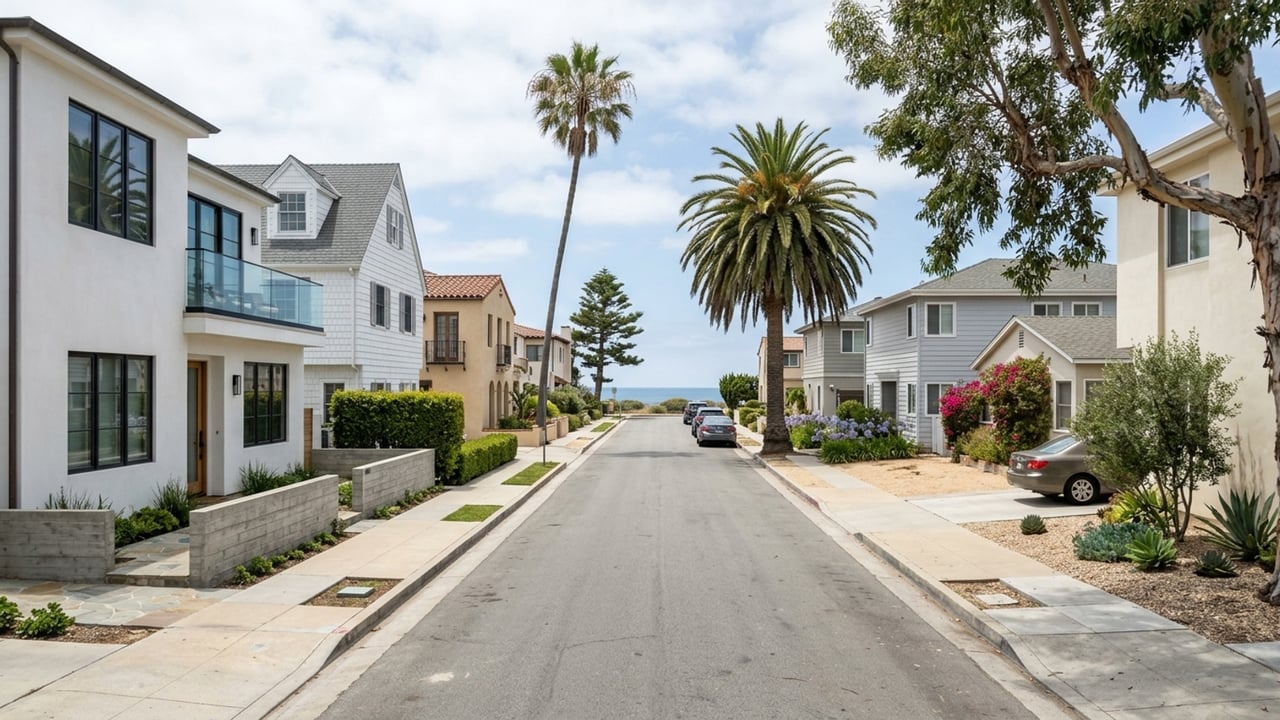
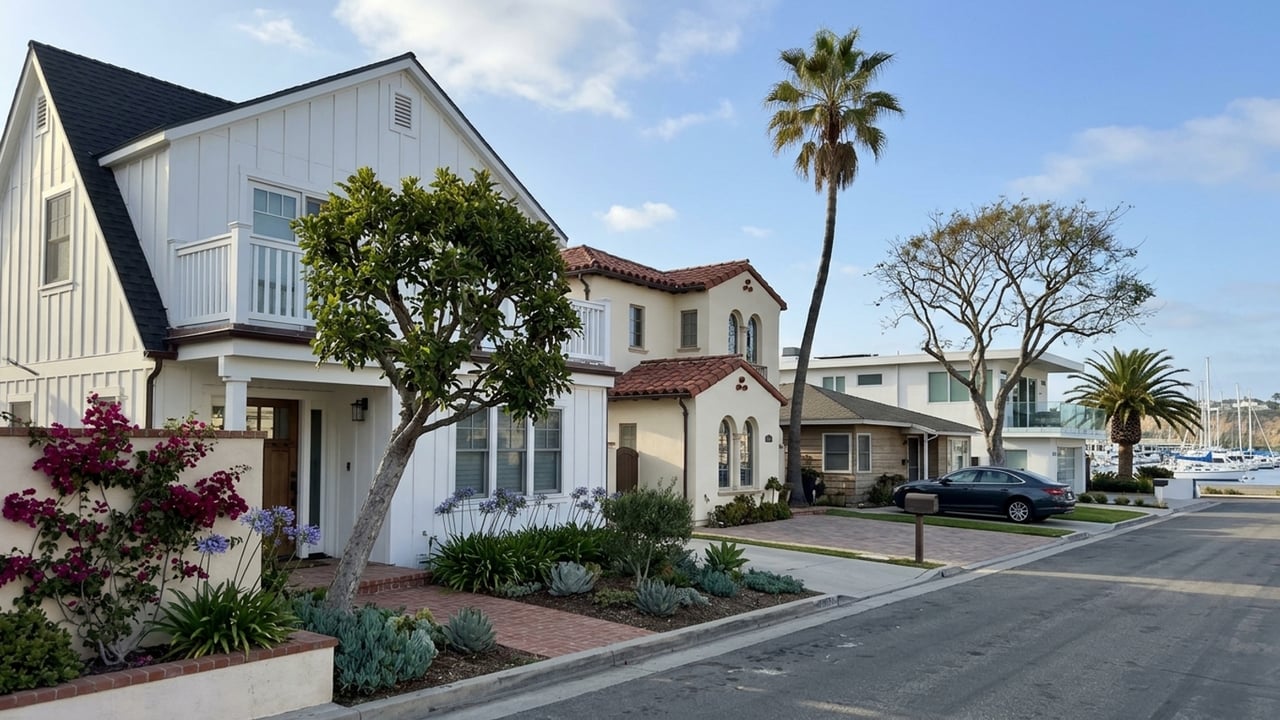
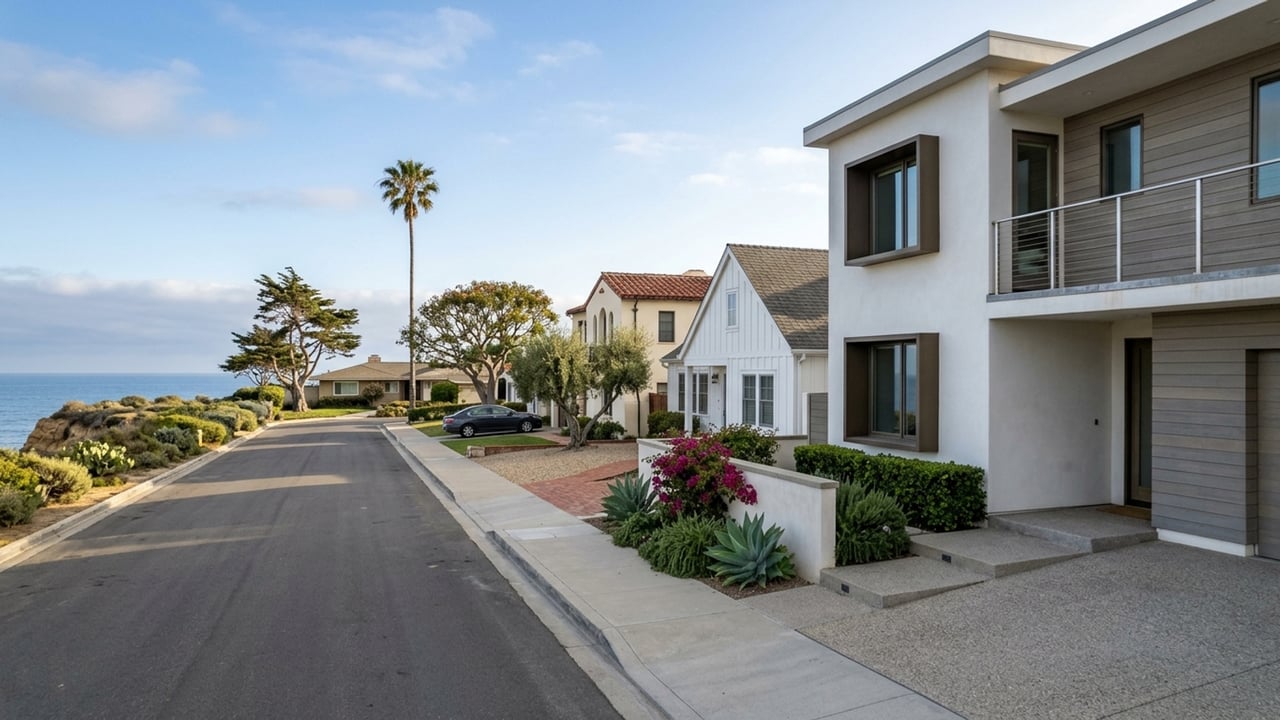
The microclimate shifts quickly as you move away from the water. Bluff-top and harbor-side streets such as Ocean Boulevard and Cameo Shores sit right in the sea breeze and the marine layer. If you want the coolest summer afternoons and a constant ocean breeze, those are the streets to start on.
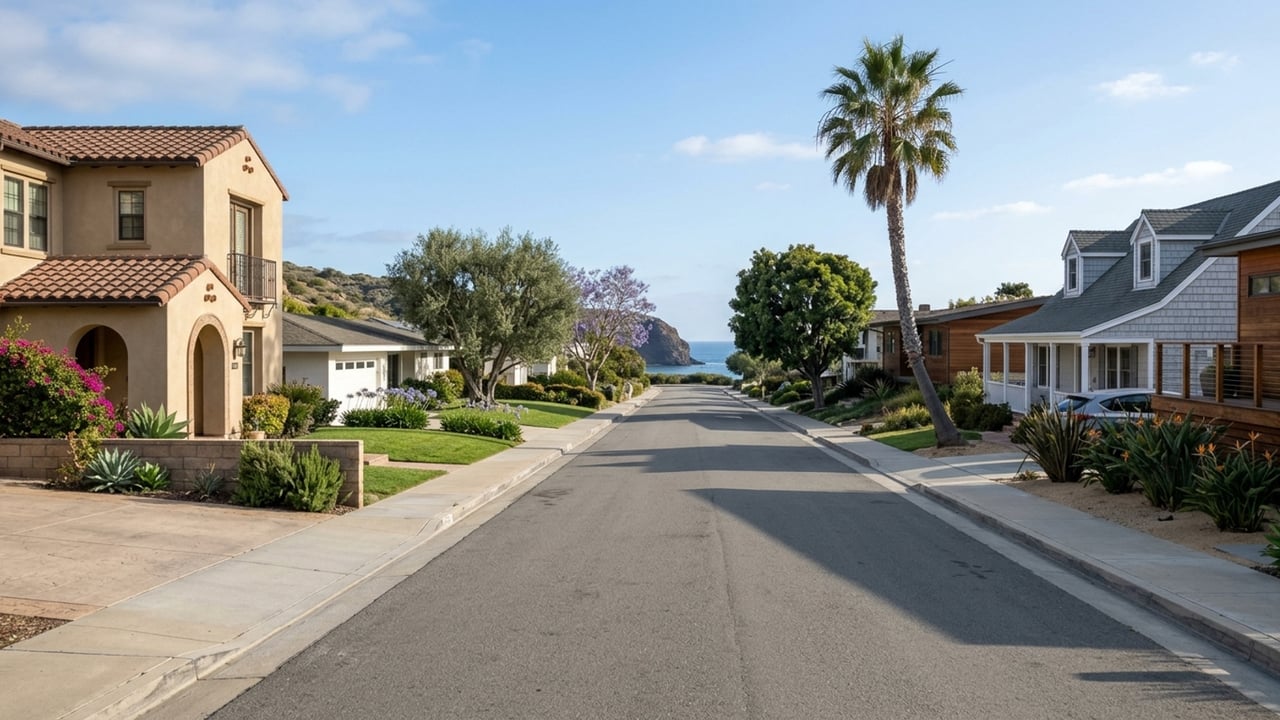
Inland hillside tracts such as Harbor View Hills sit higher and farther from the water. The coast runs cooler than inland Orange County by about six degrees on an average summer afternoon. The official climate normal for August at John Wayne Airport shows an average high of 80.4°F, noticeably warmer than the mid-70s near the harbor.
You can observe this yourself by visiting the same street at 9 a.m. and 3 p.m. in June and watching how the marine layer burns off. The tradeoff for living right on the water is real: bluff-front homes buy their cooler air and open views with more salt, wind, and surf spray. You can review the types of homes in Corona del Mar to see how housing styles adapt to these different locations.
Storms, surf and fire weather
Coastal hazards follow distinct seasonal patterns. King tides and coastal flooding occasionally affect properties near the harbor and along low-lying streets. The City of Newport Beach monitors sea-level-rise projections and active tidal flooding events to help residents prepare.
High surf and rip currents are a separate hazard for beachgoers. Late-summer swells generated by eastern Pacific hurricanes can produce heavy shorebreak conditions, and swimmers and surfers watch those swell forecasts closely from August through October.
Santa Ana winds arrive from fall through winter, bringing dry offshore gusts. A regional climatology study recorded an average of 32 Santa Ana wind occurrences per year in Southern California, typically lasting one to two days each. Those dry winds raise fire danger, especially for homes near open vegetation.
During stagnant winter weather, fine particulate pollution can build up across the South Coast Air Basin. When levels reach unhealthy thresholds, the South Coast AQMD declares a No-Burn Day, a 24-hour ban on residential wood fires including beach and backyard fire pits. That ban applies roughly from November 1 through the end of February.
What the climate means for a home here
Salt air speeds the corrosion of metal fixtures, railings, and HVAC coils. Ask the seller about the replacement history for exterior components before you get too attached to a price. The marine layer and coastal humidity can also lead to mildew in closed spaces, so ventilation and dehumidifiers are worth factoring into your plans.
Many coastal homes rely entirely on ocean breezes for cooling, so ask directly whether the house has air conditioning. Late-summer heat advisories do happen, and the answer to that question affects your budget. Buyers should factor these climate realities in when buying a home in Corona del Mar.
Checking a specific property
You can run official lookups on any address before submitting an offer. Check the FEMA Flood Map Service Center to see the property's specific flood zone designation, and verify the exact address on CAL FIRE's Fire Hazard Severity Zone viewer to understand its wildfire exposure.
For harbor-side or low-lying parcels, review the City of Newport Beach coastal hazard and sea-level-rise information. Field checks matter just as much as the maps, so visit the property at morning and afternoon in early summer and look for corrosion on exterior metal yourself. Tim Smith Real Estate Group can arrange repeat showings at different times of day.
One thing mapped zones won't tell you is what an insurer will charge. A quote is the only way to know the true cost of a location's exposure, so get one before you remove contingencies. The flood zone and fire hazard zone for any Corona del Mar address are available in a few minutes on FEMA's and CAL FIRE's free official maps.
Best time of year to visit or tour homes in Corona del Mar
September and early October usually bring the warmest, clearest beach weather for touring neighborhoods. If you want to see a house in its least flattering conditions before you commit, schedule a May or June morning showing. The marine layer is at its thickest then. Come back mid-afternoon to see the typical clearing and judge how the property feels at both ends of the day.
A winter storm visit is worth it for a different reason entirely. Touring during heavy rain shows how the property handles drainage and whether the roof performs under pressure. You can review the Corona del Mar housing market data to see how listing activity aligns with these seasonal shifts.
Deciding if the Corona del Mar climate fits you
A few questions worth sitting with before you settle on a neighborhood: Do you want the warmest, sunniest early summer, or are cool gray mornings from May through June fine? Are you prepared for the constant salt-air upkeep on metal, windows, and paint? Will you use a wood-burning fire pit or fireplace often, and are you comfortable with winter no-burn days?
Is the address you're considering near the harbor, on low ground, or on a hillside near open space? Those answers do more to define your daily weather than the climate averages do. You can weigh all of this against the broader pros and cons of living in Corona del Mar to pull it together.
At a glance
- Market data is currently unavailable for Corona del Mar.
Corona del Mar weather FAQs
Does it ever snow in Corona del Mar?
Measurable snow is not a feature of the local climate. Buyers curious about historical temperature extremes can check the NOAA National Centers for Environmental Information for past weather records at the Newport Beach Harbor station.
Is Corona del Mar humid?
Morning humidity runs high under the marine layer, while afternoons are generally moderate. You can check the NOAA climate normals for the John Wayne Airport (KSNA) station to see exact monthly humidity averages inland of Corona del Mar.
How warm is the ocean at Corona del Mar State Beach?
Winter and spring nearshore water temperatures sit in the upper-50s to low-60s, with May averaging 63°F based on Scripps Institution of Oceanography buoy data. The Scripps Newport Beach Pier shore-station program also tracks these temperatures closely. Most swimmers don't skip a wetsuit until late summer.
How much cooler is Corona del Mar than Irvine in summer?
Official NOAA climate normals for an Irvine station are not currently available in this dataset. The coast generally runs cooler than inland Orange County, as seen in the August average high at John Wayne Airport compared to the cooler temperatures closer to the water.
Do homes in Corona del Mar need air conditioning?
The Newport Beach Harbor station records roughly 584 annual cooling degree days, with the highest cooling demand in August and September. Ask the seller whether the home has air conditioning and how it handled recent heat advisories.
What climate zone is Corona del Mar in?
The California Energy Commission designates ZIP code 92625 as Climate Zone 6, which affects building and remodel energy rules. For landscaping decisions, you can check the USDA plant hardiness zone map for ZIP 92625.
Sources
- Wikipedia: Newport Beach, California
- CityWeatherData: Newport Beach
- ExtremeWeatherWatch: Newport Beach Average Rainfall
- FOX 5 San Diego: May Gray to June Gloom
- National Weather Service: John Wayne Airport Climate Normal
- Scripps Institution of Oceanography: Newport Beach Shore Station
- Climate-Charts: Newport Beach Harbor Station
- NOAA Repository: Santa Ana Wind Climatology
- South Coast AQMD: Check Before You Burn
- California Energy Commission: Building Climate Zones