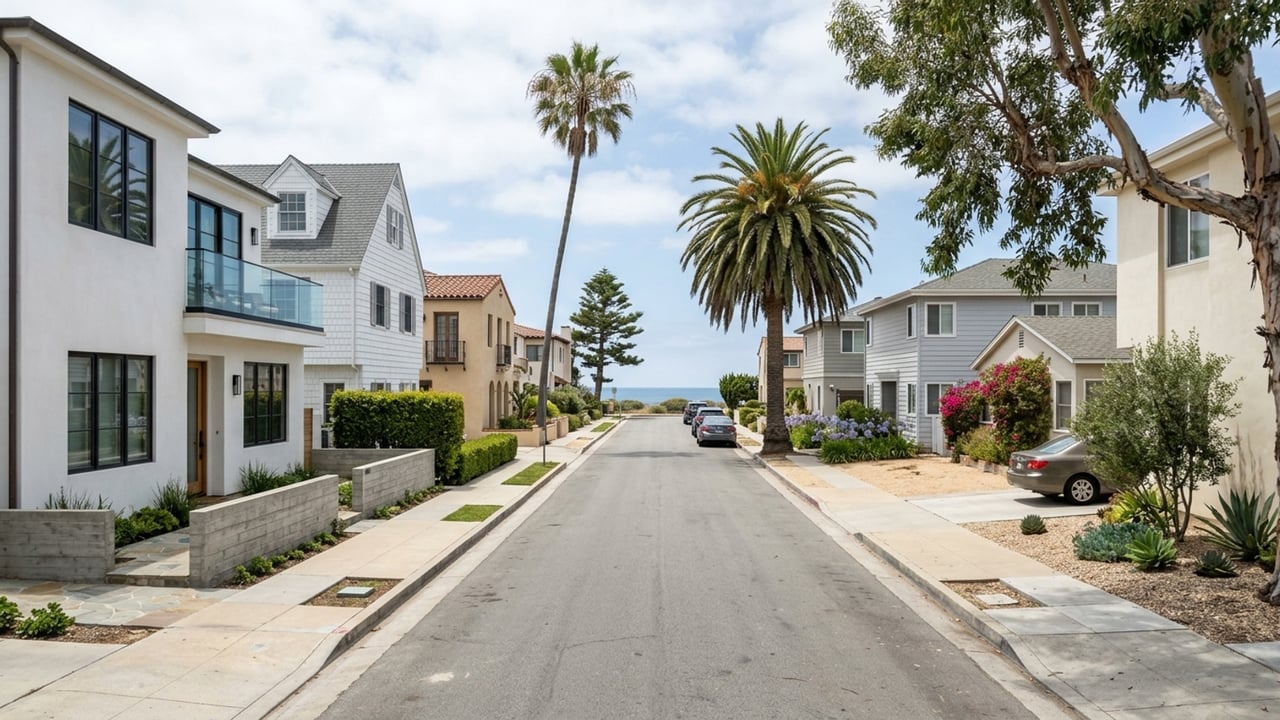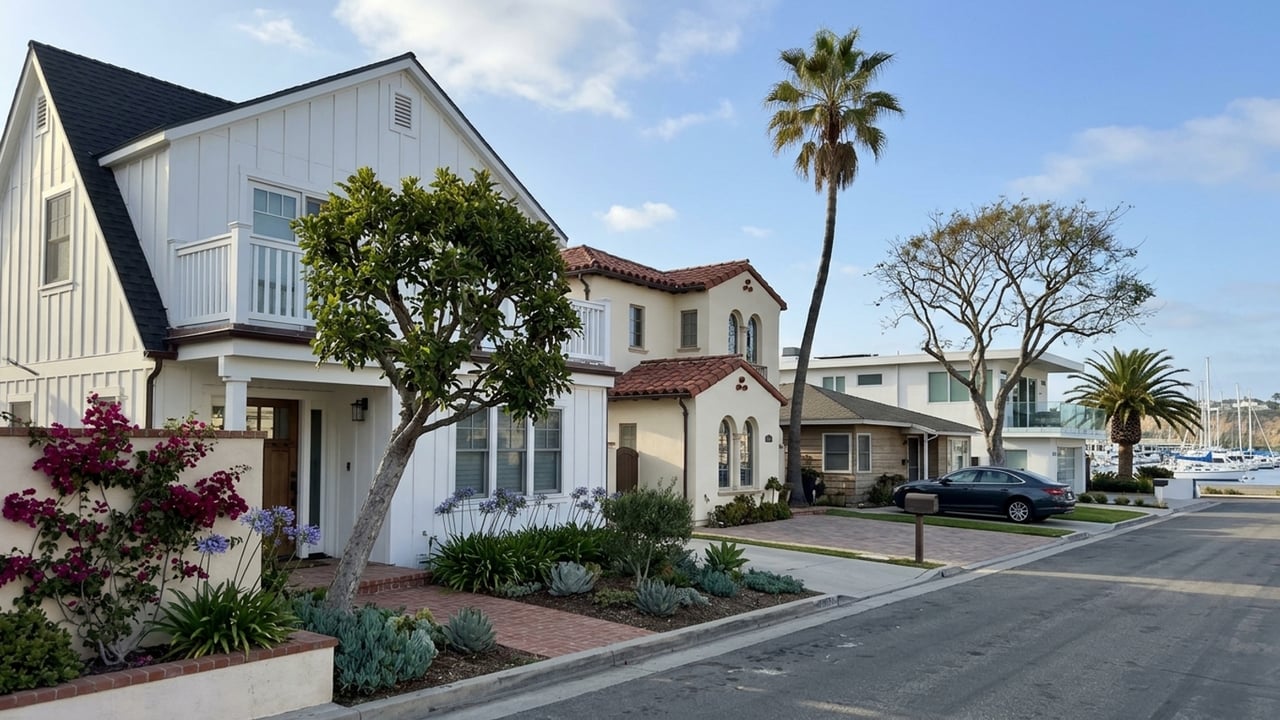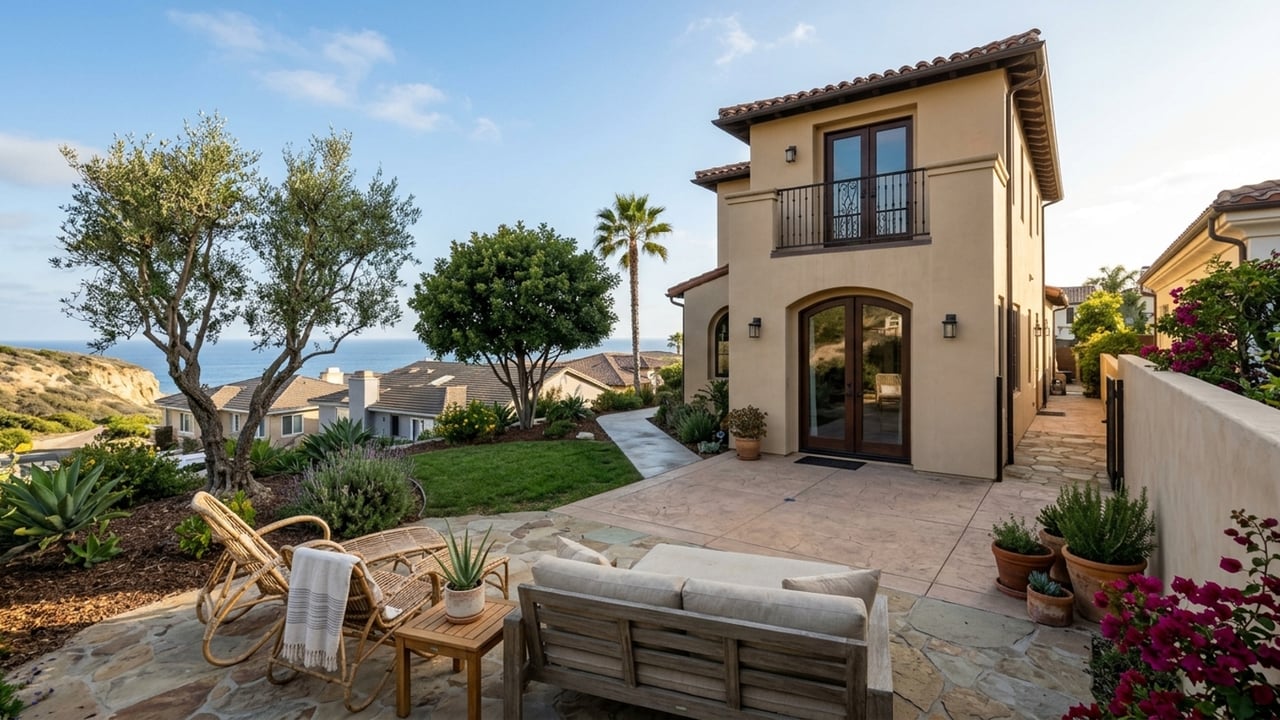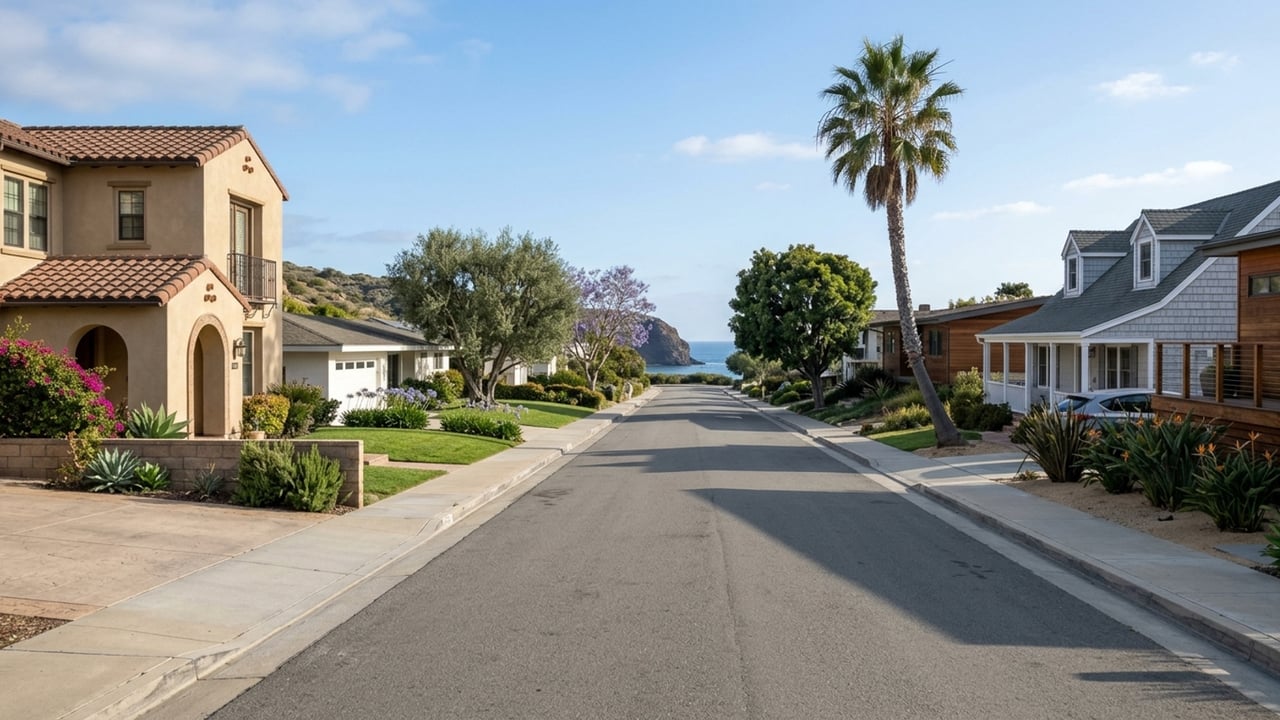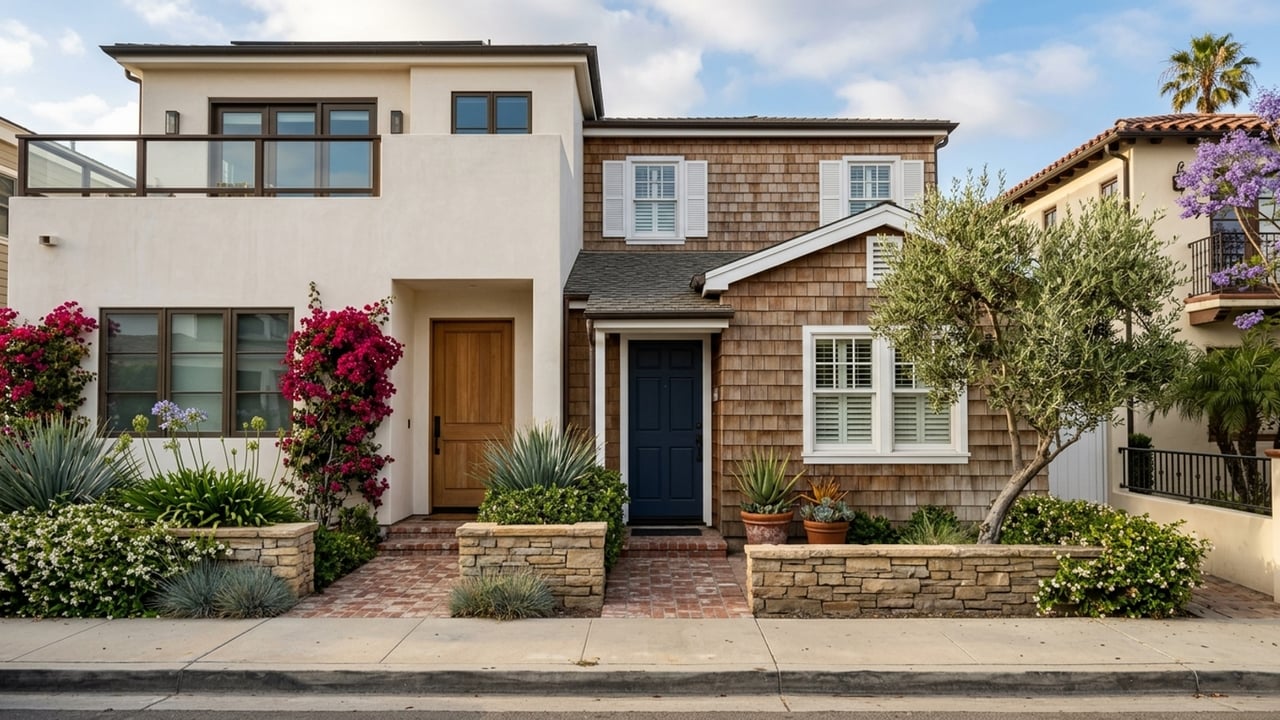
Corona del Mar functions as a neighborhood-village inside the city of Newport Beach, California - which means residents get full city services while still living in a place that feels like its own town. For anyone buying a home in Corona del Mar, the real estate market reflects that duality: single-family estates sit alongside luxury condominiums and multi-family properties scattered across the bluffs and village streets.
If you're looking for something lower-maintenance near the water, attached homes are where most of the inventory is. Condos, townhouses, and duplexes make up a significant share of what's available, and knowing the difference between these property types - and what each one costs to own - will save you a lot of time before you start scheduling tours.
Current Condo Listings and Market Trends
There are currently around 23 condos for sale in Corona del Mar, with a median asking price of about $4.39 million. That puts active listings squarely in the luxury tier of Orange County real estate - not a surprise given the address, but worth saying plainly so you can calibrate your search before you fall in love with a floor plan.
Closed sales tell a slightly different story. Over a recent trailing 30-day period, eight condos sold in the neighborhood at a median sale price of $2,272,500 and a median price per square foot of $1,734. The gap between asking and closing medians reflects the range of product on the market at any one time - some of those active listings are exceptional oceanfront units sitting at ambitious prices.
Median Prices by Bedroom Count
The overall median for a condo in Corona del Mar sits around $2.8 million, but that number smooths over a lot of variation. If you're working with a defined budget, bedroom count is a more useful filter.
One-bedroom condos trade near $1.29 million - the lowest entry point in this market for buyers who care more about location than square footage. Two-bedroom units push the median to roughly $2.25 million. Step up to three bedrooms and you're averaging closer to $3.5 million.
Recent Sales and Listing Activity
Not every unit moves at the same pace. Oceanfront or bay-facing properties attract a specific subset of buyers and tend to hold their price, while units without a water view are more likely to see negotiation.
With only about two dozen active condo listings at any given time, you can't afford to wait around if a unit in a specific building is what you're after. Identifying your target communities early - and having a local agent monitoring them - is the practical move here.
Homeowners Association Fees and Coverage
A condo listing aggregator reports a median HOA fee of about $855 per month for attached units in Corona del Mar. That's not a small number, and it doesn't go away - it's a fixed monthly cost on top of your mortgage and property taxes, so it has to fit your budget from day one.
What you get for those dues depends entirely on the building. Before you close on anything, pull the association's financial documents and look at the reserve fund. A well-funded reserve is the difference between predictable costs and a surprise assessment two years after you move in.
Typical Monthly Dues
Low-amenity complexes often come in under $500 per month. At that level, you're typically getting exterior maintenance, a master insurance policy, and common-area landscaping - the basics.
Mid-range buildings generally run between $500 and $1,200 per month. Full-service or oceanfront buildings often exceed $1,200 per month, covering things like gated security, pools, and more intensive exterior upkeep. Higher dues aren't automatically a red flag; it depends on what's included and whether the association is spending the money wisely.
Budgeting for Assessments
Monthly dues are one line item. Special assessments are another, and they're harder to predict. Roof replacements, balcony repairs, and plumbing work in older buildings can require significant contributions from unit owners on short notice.
Ask for a history of past assessments on any building you're seriously considering. Communities with deferred maintenance carry a real risk of a large assessment landing shortly after you close - and that's a cost no inspection will flag for you.
Neighborhoods and Named Condo Communities
Attached homes in Corona del Mar cluster in specific pockets - along the village streets, on the bluffs, and in a handful of planned communities with their own amenities and gate access. The inventory isn't spread evenly across the map.
Many of these buildings were constructed decades ago, so unit interiors run the full spectrum from original condition to gut-renovated. Knowing which communities match your priorities before you start touring helps you move quickly when something comes up. In a market with this little inventory, hesitation is expensive.
Bluff-Top Living in Irvine Terrace
Irvine Terrace sits on the north side of Pacific Coast Highway, looking out over Newport Harbor. The neighborhood was developed starting in the 1950s and is characterized by larger lots and mid-century single-story homes.
The views here are harbor and bay, not open Pacific Ocean - a distinction that matters to some buyers more than others. Its elevation and planned layout give Irvine Terrace a feel that's noticeably different from the denser village streets below.
Established Towers and Developments
Channel Reef is one of the better-known communities - 48 gated bayfront units at 2525 Ocean Boulevard. Sandcastle, built in 1963, offers one- and two-bedroom units closer to the central village area.
Other named communities worth looking at include Sailhouse, Jasmine Creek, The Terraces, Villa Del Este, Canyon Crest Estates, Harbor Woods, and Mai Kai. Each has its own character, age, and fee structure, so they're not interchangeable even if they're all technically "attached homes in Corona del Mar."
Waterfront Locations and Luxury Units
Corona del Mar State Beach sits just steps from the main village and anchors a lot of the demand in this market. Proximity to the water shapes pricing here more than almost any other variable, and properties on the coastal side of Pacific Coast Highway carry the highest premiums as a result.
Most buyers targeting this area have water access or ocean views somewhere on their list. It's worth being honest with yourself early about how much of a premium you're willing to pay for that, because it's a meaningful number.
Beachfront Access at Big and Little Corona
Big Corona and Little Corona beaches define the local coastline. They're where residents swim, explore tide pools, and spend most of their beach time.
Parking near both beaches is notoriously limited, which makes walkability a practical advantage - not just a lifestyle selling point. If you plan to use the beach regularly, a unit within walking distance is worth the price difference over driving in and circling for a spot.
High-End and New Construction Options
The luxury end of the condo market includes both extensively renovated older units and occasional new construction. Developers do periodically replace older multi-family structures with modern attached homes, so new product does come to market - just not on a predictable schedule.
These properties typically feature premium finishes, private elevators, and large outdoor decks. Units with unobstructed ocean or harbor views draw real competition when they list, so be prepared to move.
Townhomes, Duplexes, and Multi-Family Options
The market here isn't just condos. Townhomes, duplexes, and small apartment buildings all show up in the inventory, and each one serves a different buyer profile.
Zoning in the village allows for higher density, which is why two-unit properties are so common throughout the area. If you're looking for a part-time residence, rental income potential, or simply more square footage than a condo provides, these property types are worth adding to your search.
Townhouses and Patio Homes
Townhomes offer multi-level living and private garages - a meaningful upgrade from a condo if you want dedicated parking and no neighbors directly above or below you. They occupy a middle ground between a condo and a detached house, and for some buyers that's exactly the right fit.
HOA fees for townhomes tend to be lower than full-service condo buildings since there are no shared lobbies or community pools to maintain. That said, maintenance responsibilities vary by association, so read the CC&Rs before you assume you know what you're signing up for.
Duplex and Apartment Buildings
Duplexes are scattered throughout the main village area. Buyers commonly purchase them to live in one unit and lease out the other, or to use the whole property as a multi-generational retreat. The math on that owner-occupant-plus-rental setup can make the purchase price a lot more manageable.
Small multi-family buildings also come to market occasionally. They attract investors looking for rental income in a premium coastal zip code, which means you may be competing with buyers whose underwriting looks different from yours.
Evaluating Life in a Coastal Community
Because Corona del Mar is part of Newport Beach, local services and taxation run through the city. The purchase price is only one piece of what you'll spend - property taxes, insurance, and HOA dues are all ongoing, and they add up quickly at this price level.
Walkability and coastal access drive a lot of the demand here, but they're not free. Running the full carrying cost calculation - not just the mortgage payment - is how you figure out whether an attached home in this market fits where you want to be financially.
Property Taxes and Ownership Costs
Newport Beach carries a median effective property tax rate of about 1.08%. That's slightly above the national median of 1.02% and below the overall California state median of 1.21%.
Exact rates vary by ZIP code depending on school district levies and any applicable Mello-Roos assessments. Factor those local rates alongside your HOA dues when you're building out your monthly cost picture - don't just run the math on the mortgage.
Evaluating Lifestyle and Maintenance
A lot of buyers in this market are coming out of larger Orange County estates. The appeal of an attached home is straightforward: less to manage, easier to leave, lower day-to-day overhead.
Secondary coastal properties are another big driver of demand here. The ability to lock the door and travel without worrying about exterior maintenance is genuinely valuable to that buyer, and it shows up in the pricing of well-maintained units in professionally managed buildings.
Frequently Asked Questions
How much do condos cost in Corona del Mar, CA?
Buyers entering this market should expect to spend at least $1.25 million for entry-level, one-bedroom units. Expanding your search to two or three bedrooms pushes the baseline well past $2.25 million, making bedroom count the strictest filter for your budget.
What are typical HOA fees for condos in Corona del Mar?
Expect to add roughly $855 to your monthly carrying costs for a standard attached unit. You can keep this line item under $500 by targeting older, low-amenity properties, but securing gated security or pools will easily push dues past the $1,200 mark.
Are condos in Corona del Mar a good investment?
Attached homes here maintain strong values due to the limited coastal inventory and high demand for secondary residences. Units with unobstructed harbor or ocean views historically offer the most reliable appreciation, even when the broader market cools.
Can I buy a condo in Corona del Mar directly from the owner (FSBO)?
Finding an off-market attached home requires persistent networking in this highly constrained market. Because the active inventory rarely exceeds two dozen units, working with a well-connected local agent is the most reliable way to secure a property before it lists publicly.
Which neighborhoods in Corona del Mar have the best waterfront or luxury condos?
Buyers prioritizing harbor views often target the gated units at Channel Reef or the bluff-top properties in Irvine Terrace. If walkability to the sand is your main goal, focus your search on the streets immediately surrounding Big and Little Corona beaches.
Are there short-term rental or Airbnb restrictions for condos in Corona del Mar?
Newport Beach strictly regulates short-term lodging, meaning buyers must verify city zoning before planning any vacation rental income. Furthermore, most local homeowners associations impose their own minimum lease periods, which frequently ban stays under 30 days entirely.
How do condos compare to other attached or multi-family homes in Corona del Mar?
Townhouses provide dedicated garages and eliminate upstairs neighbors, making them a popular middle ground for buyers needing more privacy. Duplexes appeal heavily to investors and multi-generational buyers looking to offset premium coastal purchase prices with rental income.