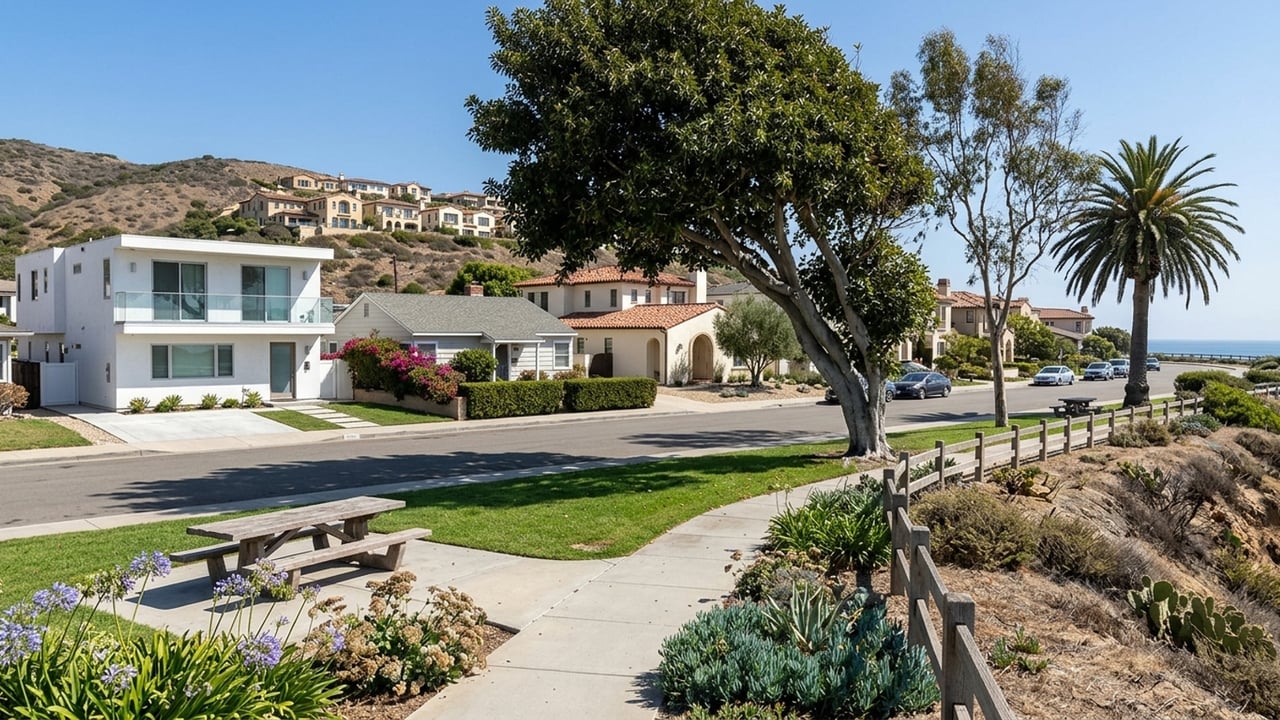
Buyers shopping the Orange County coastline often narrow their search down to two neighboring areas within the City of Newport Beach. Corona del Mar and Newport Coast sit right next to each other along Pacific Coast Highway, but they offer completely different ownership structures.
Because both areas share a city government and a school district, your choice comes down to which type of property and recurring obligations you'd rather carry. The housing types, daily routines, and carrying costs that separate these two coastal markets are covered below.
Key takeaway
If you want to walk to dinner and the beach and would rather budget for remodeling an older home than for layered association dues, start your search in Corona del Mar's Village and Flower Streets. If you want a newer home, gated streets, and a larger lot, Newport Coast is the stronger fit, as long as you price in master and sub-association dues plus any assessment line on the tax bill. Both have been inside the City of Newport Beach since Newport Coast's annexation in 2002, so you're choosing a home and its carrying costs, not a city.
Who this guide is for
You're shopping the coast between Newport Harbor and Crystal Cove and deciding whether an older home on a village lot or a newer home in a gated hillside community better fits your budget and daily routine.
The main differences between Corona del Mar and Newport Coast
Corona del Mar and Newport Coast are both neighborhoods of Newport Beach, so taxes at the city level, municipal services, and the school district are shared. The real difference is the ownership structure and the age of the housing.
Corona del Mar is an older coastal village made up of individual lots along Pacific Coast Highway. Newport Coast is a newer master-planned hillside of gated communities rising from Crystal Cove. Choosing between them usually means picking between village lots and gated hillside communities, along with the specific costs each one brings. You can review the pros and cons of living in Corona del Mar to get a better sense of the daily lifestyle, but the financial trade-offs are what usually dictate the final decision for buyers.
Corona del Mar neighborhoods with village lots
Corona del Mar offers a mix of dense, walkable blocks and quieter hillside tracts. The area doesn't have the overarching master association found in Newport Coast, which appeals to buyers who want fewer rules and lower monthly carrying costs.
You'll find different property types depending on how far you move from the water. The Village and Flower Streets and the hillside tracts of Harbor View Hills and Spyglass Hill represent the two distinct areas where most searches land.
The Village and Flower Streets
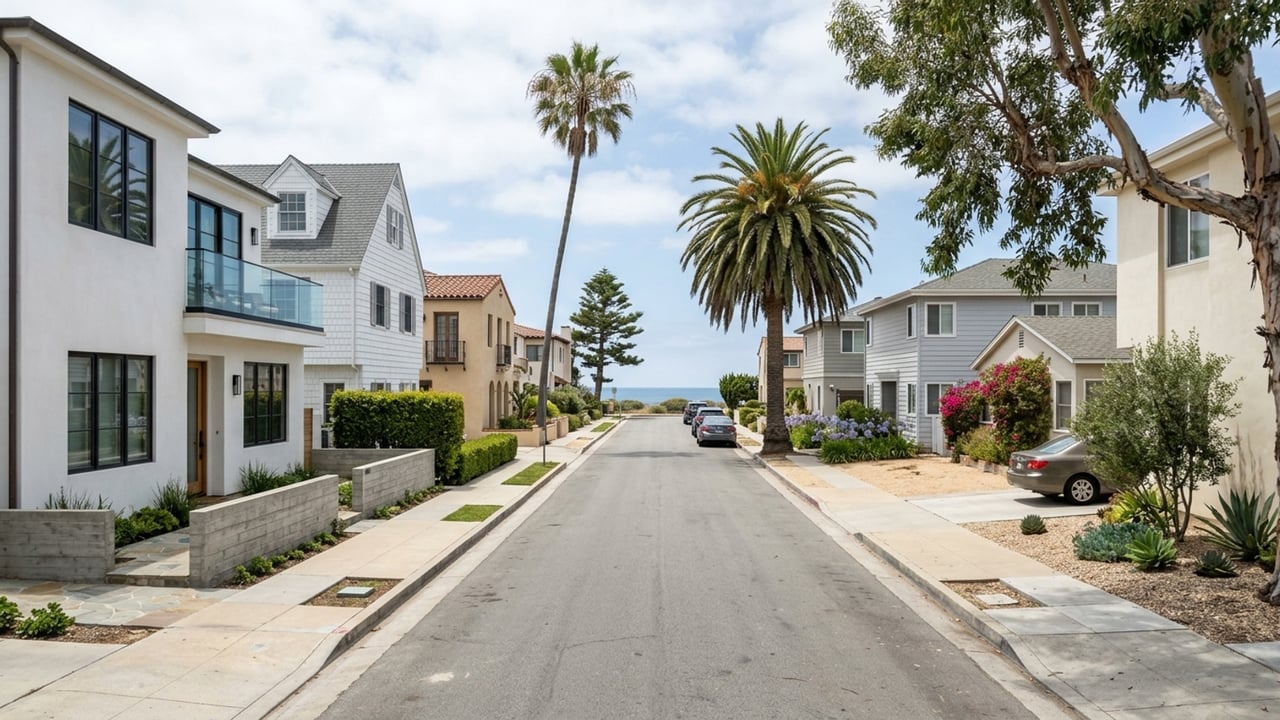
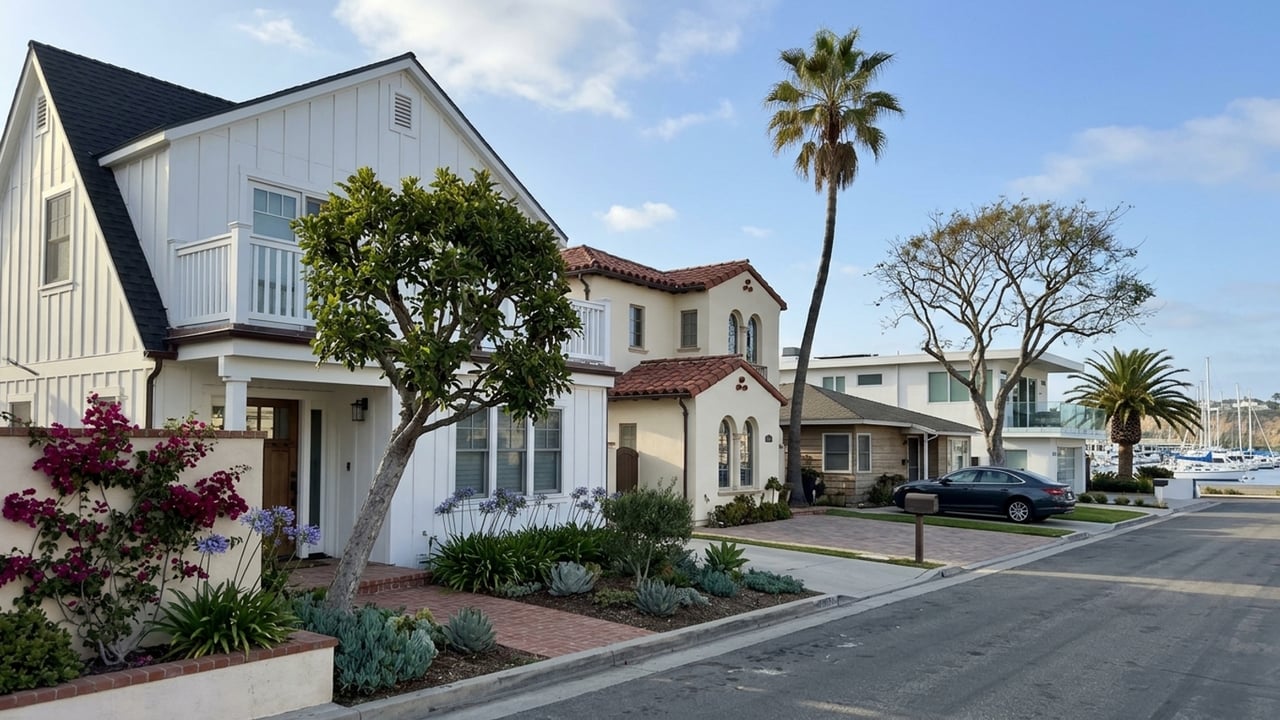
This is the walkable side of the decision, covering the blocks between Pacific Coast Highway and the bluffs. Errands, restaurants, and the beach are all on foot. The housing consists of older cottages, rebuilt contemporary properties, and duplexes on narrow lots.
Buyers here are often purchasing the lot with plans to remodel or rebuild. A Coastal Development Permit is required before construction starts, adding design time, approval time, and cost. Per the City of Newport Beach Zoning Code, the minimum lot area standard in this two-unit residential district is 5,000 square feet for an interior lot and 6,000 square feet for a corner lot. The code caps residential floor area here at 1.5 times the buildable area of the lot, compared to a 2.0 multiplier citywide.
The Flower Streets run in alphabetical order by plant name, from Acacia to Poppy, so you can tell roughly how far a street sits from the harbor end by its first letter. The trade-off is that small lots mean little yard space and close neighbors. Summer beach traffic and parking pressure spill onto these streets, and many homes are dated enough that the price you pay is just the start of your spending.
Harbor View Hills and Spyglass Hill
These tracts offer hillside lots with ocean or city-light views, closer in feel to Newport Coast but without the gated master-planned layers. You get more space and a quieter street than you'd have down in the village.
That said, these tracts carry their own associations and CC&Rs, so the idea that Corona del Mar has no homeowner associations doesn't apply everywhere. You give up the ability to walk to the village, meaning most errands become a drive. Association rules, including any view-preservation provisions, can limit what you build, so ask for the CC&Rs and current dues before you write an offer.
Gated hillside communities in Newport Coast
Newport Coast is organized around master-planned development rather than a traditional street grid. The City of Newport Beach designates Newport Coast as a master association area, under which numerous sub-associations and communities operate.
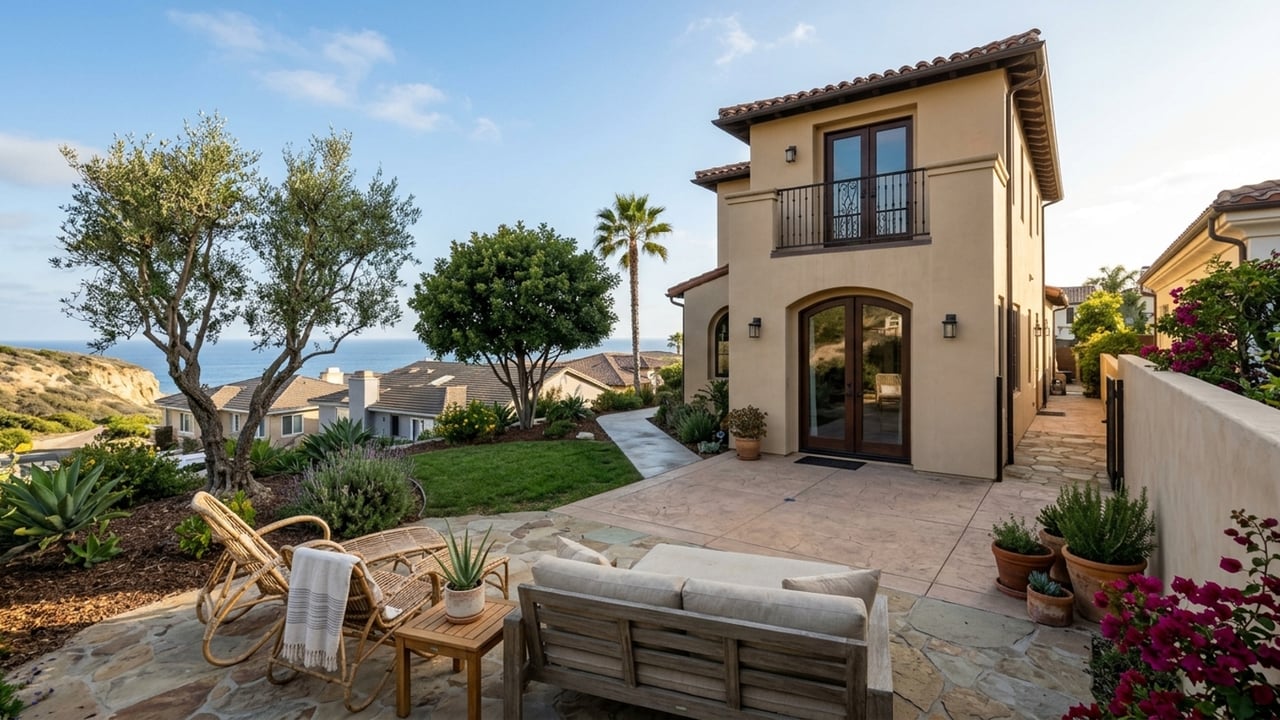
These neighborhoods feature newer custom and semi-custom homes on larger lots, and many streets have controlled access. You won't find the older beach cottages common in Corona del Mar, but you'll take on more association rules and monthly fees in exchange for newer construction and gated streets.
Crystal Cove
This guard-gated community sits on the slopes above Crystal Cove State Park, placing open space and protected coastline next door rather than a village main street. The homes are newer and sit on larger lots, with ocean views visible from many of the streets.
Because the community backs directly onto the state park, a large stretch of the neighboring coastline is protected parkland rather than private development. Everything beyond the park is a drive, including grocery runs and dinner. Gate procedures add steps for guests, deliveries, and contractors, and the dues come in more than one layer.
Pelican Hill communities
The Pelican Hill name covers a cluster of neighborhoods around the Pelican Hill resort and golf courses, rather than a single community. Each neighborhood operates its own association inside the Newport Coast master association.
Buyers need to compare individual communities by product type, weighing attached villas against detached estates, and track which specific associations apply to a given address. Stacked associations make the monthly total harder to compare than a single bill. Resort and golf traffic is part of the daily setting. The hillside lots also raise fire-zone and insurance questions worth investigating during your inspection period.
The cost to own in Corona del Mar vs Newport Coast
Comparing list prices between these two areas only gives you part of the picture. A buyer comparing two homes at the same price should add each home's full monthly association total and its annual tax-bill assessments. The cheaper list price can sometimes carry the higher monthly cost once you factor in fees and insurance. You can review current mortgage rates and financing options, but your baseline budget should account for the specific carrying costs of the neighborhood.
Association dues and assessments in Newport Coast
A Newport Coast owner often pays master association dues, a sub-association fee, and sometimes a separate gate or community fee. The sub-associations include Montserrat, Sancerre, The Pointe, The Summit, Newport Ridge Apartments, Newport Ridge Vistas, Pelican Point, Crystal Cove, and Ziani.
You also need to check the county tax bill for assessment-district or special-tax line items. The Orange County Auditor-Controller's Tax Ledger lists specific special assessment district lines for Newport Coast, including the Ziani Project, Group 2, Group 3, and a general Newport Coast line. On fire-zone hillsides, insurance cost and availability can change what a home costs to carry. The City of Newport Beach publishes CAL FIRE Very High Fire Hazard Severity Zone maps, which were updated in 2025, and properties in these zones are subject to specific fire codes. Dues and assessments rarely go away, and insurance premiums can rise over time.
Rebuild and permit costs in Corona del Mar
Village homes typically have no association bill, but the cost moves into the house itself. A remodel or full rebuild requires a Coastal Development Permit under the City of Newport Beach's certified Local Coastal Program, which covers all development in the Coastal Zone, including Corona del Mar. The review authority will only approve the permit if the proposed development conforms to all applicable sections of the program. That adds design time, approval time, and cost before construction even begins. Permit timelines and construction costs are open-ended compared to a fixed monthly dues bill, and a buyer with a firm budget can end up spending more here than on a finished Newport Coast home.
Daily routines, beaches, and commuting
Corona del Mar puts Corona del Mar State Beach, Little Corona, and the shops along Pacific Coast Highway within walking distance of the village. Newport Coast requires a drive down the hill to reach Pacific Coast Highway and the Crystal Cove beach access points. Per California State Parks, the main beach access points are the Pelican Point and Reef Point day-use lots, the Historic District, and the Moro Canyon Day Use Area. Because the beach is separated from the bluff-top parking by a steep bluff over 50 feet high, beach wheelchairs are only available for loan at the Historic District and Moro Canyon.
Both areas share Pacific Coast Highway and the 73 toll road corridor for leaving the coast and commuting to other parts of Orange County. For education, both areas are part of the Newport-Mesa Unified School District, and specific school assignments depend entirely on your address. You should check the district's school locator to confirm where a specific home is assigned. You can also review standard buyer closing costs to see how recording and escrow fees apply across the city.
Deciding between Corona del Mar and Newport Coast
Your decision comes down to how you want to spend your time and your budget. Ask yourself whether you want to walk to restaurants and the sand, or drive to them in exchange for gates, views, and newer construction. Walking points to The Village and Flower Streets; gates and newer homes point to Crystal Cove and the Pelican Hill communities.
You should also decide if you'd rather pay a predictable monthly association bill or take on a remodel or rebuild project. If you want hillside views without the gate-and-fee structure, look at Harbor View Hills and Spyglass Hill before assuming Newport Coast is your only view option. Get a fire-zone insurance quote early in the process if you're considering a hillside home, so you know your full carrying costs.
An agent can help you compare specific homes' full carrying costs to see which side of the city makes the most financial sense for you. You can also review housing market statistics to see how quickly inventory is moving in these neighborhoods right now.
At a glance
- City: both Corona del Mar and Newport Coast are part of the City of Newport Beach, in Orange County. Newport Coast joined the city by annexation effective January 1, 2002.
- ZIP codes: Corona del Mar 92625; Newport Coast 92657.
- Typical ownership structure: Corona del Mar is mostly individually owned village and hillside lots, with associations in some hillside tracts. Newport Coast is master-planned communities with a master association plus sub-associations.
- Access: Corona del Mar streets are public; many Newport Coast communities are behind guard gates.
- Beaches: Corona del Mar State Beach and Little Corona sit in Corona del Mar; Newport Coast borders Crystal Cove State Park.
Corona del Mar vs Newport Coast FAQs
Is Corona del Mar more expensive than Newport Coast?
It depends on how you measure the cost, as listing prices only tell part of the story. While headline prices vary by specific neighborhood and property condition, a direct comparison requires looking at the total monthly carrying cost. Newport Coast homes generally carry master and sub-association dues plus potential assessment-district taxes, whereas a Corona del Mar village home might have no association dues but require a costly coastal development permit to remodel.
Are Corona del Mar and Newport Coast part of Newport Beach?
Yes, both are neighborhoods within the City of Newport Beach. Newport Coast borders Corona del Mar to the southeast along Pacific Coast Highway and was officially annexed into the city on January 1, 2002.
What county is Corona del Mar, CA in?
Corona del Mar is in Orange County, and the same is true for Newport Coast. Property taxes for homes in both of these neighborhoods are billed by the Orange County Treasurer-Tax Collector.
What are the ZIP codes for Corona del Mar and Newport Coast?
The ZIP code for Corona del Mar is 92625, and the ZIP code for Newport Coast is 92657. Searching by ZIP code is a quick way to separate the two areas when looking at online property listings.
Is Cameo Shores part of Corona del Mar?
Yes, Cameo Shores is a community within Corona del Mar. It sits on the ocean side of Pacific Coast Highway, and like the rest of Corona del Mar, development here falls under the City of Newport Beach's Local Coastal Program. You should ask for the community's CC&Rs and current association dues if you plan to buy in this specific tract.
Which beaches near Corona del Mar and Newport Coast have the best water quality?
Both areas feature top-rated beaches. According to the City of Newport Beach, Corona del Mar State Beach and Crystal Cove earned A+ grades and made Heal the Bay's Beach Report Card honor roll. This honor roll status requires a beach to be monitored weekly all year and receive an A+ across all seasons and weather conditions.
Can you walk to the beach from Newport Coast?
It depends on exactly where your home is located within the hillside. Some communities near the bottom of the hill connect to Crystal Cove State Park access points, but most homes higher up require a drive to the Pelican Point, Reef Point, or Historic District parking lots. Map the walk from any specific address you're considering to see if it's practical on foot.
Does Newport Coast have higher property taxes than Corona del Mar?
The base property tax rate is the same across Orange County, but Newport Coast homes often carry additional assessment-district or special-tax line items. The Orange County Auditor-Controller lists specific special assessment lines for Newport Coast, such as the Ziani Project and Group 2, which can make the total tax bill higher. Request the actual tax bill for any home you're considering to verify the exact amount.
Sources
- City of Newport Beach: Newport Coast Advisory Committee
- City of Newport Beach: Community Associations Map
- Orange County Auditor-Controller: Tax Ledger
- City of Newport Beach: Local Coastal Program Implementation Plan
- City of Newport Beach: Zoning Code
- City of Newport Beach: CAL FIRE VHFHSZ Maps
- California State Parks: Crystal Cove SP Accessible Features
- City of Newport Beach: Ocean Water Quality
- Newport-Mesa Unified School District: School Locator