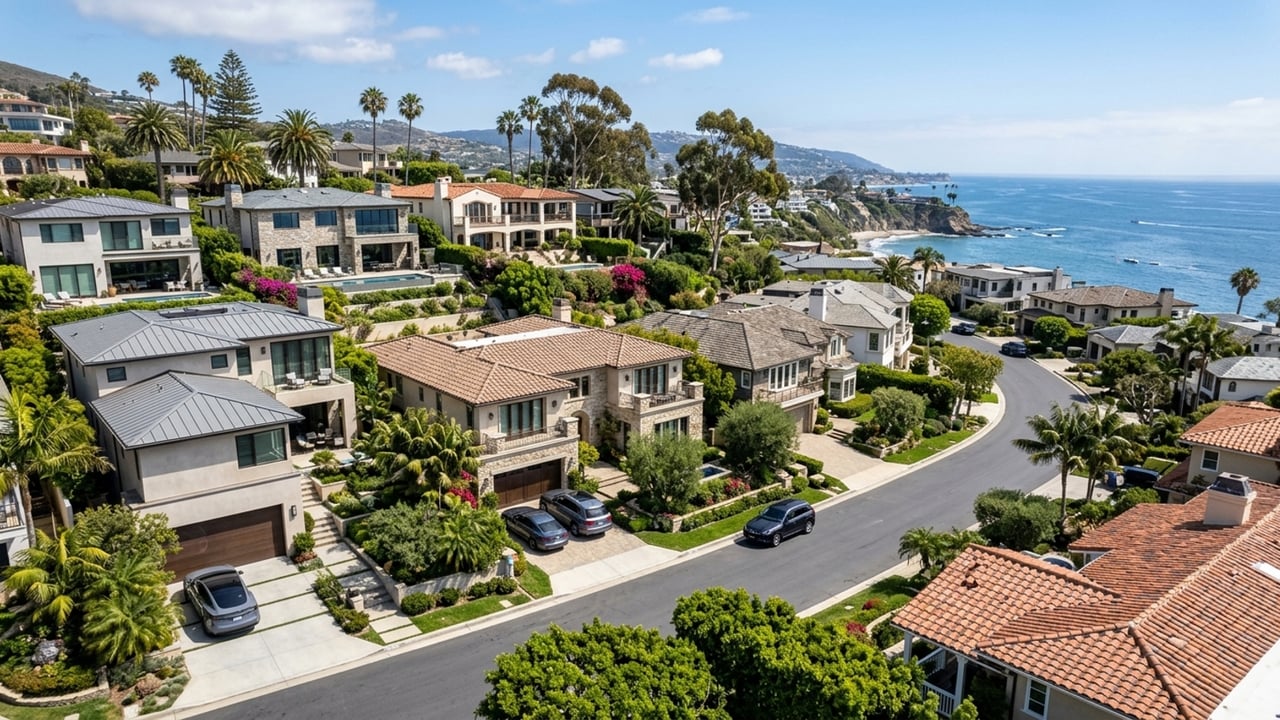
The median sale price for a home in Laguna Beach sits at roughly $3.1 million. If that number gives you pause, it should - this is one of the most expensive coastal markets in Southern California, and the barrier to entry is real. Limited inventory and steady demand from buyers who have the means to act keep prices anchored at this level.
Recent data shows about 162 active listings, which translates to roughly 4.6 months of supply. That puts the market in slightly seller-favoring territory, though buyers who know local pricing well enough can still negotiate. Knowing the difference between those two situations is most of the job.
Overview of the Local Real Estate Landscape
The Altos Research Market Action Index for Laguna Beach currently reads 30, up from 29 the previous month. That's not a dramatic swing, but the direction matters - buyer demand is continuing to outpace the rate of new homes hitting the market.
Only 35 homes sold in the most recent reporting period. Sellers hold an edge here, but it's conditional. Price correctly from the start and that edge holds. Overprice, and you'll watch the listing go stale while accurately priced homes move right past you.
Buyer or Seller Advantage
The 98.1% average sale-to-list ratio tells you sellers are largely getting what they ask. About 20% of recent transactions closed above the initial asking price, which means competitive offers are still happening - just not on every property.
Buyers do have something working in their favor, though: a median of 77 days on market. That's enough time to conduct thorough inspections and work through disclosures without the frantic bidding-war pressure that defined earlier years. Come in with strong financing and a clear ceiling, and you're in a workable position.
Comparing to Broader Orange County
Laguna Beach operates on a different pricing tier than most of Southern California. The broader Orange County region has a real mix of entry-level and move-up housing; this stretch of coast is almost entirely luxury.
That means market shifts here don't always mirror what's happening in neighboring cities. A cooling trend across California can move right past Laguna Beach when affluent buyers and investors are maintaining demand regardless of minor interest rate fluctuations.
Median and Average Home Prices in Laguna Beach, CA
Redfin data shows a median sale price of approximately $3.1 million for recent transactions - the midpoint where half the homes sell for more and half sell for less. The Zillow Home Value Index puts average home values around $2.95 million, which is a slightly different read on the same market.
That gap between the median sale price and the average estimated value is worth understanding. When a handful of ultra-luxury oceanfront estates transact, they pull the median transaction price upward in a way that doesn't reflect the broader pool of homes.
Median vs. Average Values
Look at both numbers. You can find condos and smaller townhomes below these averages, but detached single-family homes routinely command prices well above the $3 million mark. Tracking both metrics tells you where the bulk of sales activity is actually landing - and when the median outpaces the average estimate, it usually means the middle and upper-middle segments are seeing the most aggressive competition.
Price Per Square Foot and Neighborhood Costs
The median price per square foot in Laguna Beach runs roughly $1,608. Depending on the specific property and its condition, other local trackers cite a range from $1,270 to $1,930 per square foot.
Homes directly on the sand or with unobstructed ocean views land at the top of that range, consistently. Inland properties within the 92651 zip code come in at the lower end, though "lower end" here is still expensive by any inland Orange County comparison.
Current Market Trends and Inventory
Over the most recent reporting period, Laguna Beach home prices increased by about 1.7% year-over-year. That's steady and moderate - a resilient market, not a runaway one.
Inventory is the main story behind those price trends. With 162 active listings and 4.6 months of supply, buyers have options without being flooded with choices. That balance keeps prices stable and rules out any sharp declines.
Recent Price Movements
Despite broader concerns about softening prices across California, Laguna Beach has held its value. The 1.7% year-over-year increase shows demand for prime coastal real estate hasn't wavered.
Sellers listing today are still capturing near-peak equity, assuming the home is updated and well-maintained. Buyers holding out for a dramatic price drop are likely to wait a long time - limited land and strict zoning laws prevent the kind of overbuilding that triggers sharp corrections.
Days on Market and Listing Volume
A median of 77 days on market gives sellers a realistic planning window. Luxury properties take longer to sell because the qualified buyer pool is smaller and financing often involves complex asset portfolios rather than a straightforward mortgage application.
For buyers, that extended timeframe is useful information. A home sitting past the 90-day mark may belong to a seller who's now open to negotiating on price or offering concessions for repairs.
2026 Market Forecast and Predictions
The 98.1% average sale-to-list ratio tells you prices will stay firm through the rest of the year - sellers are getting close to what they ask, as long as their initial pricing reflects recent comparable sales. With 4.6 months of inventory, there's no meaningful risk of a supply glut developing. Expect home values to hold steady or see minor single-digit appreciation over the next twelve months.
Future Price Expectations
Plan for prices to hover around the $3.1 million median for the foreseeable future. Structural limits on new construction mean inventory won't suddenly outpace demand. If you find a property that fits your needs and budget, waiting for a better deal is a genuine gamble - the 1.7% annual growth rate means delay typically costs more than patience earns.
Timing Your Purchase
Your financial readiness matters more here than trying to call the market bottom. If you have a favorable interest rate locked or the cash available, the current stable inventory gives you a reasonable window to shop without the frenzy of past cycles.
Sellers should expect the traditional seasonal curve - spring and early summer bring the highest buyer traffic. Oceanfront properties are a different story. Those can attract international or out-of-state buyers any time of year.
Cost of Living and Affordability
The median household income in Laguna Beach is $143,843, according to recent estimates - roughly 1.5 times higher than the median for the broader Los Angeles-Long Beach-Anaheim metro area.
Even at that income level, purchasing a $3.1 million home requires substantial wealth. Most buyers here are working with proceeds from previous home sales, business income, or investment portfolios. Standard W-2 income alone doesn't get you there.
Income Requirements
Qualifying for a jumbo loan on a multi-million dollar property means excellent credit and significant liquid reserves. Lenders typically look for a debt-to-income ratio below 43%, factoring in principal, interest, taxes, and insurance on a property at this price point.
Work with a mortgage broker who has real experience with high-net-worth underwriting. The right professional can structure financing to leverage assets without requiring you to liquidate them.
Wealth and Local Economy
Laguna Beach ranks as one of the most affluent communities in the nation. Tourism, art galleries, and a service sector built around both residents and visitors drive the local economy.
That concentration of wealth supports high-end amenities, fine dining, and boutique shopping - and it also means everyday goods and services carry a premium compared to inland cities. That's the trade-off.
Evaluating Laguna Beach as an Investment
About 20% of homes here sold above their list price recently. For investors, that's evidence of real underlying demand, not just aspirational pricing. The catch is that real estate in this market functions primarily as a store of wealth rather than a high-yield cash-flow vehicle. High purchase prices compress rental yields on a percentage basis compared to cheaper markets.
Long-Term Value
Single-family homes and condos in the 92651 zip code benefit from a location with global name recognition - which tends to protect values during domestic economic downturns even when other markets soften. Investors who upgrade older properties can force appreciation, provided the renovations meet the standards local buyers actually expect. Flipping is less common given the high barrier to entry, but custom remodels yield strong returns.
Retiring or Relocating
The area draws a steady stream of buyers looking for a primary residence or a coastal retreat for retirement. Mild climate, access to healthcare in nearby Newport Beach and Irvine, and a walkable downtown all factor into that appeal.
If you're relocating from out of state, visit during different seasons before you commit. Summer tourism brings heavy congestion to the Pacific Coast Highway, and that changes daily commute times in ways you won't fully appreciate from a winter visit.
Practical Tips for Buyers and Sellers
Homes here spend a median of 77 days on the market. Sellers should go in expecting a multi-month marketing process - a weekend sale is the exception, not the plan.
At this price point, professional staging and high-quality photography aren't optional extras. Buyers expect luxury properties to look immaculate online before they'll commit to an in-person tour.
Timing the Sale
The stretch from late November through January is traditionally the hardest time to sell, as buyers are focused on holidays rather than moving decisions. Listing in early spring gives properties the best backdrop - gardens bloom, weather warms, and buyer traffic picks up.
Sellers who need to list in winter should price aggressively to attract the smaller pool of motivated buyers who are actually looking. Overpriced homes that sit through the holidays often end up requiring larger price cuts come spring, which costs more than a sharper initial price would have.
The 3-3-3 Rule Explained
Real estate professionals often reference the 3-3-3 rule to frame the transition into a new home. The idea is that it takes three days to get past the initial shock of moving, three weeks to unpack and establish basic routines, and three months to genuinely feel at home in a new neighborhood.
For buyers moving to a coastal town with its own traffic patterns and seasonal rhythms, that adjustment period is real. Give yourself time to learn the local shortcuts and figure out where you actually want to get coffee.
Searching for Homes and Listings in Laguna Beach, CA
Local real estate market reports and active listings are refreshed daily from the California Regional Multiple Listing Service (CRMLS), so the data buyers are working with reflects what's actually on the market.
A local agent who knows the 92651 zip code well can surface properties that don't surface easily on national portals - and can flag specific zoning restrictions before you fall in love with something that won't work for your plans.
Single-Family Homes vs. Condos
Detached homes dominate the upper price tiers, with private lots and custom architecture. They also require more hands-on maintenance, particularly given what salt air does to exterior fixtures over time.
Condominiums offer an accessible entry point - often located closer to the downtown village or directly on the water. Before you go under contract, read the HOA documents carefully to understand what exterior maintenance is actually covered and what falls on you.
Renting Before Buying
A lot of serious buyers choose to rent in the area for six months to a year before committing to a purchase. That window lets you test different neighborhoods - North Laguna versus South Laguna, for example - and actually experience what summer tourist traffic does to daily life.
The rental market here is competitive, especially for properties with ocean views. If you find a long-term lease you want, move on it quickly and come with strong financials ready.
Frequently Asked Questions
Are home prices in Laguna Beach, CA still rising, or is the market cooling down?
Yes, prices are still rising, though modestly. The median sale price recently increased by 1.7% year-over-year to approximately $3.1 million. With 4.6 months of supply keeping inventory in check, the market isn't experiencing a meaningful cooldown.
How long does it typically take for luxury oceanfront homes to sell in the current Laguna Beach market?
It depends on the property and its pricing, but homes currently spend a median of 77 days on the market. That's longer than the 55-day average reported in earlier months, which reflects buyers taking more time to close on luxury properties. Accurate pricing from the start is the most reliable way to avoid stretching that timeline further.