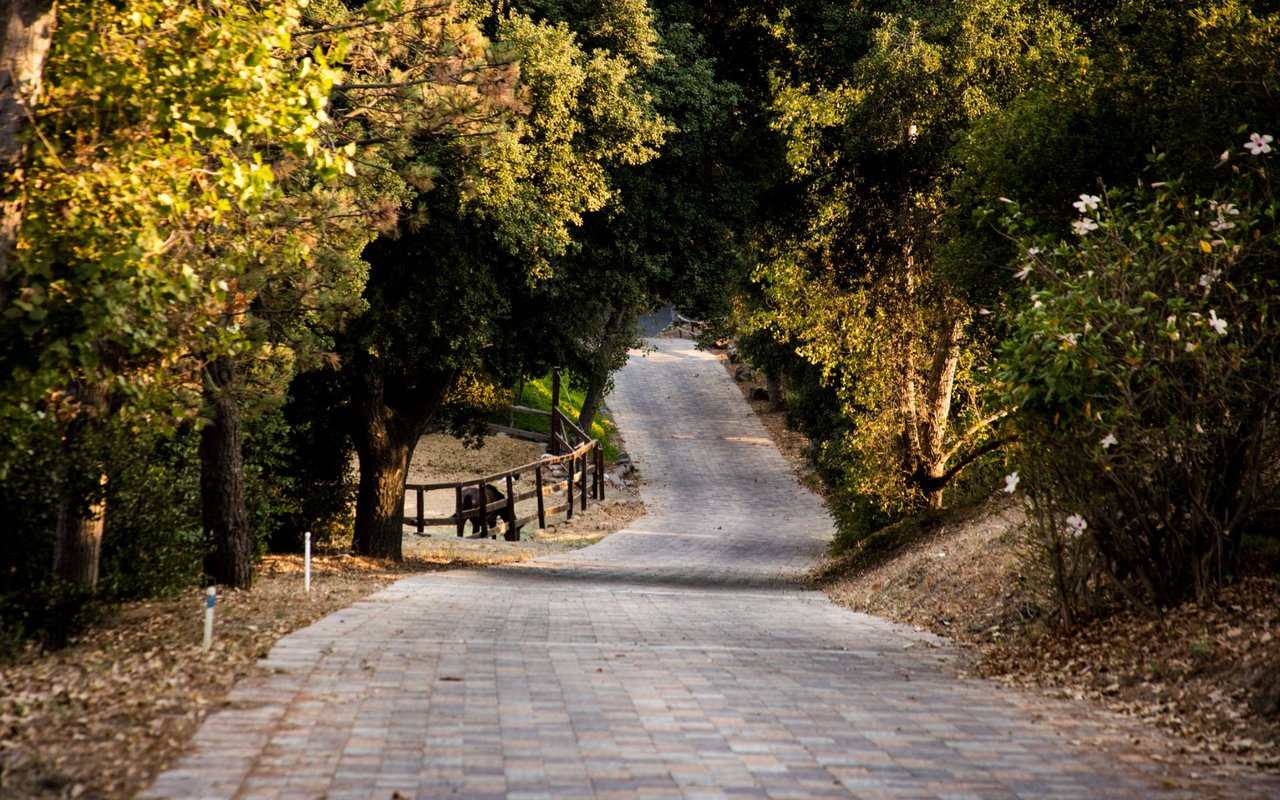
Trabuco Canyon is an unincorporated foothill community in eastern Orange County, where oak-lined canyon roads, custom homes, equestrian properties, and established residential neighborhoods meet the Santa Ana Mountains. Unlike the master-planned cities surrounding it, Trabuco Canyon is defined as much by natural terrain and rural history as by residential development.
The name also requires some geographic context. “Trabuco Canyon” can refer to the historic canyon itself, while Trabuco Canyon mailing addresses and the broader 92679 area may encompass nearby communities with very different ownership structures and residential character. Buyers can encounter rustic canyon properties along Live Oak Canyon and Trabuco Canyon roads, traditional neighborhoods near Robinson Ranch and Wagon Wheel, gated enclaves, and homes positioned near the Cleveland National Forest.
For real estate buyers, that variation is central to the search. A wooded property with acreage and horse facilities should not be compared with a newer detached home governed by an HOA simply because both use a Trabuco Canyon address. Lot, jurisdiction, utilities, access, wildfire exposure, association structure, and proximity to services can all materially affect ownership.
Trabuco Canyon offers one of the more varied residential markets in South Orange County. Housing ranges from cabins and older canyon homes to custom residences, ranch properties, equestrian estates, traditional detached homes, and attached housing in more developed portions of the broader area.
Much of the market’s appeal comes from attributes that are increasingly difficult to find elsewhere in Orange County: larger parcels, mature oak trees, hillside and mountain views, open space, privacy, and immediate access to trails and wildland.
That same diversity makes broad market averages less useful. A custom home on several acres can have little in common with a neighborhood residence on a conventional lot. Buyers and sellers benefit from comparing properties according to their actual setting and ownership characteristics rather than relying primarily on ZIP-code-wide pricing.
Land and setting are major value drivers.
Usable acreage, privacy, mature trees, views, equestrian improvements, trail access, and proximity to open space can create scarcity. A parcel that appears large on paper may contain steep terrain, creek setbacks, access limitations, or areas that are difficult to improve, making usable land more important than raw acreage alone.
For conventional residential properties, buyers may place greater weight on floor plan, lot position, renovation quality, garage capacity, HOA amenities, school assignment, and access to regional roads.
Specialized Trabuco Canyon properties often have few direct substitutes.
Buyers seeking an equestrian property, a wooded custom home, a large usable parcel, or a residence with direct trail access may wait for the right opportunity rather than choose from a large pool of similar listings.
The best comparable sale may therefore be farther away but share the same acreage, utility structure, topography, architecture, or rural setting. In Trabuco Canyon, price per square foot rarely tells the whole story.
Trabuco Canyon’s housing reflects the area’s transition from ranching and rural canyon settlement to more conventional suburban development around the foothills.
Architecture is highly varied. Buyers may encounter rustic cottages, ranch-style homes, Spanish and Mediterranean residences, contemporary remodels, custom estates, tract homes, townhomes, and properties designed specifically around horses or other outdoor uses.
The historic canyon and surrounding foothills contain some of the area’s most individual properties.
Custom homes may sit beneath mature oaks, along winding canyon roads, or on elevated parcels overlooking surrounding ridges. Some offer substantial land and privacy, while others occupy smaller but highly distinctive sites shaped by creeks, slopes, rock formations, or dense vegetation.
For buyers, the lot deserves as much attention as the residence. Driveway access, road conditions, drainage, slope stability, utility connections, emergency access, and the location of neighboring homes can all influence daily life and future improvement potential.
Large parcels can also create maintenance responsibilities uncommon in conventional neighborhoods, including vegetation management, private fencing, drainage systems, outbuildings, and extensive landscaping.
Trabuco Canyon has a longstanding equestrian identity, and select properties are configured for horses.
Private improvements may include barns, stalls, paddocks, arenas, tack spaces, turnout areas, fencing, and trailer access. Nearby trail systems and open land can add another dimension to equestrian ownership.
Not every large parcel permits or practically supports the same number or type of animals. Buyers should verify zoning, existing permits, usable acreage, access, drainage, water availability, and the configuration of equestrian facilities for the specific property.
One of the most important parts of a Trabuco Canyon home search is understanding what the address actually represents.
The Trabuco Canyon Water District serves a broad foothill service area that includes Trabuco Canyon as well as nearby communities such as Robinson Ranch, Trabuco Highlands, Walden, Rancho Cielo, Portola Hills, Santiago Canyon Estates, and Dove Canyon. Municipal boundaries, HOAs, and residential character do not necessarily follow the mailing name.
For that reason, buyers should identify the exact community, governing jurisdiction, association, and utility providers attached to each property.
The historic canyon area offers the most rural version of Trabuco Canyon living.
Live Oak Canyon Road and Trabuco Canyon Road wind through mature oak and sycamore landscapes toward the Santa Ana Mountains. Homes can be widely spaced and highly individual, with rural roads, horse properties, custom residences, and older canyon structures contributing to the area’s character.
Road access, utilities, drainage, creek proximity, wildfire planning, and emergency access can differ significantly from one parcel to another.
Real estate searches using the Trabuco Canyon name or ZIP code may also surface more conventionally planned neighborhoods near Rancho Santa Margarita.
These areas can include detached homes, townhomes, community parks, pools, HOAs, and easier access to shopping and regional roads. The ownership experience can therefore be much closer to suburban South Orange County than to the historic canyon.
Wagon Wheel provides another foothill residential setting with detached and attached housing and convenient access toward Oso Parkway and the regional toll-road system.
Buyers should avoid assuming that every 92679 property provides a rural canyon lifestyle. The exact neighborhood may be the most important piece of information in the listing.
Trabuco Canyon sits against some of Orange County’s most substantial protected and recreational landscapes.
The Cleveland National Forest provides hiking, mountain biking, horseback riding, camping, trail running, scenic driving, and access deeper into the Santa Ana Mountains. The Trabuco Ranger District includes trail and road systems extending from the foothill communities into national forest land.
Closer to developed neighborhoods, O’Neill Regional Park surrounds portions of Arroyo Trabuco and Tijeras Creek and creates a major open-space buffer between Trabuco Canyon and surrounding communities.
O’Neill Regional Park encompasses thousands of acres of natural land and includes more than 20 miles of hiking and riding trails, camping, equestrian camping, picnic areas, and a nature center.
Its trail system connects toward surrounding foothill routes and reinforces the outdoor identity of the larger Trabuco Canyon area.
Buyers should still consider trail activity, wildlife, vegetation, slopes, and wildfire exposure when evaluating homes near large open-space areas.
Trabuco Canyon is also a gateway toward trails and recreation deeper in the Santa Ana Mountains.
Routes associated with Holy Jim Canyon, Trabuco Trail, and other forest roads have long connected the canyon floor with higher elevations and mountain destinations. Access conditions can change following storms, wildfire, trail reconstruction, or Forest Service closures.
One of the biggest differences between buying in Trabuco Canyon and buying in a conventional subdivision is that infrastructure can vary by location.
Trabuco Canyon Water District provides domestic water across an approximately 8,200-acre service area, drawing from both local groundwater and imported supplies. The district also manages wastewater infrastructure in portions of its more developed service area.
That does not mean every rural property has identical utility connections.
Buyers should verify water service, sewer or wastewater arrangements, electricity, gas or propane, internet connectivity, trash service, and any private systems serving the individual property.
A home in a master-planned neighborhood may connect to conventional public infrastructure, while a rural canyon property can involve different arrangements.
Road access is another property-specific consideration.
Some homes are reached by conventional public streets, while more rural parcels may involve private roads, shared driveways, narrow access, or steep approaches. Buyers should understand maintenance responsibilities and legal access where relevant.
Drainage is equally important in canyon terrain. Creek corridors, slopes, storm runoff, culverts, retaining systems, and previous grading should be evaluated carefully, particularly on older or highly customized properties.
Wildfire planning is a central ownership consideration in Trabuco Canyon.
The community sits at the wildland-urban interface, where residences meet foothill vegetation and national forest land. Fire-hazard classifications vary by parcel, but buyers should expect wildfire risk, insurance availability, vegetation management, and home hardening to be important parts of due diligence.
This should not be treated as a generic Orange County concern. The individual property’s terrain, vegetation, road access, construction, and relationship to surrounding wildland all matter.
Buyers should review current fire-hazard mapping and natural-hazard disclosures for the specific parcel.
Roofing, vents, windows, decks, fencing, vegetation clearance, tree maintenance, and defensible space can influence both risk and insurance considerations.
Insurance should be investigated early in the purchasing process rather than after contingencies are underway. Availability and pricing can vary by carrier and property.
Trabuco Canyon is primarily associated with Saddleback Valley Unified School District, although exact assignments depend on the property.
Trabuco Elementary School is located directly within the canyon on Trabuco Canyon Road and serves grades K–6.
Properties in the broader mailing area may have different elementary, middle, and high school assignments depending on their exact location.
Buyers should use Saddleback Valley Unified School District’s current school locator for the individual property before relying on a neighborhood name or older listing.
This is especially important in Trabuco Canyon because the mailing address can encompass properties spread across a large and geographically varied area.
Trabuco Canyon sits east of Lake Forest and Mission Viejo and north of Rancho Santa Margarita, with the Santa Ana Mountains rising immediately to the east.
Trabuco Canyon Road and Live Oak Canyon Road provide important canyon connections, while more developed neighborhoods have access toward Santa Margarita Parkway, Antonio Parkway, Oso Parkway, and the SR-241 toll road.
Rancho Santa Margarita provides many of the closest shopping, dining, grocery, and service destinations for portions of the Trabuco Canyon area.
Lake Forest and Mission Viejo offer additional commercial, medical, and employment connections, while SR-241 provides a route toward Irvine and central Orange County.
A rural canyon property may add meaningful driving time compared with a home near the mouth of the canyon. Buyers who commute regularly should test the route from the actual property rather than relying on ZIP-code-level estimates.
Buying in Trabuco Canyon begins with identifying exactly what kind of ownership experience the buyer wants.
A rural custom property under mature oaks, an equestrian parcel, and a suburban home in a planned foothill neighborhood require different comparisons and different due diligence.
Start with the features that cannot easily be changed: land, topography, access, jurisdiction, utilities, wildfire exposure, view, privacy, and surrounding open space. Then evaluate the house itself.
For rural homes, walk as much of the land as practical and understand how the parcel functions.
Evaluate usable acreage, slopes, creek areas, driveway access, drainage, neighboring parcels, vegetation, utility locations, outbuildings, and future improvement potential.
For homes in planned communities, HOA obligations, lot placement, parking, amenities, nearby roads, and open-space orientation may be more relevant.
The phrase “Trabuco Canyon” can describe very different properties. The strongest purchase begins with understanding which version of the canyon a specific home actually offers.
An experienced Trabuco Canyon real estate agent should understand both rural properties and the more conventional neighborhoods associated with the broader area.
That expertise should include acreage, equestrian improvements, wildfire and insurance considerations, utilities, drainage, access, HOA structures, open-space adjacency, and the challenge of identifying meaningful comparable sales for unusual homes.
Tim Smith Real Estate Group works throughout South Orange County and currently represents property within the broader Trabuco Canyon market, providing buyers and sellers with local context across both residential neighborhoods and more specialized foothill properties.
No. Trabuco Canyon is an unincorporated community in Orange County rather than an incorporated city. The Trabuco Canyon mailing name and broader service area can also encompass nearby neighborhoods with different municipal, HOA, and ownership structures.
Trabuco Canyon offers custom homes, rural canyon properties, equestrian and ranch residences, large-lot homes, traditional detached properties, townhomes, and attached housing. Property type and ownership structure vary significantly by location.
Yes. Select properties offer equestrian facilities or larger parcels that support horse-oriented living. Buyers should verify zoning, permitted uses, usable acreage, stable facilities, trailer access, and trail connectivity for the individual property.
Yes. Trabuco Canyon sits along substantial wildland and foothill areas. Buyers should review parcel-specific fire-hazard mapping, natural-hazard disclosures, insurance availability, vegetation management, home-hardening features, and emergency access.
Start with the exact community, jurisdiction, lot, usable land, topography, road access, utilities, wildfire exposure, insurance, property condition, and HOA structure where applicable.
For rural or equestrian properties, also evaluate drainage, fencing, outbuildings, stable facilities, trail access, and future improvement potential.
In Trabuco Canyon, understanding the land and infrastructure can be every bit as important as understanding the house.
1,378 people live in Trabuco Canyon, where the median age is 51.3 and the average individual income is $87,152. Data provided by the U.S. Census Bureau.
Total Population
Median Age
Population Density Population Density This is the number of people per square mile in a neighborhood.
Average individual Income
There's plenty to do around Trabuco Canyon, including shopping, dining, nightlife, parks, and more. Data provided by Walk Score and Yelp.
Explore popular things to do in the area, including Diversified Avocado Products, Qtrade International Corporation, and SEL Summer Horse Camp.
| Name | Category | Distance | Reviews |
Ratings by
Yelp
|
|---|---|---|---|---|
| Dining | 0.19 miles | 0 reviews | 0/5 stars | |
| Dining | 0.19 miles | 0 reviews | 0/5 stars | |
| Active | 1.33 miles | 0 reviews | 0/5 stars | |
| Beauty | 0.19 miles | 0 reviews | 0/5 stars | |
| Beauty | 0.19 miles | 6 reviews | 5/5 stars | |
|
|
||||
|
|
||||
|
|
||||
|
|
||||
|
|
||||
|
|
Trabuco Canyon has 452 households, with an average household size of 2.84. Data provided by the U.S. Census Bureau. Here’s what the people living in Trabuco Canyon do for work — and how long it takes them to get there. Data provided by the U.S. Census Bureau. 1,378 people call Trabuco Canyon home. The population density is 189 and the largest age group is Data provided by the U.S. Census Bureau.
Total Population
Population Density Population Density This is the number of people per square mile in a neighborhood.
Median Age
Men vs Women
Population by Age Group
0-9 Years
10-17 Years
18-24 Years
25-64 Years
65-74 Years
75+ Years
Education Level
Total Households
Average Household Size
Average individual Income
Households with Children
With Children:
Without Children:
Marital Status
Blue vs White Collar Workers
Blue Collar:
White Collar: