Seal Beach is a small coastal city at the northwestern edge of Orange County, where a walkable beach town, established suburban neighborhoods, a gated oceanfront colony, and one of Southern California’s best-known 55+ communities share the same city limits. Its compact scale and location between Long Beach and Huntington Beach give Seal Beach a character that feels different from the larger coastal cities surrounding it.
The city’s residential areas are unusually distinct. Old Town places homes within walking distance of Main Street, the pier, and the beach. Marina Hill, often called The Hill, sits above Pacific Coast Highway with established single-family streets and access to Gum Grove Nature Park. Surfside Colony offers gated coastal living on the south side of Anaheim Bay. College Park East and West provide more conventional suburban neighborhoods north of I-405, while Leisure World operates as a large age-restricted community with its own ownership structure and amenities.
For buyers, those differences matter more than the Seal Beach name alone. Housing type, beach access, lot size, parking, HOA or cooperative structure, flood exposure, and proximity to major roads can vary substantially from one part of the city to another.
Seal Beach offers a broad housing mix for a relatively small city. Buyers can find beachfront and near-beach homes, custom residences, cottages, traditional single-family neighborhoods, townhomes, condominiums, and age-restricted cooperative or condominium ownership within Leisure World.
Because these property types occupy very different settings, citywide averages provide only limited context. A custom home near the sand in Old Town, a single-family property on The Hill, a Surfside residence, and a Leisure World unit should not be evaluated as though they belong to one competitive set.
Coastal proximity is one of the clearest value drivers in southern Seal Beach.
Homes near the beach, pier, Main Street, and the Gold Coast tend to attract buyers who prioritize walking access and a traditional beach-town environment. Ocean views, lot dimensions, garage parking, outdoor space, and redevelopment quality can all create meaningful differences between nearby properties.
On The Hill, buyers may prioritize larger lots, quieter streets, elevation, mature landscaping, and proximity to Gum Grove Nature Park. In College Park East and West, lot position, remodeling, cul-de-sac settings, neighborhood parks, and regional access can become more important.
For Surfside, beachfront position, architecture, parking, gated access, and exposure to coastal conditions create another specialized value set.
Seal Beach is relatively compact, and highly specific homes can be difficult to replace.
A wide-lot Old Town home near the beach, a fully renovated property on The Hill, or a substantial Surfside residence may have few direct alternatives at any given time. Buyers should compare homes according to neighborhood, lot, condition, ownership structure, and relationship to the coast rather than relying only on citywide price per square foot.
Seal Beach developed in distinct phases, and its housing reflects that history.
Old Town contains some of the city’s oldest residential fabric alongside significant remodels and newer custom homes. Marina Hill developed primarily during the mid-20th century as a single-family neighborhood. College Park East and West followed later, while Surfside has its own coastal development pattern. Leisure World introduced a completely different ownership model and housing type.
Old Town is the historic and most walkable portion of Seal Beach.
Residential streets extend inland from the ocean around Main Street and the pier, with cottages, duplexes, traditional detached homes, remodeled residences, and newer custom construction represented. Some lots are compact and parking can be tight, while other properties offer wider or deeper parcels that are relatively rare near the coast.
The Gold Coast along Ocean Avenue represents one of the city’s most specialized residential locations, where larger single-family properties occupy prime positions near the beach.
For buyers, exact location matters. Distance to the sand, relationship to Main Street, traffic patterns, lot width, garage access, and outdoor space can all influence the ownership experience.
Marina Hill developed largely in the 1950s and sits north of Pacific Coast Highway. The neighborhood is often referred to locally as The Hill and consists primarily of established single-family homes.
Its elevation and residential street pattern provide a different experience from Old Town, with less direct beach activity and convenient access to Gum Grove Nature Park.
College Park East and College Park West were developed primarily in the 1960s and provide another version of Seal Beach living north of I-405. These neighborhoods feature traditional suburban streets, detached homes, yards, and easier regional access while remaining part of the same coastal city.
Seal Beach is made up of several clearly defined residential areas rather than one uniform neighborhood. For buyers, deciding which part of the city fits their priorities usually makes the home search much more efficient.
Old Town is centered around the beach, pier, Main Street, and the surrounding residential grid.
Main Street provides restaurants, cafes, shops, and everyday services within a compact commercial district that leads directly toward the ocean. Eisenhower Park sits beside the pier and reinforces the connection between the town center and coastline.
Bridgeport lies immediately north of Old Town, west of Pacific Coast Highway and near the San Gabriel River. Its housing includes attached and higher-density options alongside nearby single-family areas.
For buyers who want walkability to the coast and local businesses, Old Town and nearby areas are the natural starting point.
The Hill offers a quieter single-family environment above Pacific Coast Highway. Homes are generally set on more conventional residential lots than many properties near the beach, and mature streets, elevation, and nearby open space distinguish the neighborhood.
Hellman Ranch sits immediately north and includes a limited collection of single-family residences alongside preserved open land and wetlands. Its lower-density setting creates another residential option for buyers who want greater separation from Old Town while remaining close to the coast.
Surfside Colony is a gated residential community on the south side of Anaheim Bay at the southeastern edge of Seal Beach.
The community contains single-family homes in a narrow coastal setting between the ocean and bay area. Beach access, gated entry, limited land, and a highly distinctive streetscape make Surfside one of the city’s most specialized real estate markets.
Buyers should evaluate each home according to its exact position within the colony, ocean exposure, views, parking, architectural condition, and coastal due-diligence requirements.
College Park East and West provide a more suburban alternative to Seal Beach’s coastal neighborhoods.
Developed primarily in the 1960s, these communities contain detached single-family homes, established landscaping, neighborhood parks, and convenient connections to I-405, I-605, Los Alamitos, and surrounding employment centers.
For buyers who value a larger traditional neighborhood environment more than walking access to the beach, these areas can offer a very different ownership experience within Seal Beach.
Leisure World is a major part of Seal Beach’s residential landscape and should be understood as its own specialized market.
The gated 55+ community covers more than 500 acres and includes thousands of homes, greenbelts, clubhouses, recreation, a nine-hole golf course, fitness facilities, arts and hobby spaces, community transportation, and numerous clubs and activities.
Most residences are held through stock-cooperative ownership within self-governing Mutual corporations, while Mutual 17 is organized as a condominium association. That distinction has practical implications for financing, monthly assessments, property taxes, maintenance, and the purchase process.
Buyers considering Leisure World should work with professionals familiar with its ownership structure rather than treating a unit like a conventional condominium elsewhere in Seal Beach.
Seal Beach’s traditional town center is one of the community’s most distinctive assets.
Main Street runs toward the ocean and pier, creating a compact district where restaurants, coffee shops, boutiques, services, residential streets, and the beach sit within a relatively small area.
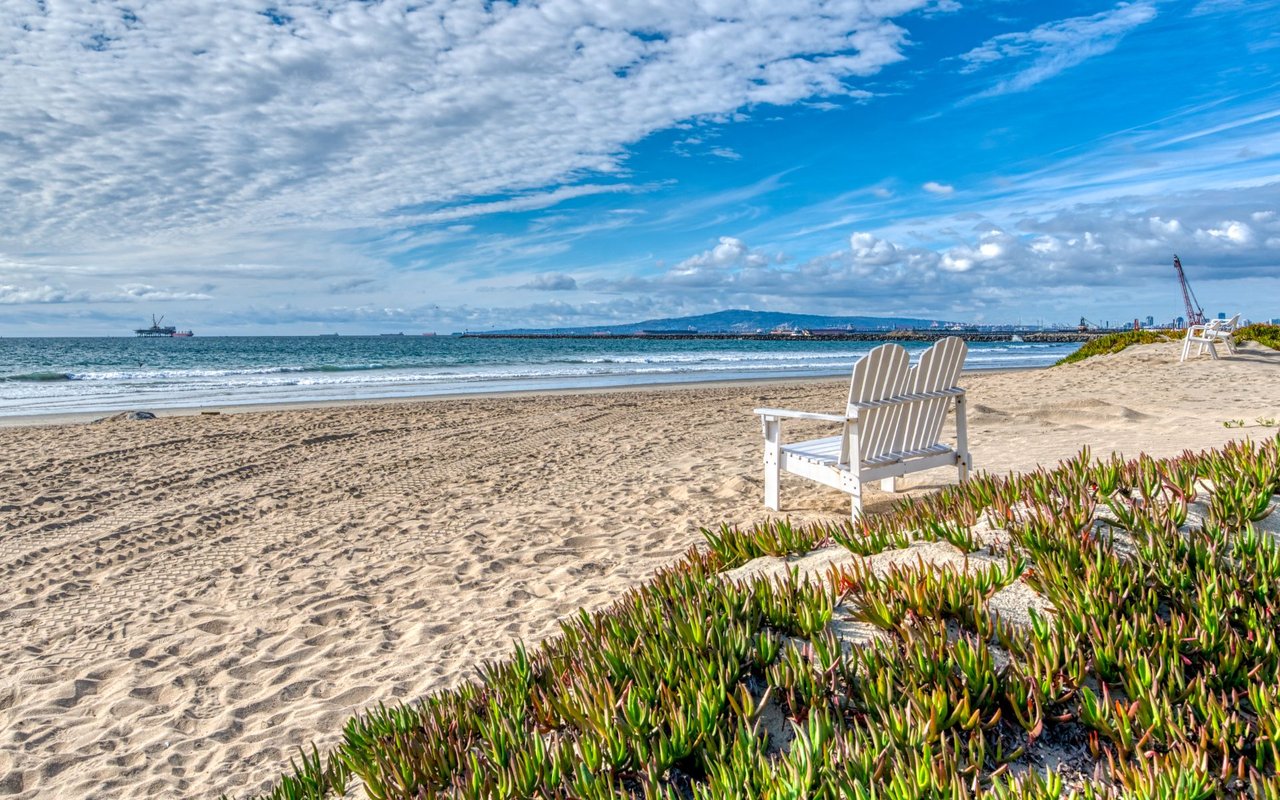
Seal Beach has approximately 1.5 miles of beach, and its wooden pier has long served as the visual anchor of the coastline.
The Seal Beach Pier extends from the foot of Main Street into the Pacific and is one of the city’s most recognizable landmarks.
For nearby residents, the pier, beach, Eisenhower Park, and Main Street can all become part of daily life rather than destinations requiring a drive.
That convenience also brings tradeoffs. Beach visitors, seasonal activity, parking demand, coastal weather, and event traffic can affect streets closest to the ocean. Buyers considering Old Town should experience the neighborhood during both quiet weekdays and busier summer periods.
Despite its compact size, Seal Beach contains several important open-space environments.
Gum Grove Nature Park sits along the edge of the Los Cerritos Wetlands and provides shaded trails through eucalyptus trees. The city also maintains neighborhood parks and recreation facilities across its residential areas.
Farther north, the Seal Beach National Wildlife Refuge preserves a substantial wetland environment inside Naval Weapons Station Seal Beach.
Gum Grove Nature Park is located on The Hill and borders the Los Cerritos Wetlands.
Its trail system and wooded setting provide a natural contrast to the city’s beach and suburban neighborhoods. For residents of Marina Hill and nearby areas, the park can function as an everyday walking and recreation destination.
Seal Beach National Wildlife Refuge protects hundreds of acres of coastal wetland within the Naval Weapons Station.
Because it lies inside an active military installation, general public access is limited and typically occurs through scheduled guided programs rather than everyday recreation.
Even with limited access, the refuge is a significant part of Seal Beach’s geography and helps preserve one of the remaining coastal wetland systems in the region.
Seal Beach is served largely by Los Alamitos Unified School District, which also serves Los Alamitos, Rossmoor, Surfside, and portions of neighboring communities.
School assignment depends on the individual property rather than the Seal Beach name alone.
Buyers for whom a particular school is important should verify the current elementary, middle, and high school assignments using the district’s address-based information before making a purchase decision.
This is particularly relevant in Seal Beach because its separated residential areas do not necessarily correspond neatly with school attendance assumptions.
Seal Beach sits at the boundary between Orange and Los Angeles counties, immediately south of Long Beach and north of Huntington Beach.
Pacific Coast Highway provides the principal coastal connection, while Seal Beach Boulevard links the shoreline with northern neighborhoods and I-405. I-605 terminates near the city, providing direct access toward Long Beach, Los Angeles County, and inland employment centers.
Old Town and The Hill prioritize proximity to Pacific Coast Highway and the beach, while College Park East, College Park West, and Leisure World sit closer to major freeway connections.
Long Beach Airport is nearby, and employment centers in Long Beach, northern Orange County, and central Orange County are accessible through the regional freeway network.
For buyers who commute regularly, the exact part of Seal Beach matters. A home near the sand and a home north of I-405 may share the same city name but provide very different daily transportation experiences.
Buying in Seal Beach begins with identifying which version of the city matches the buyer’s priorities.
Old Town emphasizes beach access and walkability. The Hill offers established single-family streets and nearby open space. Surfside provides a gated coastal environment. College Park offers suburban residential living with stronger freeway access. Leisure World provides an age-restricted community with an entirely different ownership structure.
Coastal buyers should evaluate flood and coastal-hazard information, insurance, salt-air exposure, drainage, and the condition of exterior materials.
Surfside and other beach-adjacent properties can require additional attention to coastal conditions and property-specific development requirements.
HOA buyers should review current dues, reserves, insurance, rules, and maintenance responsibilities. Leisure World purchasers need to understand the relevant Mutual, cooperative or condominium ownership structure, monthly assessments, and purchase requirements.
An experienced Seal Beach real estate agent should understand why Old Town, The Hill, Surfside, College Park, Leisure World, and other residential pockets trade differently.
That expertise should extend to coastal homes, parking and lot constraints, renovation history, cooperative ownership, HOA structures, school boundaries, and the scarcity of comparable properties in specialized locations.
Tim Smith Real Estate Group works throughout coastal Orange County and the surrounding Southern California market, providing buyers and sellers with the context needed to evaluate Seal Beach homes within the correct neighborhood and property type.
Seal Beach offers beach houses, custom coastal homes, traditional detached residences, townhomes, condominiums, gated Surfside properties, and age-restricted cooperative and condominium ownership within Leisure World. Housing type varies substantially by neighborhood.
Major residential areas include Old Town, Marina Hill or The Hill, Bridgeport, Hellman Ranch, Surfside Colony, College Park East, College Park West, and Leisure World. Each offers a different relationship to the beach, open space, amenities, and regional transportation.
Yes. Surfside Colony is a gated coastal community within the City of Seal Beach, located on the south side of Anaheim Bay. Its limited supply of single-family homes and direct relationship to the beach make it a specialized local market.
Not usually. Most Leisure World residences are stock cooperatives organized through individual Mutual corporations, while Mutual 17 is a condominium association. Buyers should understand the specific ownership and assessment structure before purchasing.
Start with neighborhood, beach proximity, lot and parking, property condition, ownership structure, HOA or cooperative obligations, school assignment where relevant, insurance, and commute needs.
For coastal homes, also evaluate flood exposure, salt-air conditions, drainage, and any property-specific development considerations.
In Seal Beach, choosing the right neighborhood and ownership structure can be every bit as important as choosing the home itself.
24,868 people live in Seal Beach, where the median age is 61.2 and the average individual income is $67,571. Data provided by the U.S. Census Bureau.
Total Population
Median Age
Population Density Population Density This is the number of people per square mile in a neighborhood.
Average individual Income
There's plenty to do around Seal Beach, including shopping, dining, nightlife, parks, and more. Data provided by Walk Score and Yelp.
Explore popular things to do in the area, including Hughes Glynda Shaklee Distr, Xtreme Couture, and Siemens Business Services.
| Name | Category | Distance | Reviews |
Ratings by
Yelp
|
|---|---|---|---|---|
| Dining | 1.99 miles | 0 reviews | 0/5 stars | |
| Shopping | 0.99 miles | 0 reviews | 0/5 stars | |
| Shopping | 1.51 miles | 0 reviews | 0/5 stars | |
| Shopping | 1.91 miles | 0 reviews | 0/5 stars | |
| Active | 0.64 miles | 0 reviews | 0/5 stars | |
| Active | 1.75 miles | 0 reviews | 0/5 stars | |
| Beauty | 0.4 miles | 0 reviews | 0/5 stars | |
| Beauty | 0.63 miles | 2 reviews | 3/5 stars | |
| Beauty | 0.63 miles | 0 reviews | 0/5 stars | |
| Beauty | 0.63 miles | 7 reviews | 4.4/5 stars | |
| Beauty | 1.11 miles | 0 reviews | 0/5 stars | |
| Beauty | 1.97 miles | 0 reviews | 0/5 stars | |
| Beauty | 1.97 miles | 0 reviews | 0/5 stars | |
| Beauty | 2 miles | 3 reviews | 5/5 stars | |
| Beauty | 2.01 miles | 5 reviews | 5/5 stars | |
| Beauty | 2.02 miles | 3 reviews | 5/5 stars | |
| Beauty | 2.02 miles | 0 reviews | 0/5 stars | |
| Beauty | 2.03 miles | 2 reviews | 3/5 stars | |
| Beauty | 2.03 miles | 0 reviews | 0/5 stars | |
| Beauty | 2.03 miles | 0 reviews | 0/5 stars | |
|
|
||||
|
|
||||
|
|
||||
|
|
||||
|
|
||||
|
|
Seal Beach has 12,948 households, with an average household size of 1.9. Data provided by the U.S. Census Bureau. Here’s what the people living in Seal Beach do for work — and how long it takes them to get there. Data provided by the U.S. Census Bureau. 24,868 people call Seal Beach home. The population density is 2,207 and the largest age group is Data provided by the U.S. Census Bureau.
Total Population
Population Density Population Density This is the number of people per square mile in a neighborhood.
Median Age
Men vs Women
Population by Age Group
0-9 Years
10-17 Years
18-24 Years
25-64 Years
65-74 Years
75+ Years
Education Level
Total Households
Average Household Size
Average individual Income
Households with Children
With Children:
Without Children:
Marital Status
Blue vs White Collar Workers
Blue Collar:
White Collar: