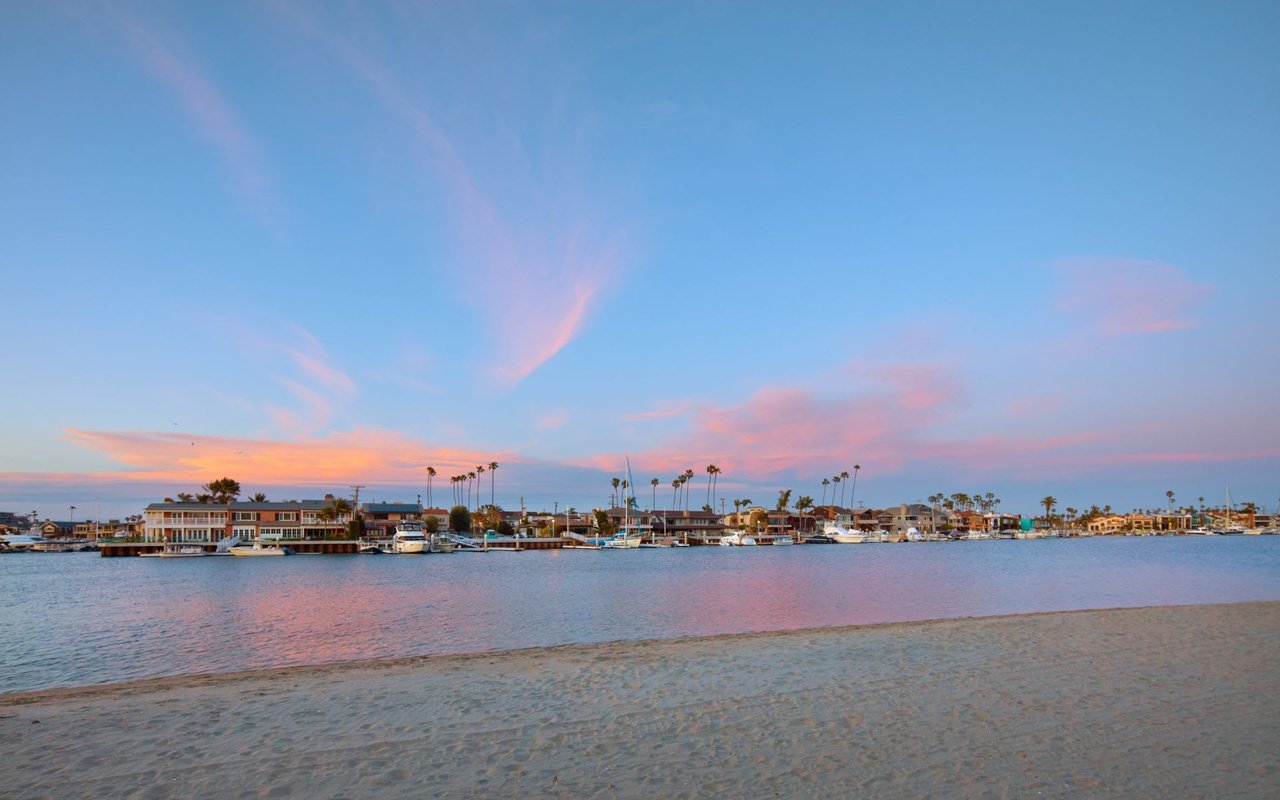
Long Beach is one of Southern California’s most varied coastal cities, combining oceanfront neighborhoods, protected bayfront communities, historic residential districts, high-rise downtown living, established inland neighborhoods, major parks, and one of the region’s most active waterfronts.
That diversity is essential to understanding Long Beach real estate. Naples and the Peninsula are shaped by canals, Alamitos Bay, boating, and limited waterfront land. Belmont Shore places residents close to the beach and the shops and restaurants of Second Street. Belmont Heights and Bluff Park are known for historic architecture and mature streets. Bixby Knolls, Los Cerritos, and California Heights offer a more traditional residential environment farther inland, while Downtown provides condominiums, lofts, and high-rise living near the waterfront.
For buyers, the city should be approached as a collection of distinct micro-markets rather than one housing market. Property type, architectural character, water access, parking, lot size, historic status, school assignment, and proximity to commercial districts can all change significantly within a few miles.
Long Beach offers one of the broadest housing mixes in coastal Los Angeles County, from waterfront estates and historic Craftsman homes to beach cottages, traditional single-family residences, condominiums, lofts, and high-rise units.
That breadth makes citywide averages only a starting point. A canal-front residence on Naples Island, a Bluff Park historic home, and a Downtown condominium serve very different buyers. Water frontage, parking, lot configuration, historic designation, renovation quality, and walkability can all materially influence value.
The features that are difficult to reproduce tend to carry the greatest weight.
For waterfront homes, dock capability, frontage, seawall condition, canal or bay position, and views can be central to value. In coastal neighborhoods, walking distance to the beach and Second Street, garage parking, lot width, and street position can matter significantly.
Historic neighborhoods introduce another set of considerations. Architectural integrity, permitted renovations, original details, lot size, and the property’s status within a designated historic district may all influence the market.
Farther inland, buyers may prioritize larger lots, mature landscaping, privacy, neighborhood character, school boundaries, and access to freeways or employment centers.
One of the most useful early decisions is whether the buyer wants a distinctly coastal lifestyle or a more traditional residential setting.
Belmont Shore, Naples, the Peninsula, Bluff Park, and Alamitos Beach place residents closer to the shoreline, bay, restaurants, and waterfront recreation. The tradeoffs can include smaller lots, greater density, tighter parking, visitor activity, and higher premiums for water proximity.
Inland areas such as Bixby Knolls, Los Cerritos, California Heights, Park Estates, and neighborhoods near El Dorado Park can offer larger lots, broader residential streets, and a different sense of space while remaining within the same city.
Long Beach developed across more than a century, creating an unusually rich mix of architecture. Craftsman bungalows, Spanish Colonial Revival homes, Tudor Revival residences, Streamline Moderne buildings, mid-century houses, contemporary remodels, waterfront estates, and modern condominiums all appear within the city.
Numerous designated historic districts and individual landmarks make preservation an important part of the residential landscape.
Long Beach’s waterfront market includes several distinct forms of ownership.
Naples contains homes positioned along canals as well as interior residences on the islands. The Peninsula places homes between the Pacific-facing beach and Alamitos Bay, while portions of Belmont Shore and Belmont Park sit close to both ocean and bay recreation.
Some properties include private docks or other water-related rights, but waterfront functionality varies. Buyers should verify dock dimensions, permits, seawall responsibilities, mooring arrangements, and the type of boating access associated with the specific residence.
A water view alone should not be treated as equivalent to functional waterfront ownership.
Long Beach is especially notable for the concentration of intact early- and mid-20th-century residential architecture.
Bluff Park includes substantial Craftsman and Period Revival homes near the ocean bluff. Belmont Heights, Bluff Heights, California Heights, Carroll Park, Rose Park, and other designated districts preserve different chapters of the city’s architectural history.
For buyers, historic designation can be both an asset and a responsibility. Exterior changes to designated landmarks or properties within historic districts may require additional review and approval.
A buyer planning major exterior remodeling should understand those requirements before assuming a project can proceed in the same way it would on a non-designated property.
Long Beach is too large and varied to evaluate through one neighborhood lens. The strongest home search usually begins by narrowing the city to a few areas that fit the buyer’s priorities.
Naples is one of Long Beach’s most distinctive residential communities. Developed around three islands and a network of canals, the neighborhood includes waterfront homes, interior residences, narrow streets, pedestrian paths, bridges, docks, and direct access to Alamitos Bay.
The canals support kayaking and paddleboarding, while nearby bay waters provide access to sailing and boating. Waterfront buyers should evaluate dock and seawall conditions carefully because construction and alterations can involve specific City permitting requirements.
Belmont Shore offers a different coastal experience. Second Street forms a highly walkable commercial corridor of restaurants, shops, and services, while the beach and Alamitos Bay sit nearby. Housing includes detached homes, duplexes, apartments, condominiums, and remodeled coastal residences.
The Peninsula extends between the ocean and Alamitos Bay, creating a narrow residential environment where beach and bay access become defining features.
Belmont Heights and Bluff Park combine coastal proximity with some of Long Beach’s strongest historic residential architecture.
Bluff Park occupies the ocean bluff and includes broad residential streets, mature landscaping, and architecturally significant homes near its namesake park. Belmont Heights extends inland and east with a mix of historic and later housing.
Alamitos Heights sits farther east near Recreation Park, Colorado Lagoon, and Marine Stadium. Its single-family streets can offer more residential separation while keeping Belmont Shore and Alamitos Bay nearby.
These neighborhoods can be particularly relevant to buyers who want coastal access without living directly within the densest beach district.
North and central Long Beach offer another version of the city.
Bixby Knolls is known for tree-lined residential streets, larger single-family homes, and a commercial corridor centered around Atlantic Avenue. Los Cerritos, near Virginia Country Club, contains substantial homes and mature landscaping in one of the city’s older residential areas.
California Heights is a designated historic district with a strong concentration of period architecture and established streets.
These neighborhoods often appeal to buyers prioritizing lot size, architectural character, mature surroundings, and residential scale over immediate beach access.
Downtown Long Beach is the city’s most urban residential market.
Condominiums, lofts, apartments, and high-rise residences place owners near Pine Avenue, The Promenade, the East Village Arts District, the waterfront, Shoreline Village, cultural destinations, restaurants, entertainment, and public transportation.
High-rise ownership requires a different type of due diligence than a detached home. HOA finances, reserves, building insurance, parking, assessments, amenities, management, and any pending major building projects should all be reviewed carefully.
Long Beach’s protected bay environment creates a boating and recreation market distinct from homes facing the open Pacific.
Alamitos Bay supports sailing, kayaking, paddleboarding, marinas, beaches, and waterfront recreation. Naples, Belmont Shore, the Peninsula, Belmont Park, and surrounding neighborhoods all have different relationships to the bay.
For waterfront buyers, the physical water infrastructure is part of the real estate.
In Naples, dock work can require Harbor Structure Construction permits, and seawall or waterfront improvements may involve additional responsibilities. Buyers should confirm the permitted status of existing structures rather than relying solely on listing language.
Dock size should also be matched to the intended vessel. Water depth, canal position, turning space, bridge clearance where relevant, and access into Alamitos Bay can all affect actual boating utility.
Long Beach provides both ocean-facing beaches and calmer bay beaches. Belmont Shore fronts the Pacific and sits close to Alamitos Bay, while the Peninsula is nearly surrounded by water.
For buyers, the distinction is meaningful: some prioritize surf and direct beach proximity, while others value protected water, docks, sailing, or paddle access.
Historic architecture is unusually visible in Long Beach and can be a meaningful part of property value.
The city has designated numerous historic districts, including Belmont Heights, Bluff Park, California Heights, Carroll Park, Rose Park, and others. These neighborhoods preserve different combinations of Craftsman, Spanish Colonial Revival, Tudor Revival, Art Deco, Streamline Moderne, and other architectural styles.
A historic designation should be investigated before purchase.
Exterior modifications to designated properties may require a Certificate of Appropriateness, and buyers planning additions, window replacements, façade changes, or other visible work should understand applicable design guidelines.
Interior remodeling may involve a different approval path, but standard building permits still apply when required.
For buyers who value historic architecture, these protections can help preserve neighborhood character. For buyers planning extensive exterior transformation, they can also influence the feasibility and timing of a project.
Long Beach combines coastal recreation with an extensive system of neighborhood and regional parks.
El Dorado Regional Park and Nature Center form one of the largest recreation and open-space areas in east Long Beach. The larger El Dorado complex includes trails, lakes, sports facilities, golf, picnic areas, a dog park, and natural habitat.
Bluff Park provides a very different experience, extending along Ocean Boulevard with Pacific views and direct connections to surrounding coastal neighborhoods.
El Dorado Regional Park is a defining feature of east Long Beach.
Its extensive acreage supports cycling, fishing, sports, picnicking, golf, nature trails, and community recreation. Residential neighborhoods surrounding the park tend to feel more suburban than coastal Long Beach, with detached homes and broader streets.
For buyers who prioritize parks, yards, and freeway access over walkability to the beach, east Long Beach can provide an entirely different value proposition from Belmont Shore or Naples.
Most of Long Beach is served by Long Beach Unified School District, one of California’s largest public school systems.
The district operates elementary, K–8, middle, and high schools across Long Beach and several neighboring communities. Major high schools within the broader system include Wilson, Millikan, Polytechnic, Jordan, Cabrillo, and others.
School assignment should still be verified for the exact property.
Long Beach Unified maintains an address-based School Finder that allows buyers to check current elementary, middle, and high school assignments.
This is particularly important in a city of Long Beach’s size. Two properties that appear close geographically can fall within different attendance boundaries.
Buyers for whom a specific school is important should verify the assignment directly before making a purchase decision rather than relying on neighborhood assumptions or older listing information.
Long Beach occupies the southern edge of Los Angeles County, immediately north of Orange County and west of communities including Seal Beach and Los Alamitos.
Its size creates different transportation patterns depending on neighborhood. I-710 provides a major north-south connection from Downtown and the Port area, while I-405 crosses the northern portion of the city. The SR-22 corridor serves eastern areas near Seal Beach and Los Alamitos.
Long Beach Airport provides commercial air service within the city.
Metro’s A Line connects Downtown Long Beach with Downtown Los Angeles, while Long Beach Transit provides local bus service throughout the city. Buyers with a regular commute should test the route from the actual property because transportation patterns vary substantially by neighborhood.
Buying in Long Beach begins with choosing the correct micro-market.
A Naples canal home, Belmont Shore residence, Bluff Park historic property, Bixby Knolls single-family home, Downtown condominium, and El Dorado Park-area residence should each be evaluated differently.
Start with the features that cannot easily be changed: neighborhood, water relationship, lot, architecture, parking, historic status, HOA structure, and access to employment or transportation. Then compare condition, renovations, and interior layout.
Waterfront buyers should investigate docks, seawalls, permits, water access, insurance, and property-specific flood considerations.
Historic-property buyers should review designation status and applicable rules before planning significant exterior changes.
Condominium and townhome buyers should examine HOA finances, reserves, insurance coverage, assessments, maintenance responsibilities, parking, and building condition.
These ownership structures are different enough that due diligence should be tailored to the property rather than applied generically across the city.
An experienced Long Beach real estate agent should understand why Naples, Belmont Shore, Bluff Park, Bixby Knolls, Los Cerritos, Downtown, and east Long Beach can trade differently.
That expertise should include waterfront functionality, historic architecture, parking, lot characteristics, HOA structures, renovation history, school boundaries, and the scarcity of comparable properties in specialized neighborhoods.
Tim Smith Real Estate Group works throughout coastal Southern California, providing buyers and sellers with the broader market context needed to evaluate Long Beach homes within the correct neighborhood and property type.
Long Beach offers waterfront estates, canal homes, historic residences, traditional detached homes, beach cottages, townhomes, condominiums, lofts, and high-rise residences. Housing type and architecture vary substantially by neighborhood.
Naples, the Peninsula, Belmont Shore, Belmont Park, and areas surrounding Alamitos Bay are among the city’s strongest waterfront and water-oriented markets. Each offers a different combination of beach access, canals, docks, bay recreation, and residential density.
Yes. Long Beach has numerous designated historic districts and individual landmarks, with notable concentrations of Craftsman, Spanish Colonial Revival, Tudor Revival, Art Deco, and other period architecture. Buyers should verify whether a specific property is subject to historic preservation requirements.
Yes. Metro’s A Line connects Downtown Long Beach with Downtown Los Angeles and other parts of the regional rail network. Transportation convenience varies considerably by neighborhood.
Start with neighborhood, property type, lot size, parking, architecture, water access where relevant, historic status, property condition, school assignment, and transportation needs.
For waterfront homes, also evaluate dock and seawall conditions, permits, insurance, and actual boating utility. For condominiums, review the HOA and building finances carefully.
In Long Beach, choosing the right neighborhood and ownership structure can be every bit as important as choosing the house itself.
455,548 people live in Long Beach, where the median age is 37.1 and the average individual income is $44,575. Data provided by the U.S. Census Bureau.
Total Population
Median Age
Population Density Population Density This is the number of people per square mile in a neighborhood.
Average individual Income
There's plenty to do around Long Beach, including shopping, dining, nightlife, parks, and more. Data provided by Walk Score and Yelp.
Explore popular things to do in the area, including M & N Seafood Market, Dania's Mexican Food, and Prospector Friday Nite Taco Cart.
| Name | Category | Distance | Reviews |
Ratings by
Yelp
|
|---|---|---|---|---|
| Dining | 0.33 miles | 0 reviews | 0/5 stars | |
| Dining | 0.39 miles | 1 review | 5/5 stars | |
| Dining | 0.42 miles | 2 reviews | 5/5 stars | |
| Dining | 0.43 miles | 4 reviews | 1/5 stars | |
| Dining | 0.54 miles | 2 reviews | 5/5 stars | |
| Dining | 0.65 miles | 0 reviews | 0/5 stars | |
| Dining · $$ | 0.71 miles | 0 reviews | 0/5 stars | |
| Dining | 0.72 miles | 1 review | 5/5 stars | |
| Dining | 0.78 miles | 0 reviews | 0/5 stars | |
| Shopping | 0.4 miles | 37 reviews | 2.9/5 stars | |
| Active | 0.23 miles | 38 reviews | 3.8/5 stars | |
| Active | 0.63 miles | 35 reviews | 5/5 stars | |
| Active | 0.71 miles | 14 reviews | 4.1/5 stars | |
| Active | 0.73 miles | 5 reviews | 5/5 stars | |
| Nightlife | 0.53 miles | 219 reviews | 4.7/5 stars | |
| Beauty | 0.26 miles | 4 reviews | 3.3/5 stars | |
| Beauty | 0.31 miles | 0 reviews | 0/5 stars | |
| Beauty | 0.35 miles | 13 reviews | 3.9/5 stars | |
| Beauty | 0.38 miles | 119 reviews | 4.9/5 stars | |
| Beauty | 0.48 miles | 1 review | 5/5 stars | |
| Beauty | 0.59 miles | 112 reviews | 3.9/5 stars | |
| Beauty | 0.66 miles | 22 reviews | 4.1/5 stars | |
| Beauty | 0.73 miles | 0 reviews | 0/5 stars | |
| Beauty | 0.74 miles | 1 review | 5/5 stars | |
|
|
||||
|
|
||||
|
|
||||
|
|
||||
|
|
||||
|
|
Long Beach has 170,927 households, with an average household size of 2.6. Data provided by the U.S. Census Bureau. Here’s what the people living in Long Beach do for work — and how long it takes them to get there. Data provided by the U.S. Census Bureau. 455,548 people call Long Beach home. The population density is 8,990 and the largest age group is Data provided by the U.S. Census Bureau.
Total Population
Population Density Population Density This is the number of people per square mile in a neighborhood.
Median Age
Men vs Women
Population by Age Group
0-9 Years
10-17 Years
18-24 Years
25-64 Years
65-74 Years
75+ Years
Education Level
Total Households
Average Household Size
Average individual Income
Households with Children
With Children:
Without Children:
Marital Status
Blue vs White Collar Workers
Blue Collar:
White Collar: