Lake Forest is a South Orange County city that combines established lake-centered neighborhoods, foothill master-planned communities, newer construction, parks, trails, and convenient access to Irvine and the broader employment corridor around the I-5 and 241.
The city incorporated in 1991 and expanded in 2000 to include Foothill Ranch and Portola Hills. That history helps explain why Lake Forest does not feel like one uniform master plan. The older core grew around two private lakes and mature residential neighborhoods, while later development pushed east into the foothills and introduced newer communities such as Baker Ranch, Serrano Summit, and Portola Center.
For buyers, the differences are meaningful. A 1970s home tied to one of the private lake associations offers a different ownership experience from a newer Baker Ranch property, a hillside home in Portola Hills, or a residence near Whiting Ranch Wilderness Park.
Lake Forest real estate is therefore best understood by neighborhood, housing age, association structure, amenities, and relationship to open space.
Lake Forest offers a wide range of housing, including traditional detached homes, lakefront and lake-oriented residences, townhomes, condominiums, newer luxury properties, and contemporary master-planned neighborhoods.
The market spans several generations of development. Established areas often provide mature landscaping, larger traditional lots, and access to long-standing community amenities. Newer neighborhoods tend to offer more current floor plans, energy-efficient construction, resort-style recreation, and newer community infrastructure.
Because those products are different, citywide averages only tell part of the story.
Neighborhood and lot position are important value drivers.
Homes with direct lake frontage or association access can appeal to buyers seeking a specific recreational lifestyle. In Foothill Ranch and Portola Hills, elevation, views, proximity to trails, and open-space orientation may matter more. In Baker Ranch and Serrano Summit, buyers may place greater emphasis on newer construction, modern layouts, community amenities, and outdoor living.
Condition also matters in established neighborhoods. Two similar homes built in the same decade may compete very differently if one has updated systems, remodeled interiors, newer windows, landscaping, and contemporary outdoor spaces.
Lake Forest contains many neighborhoods, but buyers looking for a specific property type can still face limited choices.
A lakefront home, a single-level residence, a premium hillside lot, a newer home with a larger yard, or a highly renovated property may have few direct substitutes.
For that reason, the strongest comparable sale is not always the closest. Housing age, HOA structure, neighborhood amenities, lot quality, view, condition, and development type can be more important than simple geographic distance.
Lake Forest's housing reflects more than five decades of residential development.
Buyers can find ranch-style and traditional suburban homes from the 1960s and 1970s, lake-oriented residences, townhomes, condominiums, 1990s foothill construction, and newer homes built through the 2010s and 2020s.
Much of central Lake Forest is characterized by mature residential neighborhoods with detached homes, private yards, established landscaping, and streets that developed alongside the city's two private lakes.
Some properties sit directly on the water, while others belong to one of the lake associations and receive access to recreation through membership. Buyers should verify the exact association attached to a specific address because proximity to a lake does not automatically create access to both lake systems.
Established homes may also offer renovation opportunities. Buyers should review roofs, plumbing, electrical systems, windows, drainage, additions, and the quality of previous remodeling rather than relying only on the original year built.
The eastern and northern portions of Lake Forest include a substantial amount of newer housing.
Baker Ranch introduced contemporary detached homes, townhomes, parks, pools, clubhouses, and extensive neighborhood recreation. Serrano Summit added additional newer housing closer to the city's civic center, while Portola Center expanded the residential offerings around Portola Hills with new homes, trails, parks, and open space.
These communities can appeal to buyers seeking newer systems, open floor plans, larger kitchens, energy-efficient features, and newer shared amenities.
The tradeoff may include smaller lots, more extensive HOA rules, or additional community costs depending on the property.
Lake Forest's residential areas can be divided broadly between the established lake neighborhoods, the foothill communities, and newer master-planned development.
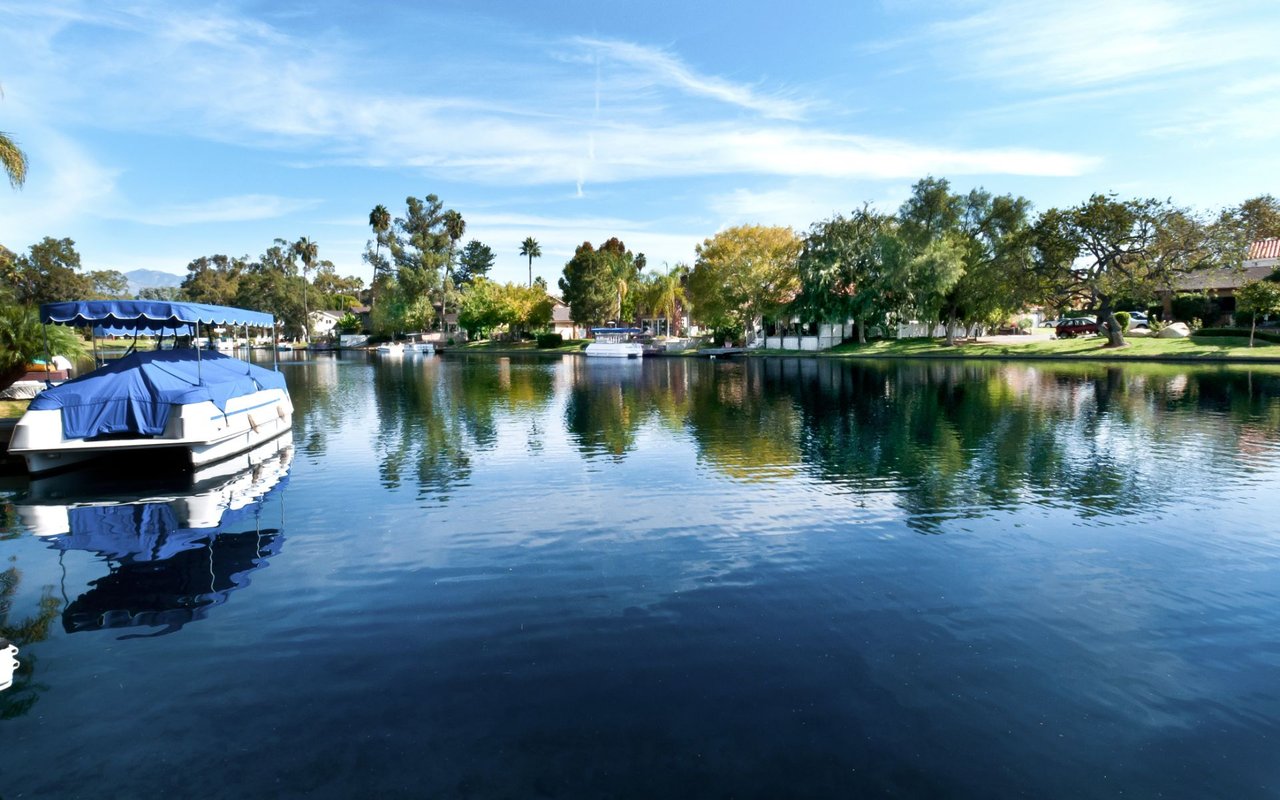
The city's namesake lake communities are among its most distinctive residential areas.
Lake Forest I is associated with the Lake Forest Community Association and the Lake Forest Beach & Tennis Club. Homes within the association receive access to recreation that includes pools, a swim lagoon, tennis and pickleball, fitness facilities, and the lake environment.
Lake Forest II is a separate master association and operates the Sun & Sail Club. Its homeowners have access to a different lake and recreation system, with pools, courts, community programming, and water-oriented amenities.
These are separate associations. Buyers should confirm which association a property belongs to, what amenities are included, current dues, and whether any sub-association also applies.
Foothill Ranch sits against the eastern hills and was incorporated into Lake Forest in 2000. The community combines single-family homes, townhomes, parks, schools, shopping, and direct proximity to Whiting Ranch Wilderness Park.
Its relationship to the foothills is one of its defining features. Some streets offer elevated views or easy access to trails, while Foothill Ranch Towne Centre provides nearby retail and services.
Portola Hills lies farther east and rises into the Saddleback foothills. The neighborhood includes established homes as well as newer development, including The Oaks at Portola Hills and the broader Portola Center area.
Buyers in Portola Hills should compare elevation, view, lot orientation, wildfire considerations, HOA structure, and proximity to the 241 in addition to the home itself.
Baker Ranch represents one of Lake Forest's largest newer residential environments.
Its villages include detached homes and attached housing connected by parks, trails, pools, clubhouses, playgrounds, and community gathering spaces. The architecture and streetscape are more contemporary than the city's older lake neighborhoods.
Serrano Summit offers another newer residential option near the civic center, while continuing development around Portola Hills has expanded the city's newer-home inventory.
For buyers comparing these communities, square footage alone is not enough. Lot size, parking, outdoor space, community facilities, HOA dues, tax and assessment obligations, and access to major roads should all be considered.
Lake Forest's two private lake systems are unusual within Orange County and remain one of the city's strongest identity markers.
They also require careful explanation because the lakes are not general city amenities.
The Lake Forest Community Association operates the Lake Forest Beach & Tennis Club.
Membership is tied to homes within the association and provides access to facilities including swimming pools, a swim lagoon, tennis and pickleball courts, basketball, volleyball, fitness facilities, and clubhouse space.
A buyer who values these amenities should confirm that the specific property is included in the association rather than assuming access based on neighborhood proximity.
Lake Forest II Master Homeowners Association operates the Sun & Sail Club and manages a large private planned community.
Homeowners within Lake Forest II are members of the master association and support its operation through assessments. The club provides pools, sports courts, fitness and recreation programming, and access to the association's lake environment.
Some Lake Forest II neighborhoods may also have sub-associations, creating more than one layer of dues or governance.
Understanding the exact association structure should be part of the purchase process.
Lake Forest provides a substantial mix of neighborhood parks, regional trails, sports facilities, and adjacent wilderness.
That outdoor network changes character across the city. Central neighborhoods connect with parks and creek corridors, while Foothill Ranch and Portola Hills sit much closer to large preserved foothill landscapes.
Whiting Ranch Wilderness Park encompasses approximately 2,500 acres immediately adjacent to Foothill Ranch.
Its trail system crosses oak woodland, stream corridors, grassland, chaparral, and sandstone terrain, with routes for hiking, mountain biking, and horseback riding.
For nearby residents, this creates unusually direct access to wilderness within a suburban setting.
Homes near natural open space can also require additional due diligence involving wildfire exposure, insurance, vegetation management, wildlife, slope conditions, and trail activity.
Lake Forest Sports Park is another major recreational asset.
The 86-acre complex includes athletic fields, a recreation center, gymnasium, event space, and passive areas. Elsewhere in the city, Serrano Creek Trail, Aliso Creek Trail, neighborhood parks, Etnies Skatepark, and smaller recreation areas create additional outdoor connections.
For buyers, proximity to a major park can be an amenity, but exact position matters. Homes immediately next to athletic fields or busy facilities can experience different traffic, lighting, and activity patterns than properties several streets away.
Lake Forest contains a wide range of association structures.
Some established homes belong to Lake Forest I or Lake Forest II. Other neighborhoods have independent HOAs, sub-associations, or no large master association. Newer communities may have extensive shared amenities and architectural controls.
That variety makes property-specific review important.
Buyers should identify every association attached to the property.
Review current dues, reserves, insurance, architectural standards, common-area responsibilities, planned assessments, parking restrictions, and maintenance obligations.
A home in Lake Forest II, for example, may belong to the master association and a separate neighborhood association. Attached housing can introduce additional responsibilities for roofs, exteriors, or shared structures.
Newer construction should also be evaluated according to total ownership cost rather than purchase price alone.
Property tax rates, special assessments, HOA dues, insurance, and utility costs can vary between communities. Buyers should review the preliminary title report, tax information, HOA documents, and current assessment details for the exact property.
Assumptions about one Lake Forest neighborhood should not automatically be applied to another.
Lake Forest is primarily served by Saddleback Valley Unified School District.
Schools within the city include Lake Forest Elementary, Santiago Elementary, Foothill Ranch Elementary, Portola Hills Elementary, Serrano Intermediate, and El Toro High School, among others depending on the property address.
Because attendance boundaries can shift and neighborhood names do not always align with school zones, buyers should verify assignments directly.
Saddleback Valley Unified provides an address-based school locator.
Buyers for whom a particular campus matters should confirm the current assignment before making a purchase decision rather than relying on listing language or proximity alone.
This is especially relevant when comparing newer neighborhoods with established portions of the city.
Lake Forest occupies a central South Orange County location between Irvine, Mission Viejo, Laguna Hills, and the foothill communities to the east.
I-5 provides the primary north-south freeway connection, while SR-241 serves Foothill Ranch, Portola Hills, Baker Ranch, and other eastern neighborhoods. Bake Parkway, Lake Forest Drive, El Toro Road, Alton Parkway, and Portola Parkway provide major local routes.
Lake Forest's northern and western neighborhoods offer relatively direct access toward Irvine, the Irvine Spectrum area, and central Orange County employment centers.
Foothill Ranch and Portola Hills can benefit from proximity to SR-241, while neighborhoods closer to I-5 may provide a more direct route toward Mission Viejo, Irvine, and coastal South Orange County.
For commuters, the best neighborhood depends not only on mileage but on which freeway or arterial serves the daily route.
Buying in Lake Forest begins with deciding which version of the city fits the buyer's priorities.
The private lake communities offer established neighborhoods and recreation tied to association membership. Foothill Ranch and Portola Hills emphasize elevation, open space, and trail access. Baker Ranch and Serrano Summit provide newer construction and more contemporary master-planned amenities.
Once the area is narrowed, buyers can compare the individual lot, home, and ownership structure.
Start with features that cannot easily be changed.
Consider the neighborhood's age, HOA structure, lake or recreation access, lot size, view, parking, proximity to trails, freeway access, and surrounding land uses.
For older homes, study renovation history and major systems. For newer homes, compare taxes, assessments, association costs, lot configuration, and community rules.
A newer home is not automatically the better fit, just as a larger established lot is not automatically the better value.
An experienced Lake Forest real estate agent should understand how the private lake neighborhoods, Foothill Ranch, Portola Hills, Baker Ranch, Serrano Summit, and other communities compete differently.
That expertise should include HOA structures, lake membership, newer construction, foothill considerations, views, open-space adjacency, renovation history, and the total ownership costs associated with different developments.
Tim Smith Real Estate Group has represented homes in Lake Forest's newer foothill communities, including The Oaks at Portola Hills, providing additional context for buyers and sellers evaluating both established and recent construction.
Yes. Lake Forest has two private lake systems associated with separate homeowner associations. Lake Forest I is connected with the Lake Forest Community Association and Beach & Tennis Club, while Lake Forest II is associated with the Sun & Sail Club. Access depends on the specific property and association membership.
Major areas include the Lake Forest I and Lake Forest II communities, Foothill Ranch, Portola Hills, Baker Ranch, Serrano Summit, and numerous established neighborhoods around El Toro Road, Lake Forest Drive, and Serrano Creek.
Yes. Lake Forest expanded its city limits in 2000 to include the master-planned communities of Foothill Ranch and Portola Hills.
Yes. Baker Ranch, Serrano Summit, Portola Center, and other newer developments have added homes built primarily in the 2010s and 2020s, complementing the city's substantial inventory of established housing.
Start with neighborhood, housing age, lot size, property condition, HOA structure, lake or recreation access, tax and assessment obligations, parking, school assignment, and commute needs.
For foothill properties, also consider views, wildfire and insurance issues, slopes, and open-space adjacency.
In Lake Forest, choosing the right community and ownership structure can be every bit as important as choosing the house itself.
85,846 people live in Lake Forest, where the median age is 40.4 and the average individual income is $58,506. Data provided by the U.S. Census Bureau.
Total Population
Median Age
Population Density Population Density This is the number of people per square mile in a neighborhood.
Average individual Income
There's plenty to do around Lake Forest, including shopping, dining, nightlife, parks, and more. Data provided by Walk Score and Yelp.
Explore popular things to do in the area, including The Great American Grill @ Hilton Garden Inn, Sparta, and House of Sound & Video.
| Name | Category | Distance | Reviews |
Ratings by
Yelp
|
|---|---|---|---|---|
| Dining · $$ | 1.09 miles | 0 reviews | 0/5 stars | |
| Shopping | 0.82 miles | 0 reviews | 0/5 stars | |
| Shopping | 1.26 miles | 0 reviews | 0/5 stars | |
| Active | 0.25 miles | 2 reviews | 1/5 stars | |
| Active | 0.41 miles | 0 reviews | 0/5 stars | |
| Active | 0.86 miles | 13 reviews | 5/5 stars | |
| Active | 1.2 miles | 0 reviews | 0/5 stars | |
| Active | 1.25 miles | 0 reviews | 0/5 stars | |
| Active | 1.26 miles | 0 reviews | 0/5 stars | |
| Active | 1.33 miles | 0 reviews | 0/5 stars | |
| Active | 1.33 miles | 0 reviews | 0/5 stars | |
| Active | 1.33 miles | 0 reviews | 0/5 stars | |
| Active | 1.33 miles | 0 reviews | 0/5 stars | |
| Beauty | 0.41 miles | 0 reviews | 0/5 stars | |
| Beauty | 1.02 miles | 0 reviews | 0/5 stars | |
| Beauty | 1.03 miles | 0 reviews | 0/5 stars | |
| Beauty | 1.09 miles | 0 reviews | 0/5 stars | |
| Beauty | 1.15 miles | 0 reviews | 0/5 stars | |
| Beauty | 1.33 miles | 1 review | 5/5 stars | |
| Beauty | 1.33 miles | 0 reviews | 0/5 stars | |
| Beauty | 1.33 miles | 1 review | 5/5 stars | |
| Beauty | 1.35 miles | 0 reviews | 0/5 stars | |
| Beauty | 1.35 miles | 0 reviews | 0/5 stars | |
| Beauty | 1.35 miles | 0 reviews | 0/5 stars | |
|
|
||||
|
|
||||
|
|
||||
|
|
||||
|
|
||||
|
|
Lake Forest has 30,246 households, with an average household size of 2.82. Data provided by the U.S. Census Bureau. Here’s what the people living in Lake Forest do for work — and how long it takes them to get there. Data provided by the U.S. Census Bureau. 85,846 people call Lake Forest home. The population density is 5,136 and the largest age group is Data provided by the U.S. Census Bureau.
Total Population
Population Density Population Density This is the number of people per square mile in a neighborhood.
Median Age
Men vs Women
Population by Age Group
0-9 Years
10-17 Years
18-24 Years
25-64 Years
65-74 Years
75+ Years
Education Level
Total Households
Average Household Size
Average individual Income
Households with Children
With Children:
Without Children:
Marital Status
Blue vs White Collar Workers
Blue Collar:
White Collar: