Irvine is one of Orange County’s largest master-planned cities, organized around distinct residential villages, employment centers, schools, parks, trails, and commercial districts rather than a single traditional downtown. That planning model is fundamental to understanding Irvine real estate. The city’s residential areas were intentionally planned as villages with their own character, density, and neighborhood amenities, so choosing where to live in Irvine often means choosing among several very different versions of the city.
Irvine’s estimated population reached 318,764 in 2025, up approximately 3.6% from the 2020 population base. Yet that scale is not experienced uniformly. Established villages such as Woodbridge, Turtle Rock, Northwood, and University Park feel different from newer communities such as Orchard Hills, Portola Springs, Cypress Village, and the neighborhoods surrounding Great Park. At the luxury end, Shady Canyon operates as a private estate and golf community within the larger Irvine market.
For buyers, citywide statistics tell only part of the story. Property type, village, school assignment, HOA structure, community facilities, age of construction, lot position, and proximity to employment or recreation centers can all meaningfully affect value and everyday living.
Irvine contains a broader housing spectrum than its reputation for newer master-planned homes may suggest. The city includes established single-family neighborhoods, newer detached homes, townhomes and condominiums, higher-density residential districts, gated communities, and custom luxury estates. Irvine’s own planning history reflects that evolution from predominantly lower-density single-family villages into a more diverse mix of housing types.
That diversity can create significant differences within the Irvine housing market. A condominium in an established village, a newly built detached residence near Great Park, and a custom Shady Canyon estate do not compete for the same buyer and should not be evaluated as though they represent one uniform market.
Village and micro-location matter. Buyers may weigh lot size, age and condition, renovation quality, community amenities, HOA obligations, school assignment, proximity to open space, and access to employment centers.
Property scarcity matters too. Homes with unusually large lots, protected views, single-level floor plans, private gates, or prime positions near open space can trade differently from nearby properties that appear similar by square footage alone.
At the highest end, Shady Canyon demonstrates how specialized Irvine real estate can become. Custom architecture, substantial homesites, canyon or golf-course orientation, and limited inventory make property-specific analysis considerably more useful than simple citywide price-per-square-foot comparisons.
One of the most important Irvine buying decisions is whether to prioritize an established village or newer construction.
Older communities may offer mature landscaping, established parks and recreation, different lot configurations, and homes that have already undergone one or more generations of remodeling. Newer villages often offer contemporary floor plans, newer systems, extensive association amenities, and a more consistent architectural environment.
Neither is automatically the better value. Buyers should compare renovation needs, HOA dues, special assessments, lot utility, parking, privacy, community amenities, and the long-term appeal of the particular location.
Irvine’s housing stock reflects several decades of development, which gives buyers choices ranging from smaller attached residences to major custom estates.
The city’s planning documents identify estate, low-density, medium-density, condominium, apartment, and other residential land-use categories, while newer mixed-use districts add another layer to the housing market.
Detached homes are found throughout communities including Northwood, Woodbridge, Turtle Rock, University Park, Orchard Hills, Portola Springs, Stonegate, Eastwood, and the Great Park area.
The luxury segment becomes increasingly specialized. Gated communities, elevated lots, hillside positions, newer construction, and custom architecture can command significant premiums. Shady Canyon sits at the top of this spectrum, combining large homesites, custom estates, a private golf environment, and preserved canyon land.
Other luxury opportunities can be found in areas such as Orchard Hills, Turtle Ridge, Hidden Canyon, and select newer Irvine communities where elevation, views, gates, or larger residences distinguish properties from the broader market.
Condominiums and townhomes are an important part of Irvine real estate and can offer another entry point into the city while retaining access to village amenities.
Attached housing is distributed across both established and newer communities, so buyers should not assume that a condominium necessarily means older construction or fewer amenities. Some developments offer pools, recreation facilities, parks, and extensive common areas, while others have much simpler association structures.
The Irvine Business Complex and areas near major commercial and employment centers also illustrate Irvine’s evolution toward higher-density and mixed-use residential development.
The City of Irvine formally identifies planning areas including Orchard Hills, Northwood, Portola Springs, Woodbury, Woodbridge, Quail Hill, University Park, Turtle Rock, Shady Canyon, Turtle Ridge, Cypress Village, and Great Park, among others. These are more than neighborhood names: they represent different development periods, locations, housing types, and relationships to schools, parks, open space, and commercial areas.
For buyers, narrowing Irvine to several target villages is usually more useful than beginning with the city as a whole.
Woodbridge is one of Irvine’s best-known established master-planned villages. Its association encompasses approximately 1,700 acres and includes two landmark lakes, pools, parks, beach lagoons, tennis and pickleball facilities, and other community recreation. Housing ranges from attached residences to detached homes developed across several decades.
Turtle Rock and University Park sit closer to UC Irvine and southern Irvine’s open-space network. Their mature landscapes and established housing distinguish them from many newer neighborhoods. Northwood and Northwood Point occupy northern Irvine and include established residential streets alongside later development and gated sections.
These areas can be particularly relevant to buyers who prefer mature neighborhood character rather than prioritizing newly built housing.
Northern and eastern Irvine contain much of the city’s newer residential development. Orchard Hills and Portola Springs combine newer homes with elevated terrain and proximity to parks, trails, and open land.
Cypress Village, Stonegate, Eastwood, and Woodbury represent another generation of Irvine village planning, integrating housing with neighborhood schools, parks, recreation facilities, and commercial services.
When comparing these areas, buyers should look closely at lot size, neighborhood density, association structure, special assessments, school boundaries, and any ongoing or planned development nearby.
The communities surrounding Great Park represent a major chapter in Irvine’s continuing growth.
The City describes Great Park as a 1,300-acre regional destination for recreation, sports, culture, and community activity. Its long-term framework includes additional cultural, recreational, garden, lake, and open-space elements alongside existing sports and event facilities.
Housing in the surrounding area is generally newer and is integrated with community parks, pools, walking and cycling routes, and large-scale recreational amenities. Buyers should still compare the individual neighborhood, builder, HOA, and lot rather than treating the entire Great Park area as a single housing product.
Irvine’s village structure is more than a planning concept; it directly affects the home-buying experience.
Schools, parks, greenbelts, recreational facilities, commercial centers, and major streets were intentionally distributed throughout residential areas. Irvine’s General Plan specifically identifies this village structure as one of the city’s defining features.
As a result, two similarly priced Irvine homes can provide very different daily experiences depending on whether they sit near a village center, park, trail corridor, school, employment district, or major regional destination.
Many Irvine neighborhoods include HOA-managed pools, parks, clubhouses, landscaping, gates, recreation facilities, or other common amenities. Dues and the services they cover can vary substantially.
Some newer communities also lie within Community Facilities Districts that levy special taxes to fund public facilities and services. Great Park, for example, contains multiple improvement areas within City of Irvine Community Facilities District No. 2013-3.
Buyers should therefore evaluate total ownership costs rather than comparing purchase price alone. Association dues, special assessments, property taxes, and future obligations should all be verified for the specific property.
An effective Irvine home search often begins with location and lifestyle priorities before square footage.
Some buyers prefer an established neighborhood with mature landscaping. Others prioritize newer construction and newer systems. Open-space access, a gated setting, proximity to UC Irvine or the Spectrum, access to Great Park, commute patterns, private outdoor space, and association amenities can quickly narrow the city to a few relevant communities.
That is one of Irvine’s defining real-estate characteristics: the village can matter almost as much as the house.
Open space is another defining feature of Irvine’s planning.
The City currently reports 18 community parks, 37 neighborhood parks, and approximately 5,250 acres of permanently preserved open space, along with an interconnected bicycle network.
Southern Irvine connects to preserved landscapes including Bommer Canyon and Quail Hill, while parks, greenbelts, and trails are distributed throughout the city rather than concentrated in a single recreation district.
Great Park is Irvine’s largest individual recreational destination and extends across approximately 1,300 acres. Its existing and planned uses encompass sports, cultural attractions, gathering spaces, gardens, passive recreation, and large community events.
For buyers considering nearby homes, proximity to Great Park can be a significant lifestyle feature. But “near Great Park” is not sufficiently specific for a real-estate comparison. Access routes, individual neighborhoods, future construction, event activity, and lot position all affect the residential experience.
Irvine’s preserved land creates distinctive residential edges in places such as Shady Canyon, Quail Hill, Turtle Rock, Portola Springs, and other hillside communities.
The Quail Hill trail system, for example, connects into southern Irvine’s larger open-space network, while Irvine’s broader preservation strategy has protected extensive acreage around the developed city.
Homes adjoining open space or elevated terrain may offer views and additional separation from development, but the setting can also create property-specific considerations involving slopes, landscaping, wildfire planning, or insurance.
Schools are closely integrated into Irvine’s village planning. Irvine Unified School District explains that schools were intentionally placed near the center of neighborhoods as the master-planned city developed.
Today, IUSD serves more than 38,000 TK–12 students across elementary schools, K–8 schools, middle schools, comprehensive high schools, alternative education, and virtual programs.
For real estate buyers, however, the important issue is the specific school assignment, not a generalized statement about Irvine schools.
IUSD operates high schools including Irvine High School, Northwood High School, Portola High School, University High School, and Woodbridge High School, along with numerous elementary, K–8, and middle schools throughout the city.
Buyers should verify the current assignment for an individual address through IUSD’s School Locator before relying on proximity, an older listing, or assumptions based on a neighborhood name. The district maintains current attendance boundaries and separate school-choice policies.
That distinction is particularly important in a growing city where new schools and changing attendance areas can accompany residential development.
University of California, Irvine is a major institutional anchor in southern Irvine and gives the surrounding area a character distinct from other parts of the city.
Nearby planning areas include University Town Center, University Park, Turtle Rock, the University Research Center, and UCI itself.
For buyers, proximity to UCI may matter for employment or education, but the university’s broader influence also extends into healthcare, research, culture, and Irvine’s innovation economy.
Irvine occupies a central position within Orange County while also containing substantial employment centers of its own.
The city has historically identified UCI, the Irvine Business Complex, and Irvine Spectrum among its major employment concentrations. The Irvine Business Complex alone has been planned as a mixed-use employment district encompassing thousands of businesses and tens of thousands of jobs.
That matters to housing because commute patterns can differ significantly depending on which side of Irvine a buyer chooses.
The Irvine Spectrum area combines offices, research and industrial uses, housing, dining, shopping, and entertainment. The Irvine Business Complex near John Wayne Airport similarly combines major employment with an increasing residential presence.
These employment centers give Irvine a different pattern from a traditional bedroom community: many residents may work elsewhere in the same city.
For a buyer with a fixed workplace, choosing the correct village can therefore affect daily life more than a relatively small difference in home size.
Irvine is connected by major transportation corridors including I-5, I-405, SR-133, SR-241, and SR-73, depending on location within the city.
Irvine Station provides Metrolink Orange County and Inland Empire–Orange County service, Amtrak Pacific Surfliner connections, OCTA service, and other transportation links. The City describes it as Orange County’s busiest rail station.
Irvine’s iShuttle also connects employment areas with rail stations, including routes serving the Irvine Business Complex and Spectrum.
John Wayne Airport is nearby in Santa Ana and serves Irvine and surrounding Orange County communities, making airport proximity another meaningful consideration for frequent travelers.
Buying in Irvine requires more than comparing bedrooms, bathrooms, and square footage.
Start with the village and the property's position within it. Then examine HOA structure, school assignment when relevant, property taxes and special assessments, renovation history, parking, lot orientation, nearby development, and the condition of shared community amenities.
New construction deserves its own diligence. Builder incentives, upgrade pricing, lot premiums, association budgets, landscaping requirements, solar arrangements, and special assessments can materially change the final cost of ownership.
An experienced Irvine real estate agent should understand how values shift from village to village and why newer construction is not automatically more valuable than an older home in a stronger micro-location.
Local representation can also help buyers compare resale homes with builder inventory, understand association and special-assessment structures, assess remodeling history, and determine which properties genuinely compete with one another.
Tim Smith Real Estate Group works across Irvine’s housing spectrum, from attached residences to significant luxury estates, with dedicated experience in communities including Shady Canyon.
Irvine is organized into numerous villages and planning areas with different housing types, development histories, parks, schools, commercial centers, and community amenities. Buyers generally benefit from comparing individual villages rather than treating Irvine as one uniform housing market.
Irvine includes detached single-family homes, condominiums, townhomes, higher-density residences, gated communities, newer master-planned homes, and custom luxury estates. The mix varies substantially by village.
Yes. Much of Irvine’s newer residential development is concentrated in areas such as Great Park Neighborhoods, Orchard Hills, Portola Springs, and other northern and eastern communities. Buyers should compare the individual builder, lot, HOA structure, special assessments, and surrounding development rather than focusing on construction year alone.
No. Association obligations and special taxes vary by property and community. Some residences may have master and sub-association dues, some areas are within Community Facilities Districts, and other homes have different ownership structures. The actual HOA documents and property tax information should be reviewed for the individual home.
Begin with the characteristics that are difficult or impossible to change: village, location, lot, commute, community structure, open-space access, school assignment when relevant, and nearby development. Then compare the house itself.
In Irvine, choosing the right village can be every bit as important as choosing the right floor plan.
311,690 people live in Irvine, where the median age is 34 and the average individual income is $64,055. Data provided by the U.S. Census Bureau.
Total Population
Median Age
Population Density Population Density This is the number of people per square mile in a neighborhood.
Average individual Income
There's plenty to do around Irvine, including shopping, dining, nightlife, parks, and more. Data provided by Walk Score and Yelp.
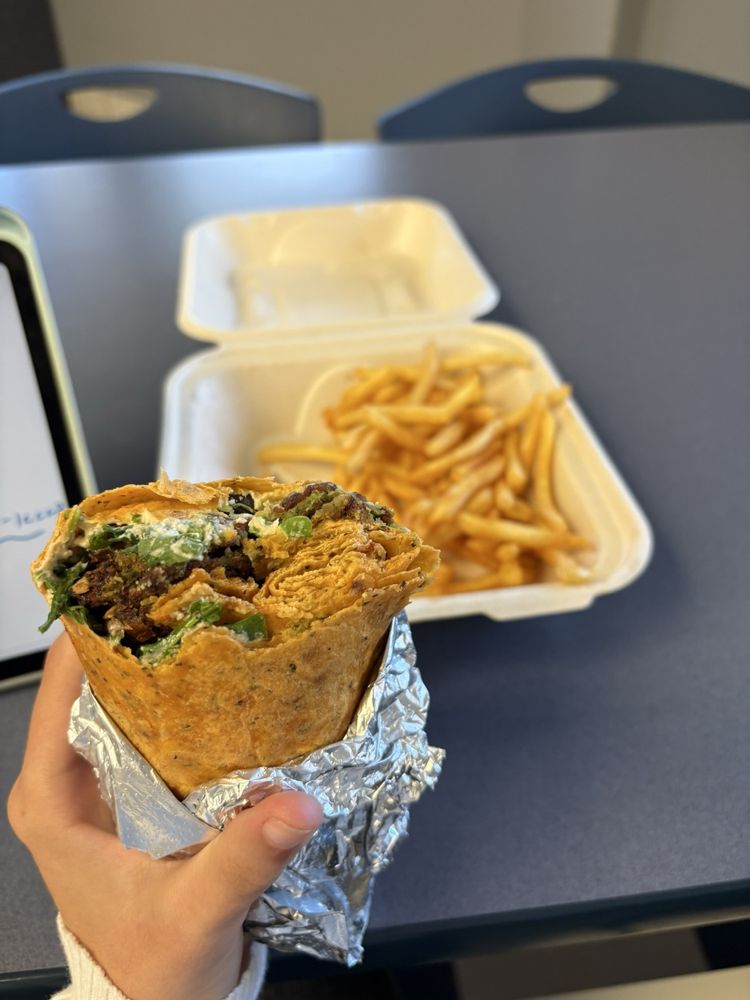
Explore popular things to do in the area, including Fresh N Lean, Irvine Valley College Cafeteria, and BZ Noodle.
| Name | Category | Distance | Reviews |
Ratings by
Yelp
|
|---|---|---|---|---|
| Dining | 0 miles | 0 reviews | 0/5 stars | |
| Dining · $ | 0.31 miles | 4 reviews | 3/5 stars | |
| Dining | 0.4 miles | 0 reviews | 0/5 stars | |
| Shopping | 0.77 miles | 114 reviews | 4.4/5 stars | |
| Shopping | 0.81 miles | 8 reviews | 2.9/5 stars | |
| Shopping | 0.92 miles | 5 reviews | 3.4/5 stars | |
| Active | 0.83 miles | 1 review | 3/5 stars | |
| Active | 0.85 miles | 0 reviews | 0/5 stars | |
| Active | 0.92 miles | 39 reviews | 4.8/5 stars | |
| Active | 1.12 miles | 0 reviews | 0/5 stars | |
| Active | 1.15 miles | 8 reviews | 5/5 stars | |
| Active | 1.15 miles | 5 reviews | 5/5 stars | |
| Active | 1.15 miles | 0 reviews | 0/5 stars | |
| Active | 1.17 miles | 2 reviews | 3.5/5 stars | |
| Beauty | 0.35 miles | 32 reviews | 4.8/5 stars | |
| Beauty | 0.4 miles | 3 reviews | 5/5 stars | |
| Beauty | 0.4 miles | 2 reviews | 5/5 stars | |
| Beauty | 0.87 miles | 0 reviews | 0/5 stars | |
| Beauty | 0.91 miles | 1 review | 5/5 stars | |
| Beauty | 1.02 miles | 545 reviews | 4.5/5 stars | |
| Beauty | 1.15 miles | 11 reviews | 4.9/5 stars | |
| Beauty | 1.15 miles | 0 reviews | 0/5 stars | |
| Beauty | 1.15 miles | 1 review | 5/5 stars | |
| Beauty | 1.16 miles | 601 reviews | 4.4/5 stars | |
|
|
||||
|
|
||||
|
|
||||
|
|
||||
|
|
||||
|
|
Irvine has 112,091 households, with an average household size of 2.65. Data provided by the U.S. Census Bureau. Here’s what the people living in Irvine do for work — and how long it takes them to get there. Data provided by the U.S. Census Bureau. 311,690 people call Irvine home. The population density is 4,750 and the largest age group is Data provided by the U.S. Census Bureau.
Total Population
Population Density Population Density This is the number of people per square mile in a neighborhood.
Median Age
Men vs Women
Population by Age Group
0-9 Years
10-17 Years
18-24 Years
25-64 Years
65-74 Years
75+ Years
Education Level
Total Households
Average Household Size
Average individual Income
Households with Children
With Children:
Without Children:
Marital Status
Blue vs White Collar Workers
Blue Collar:
White Collar: