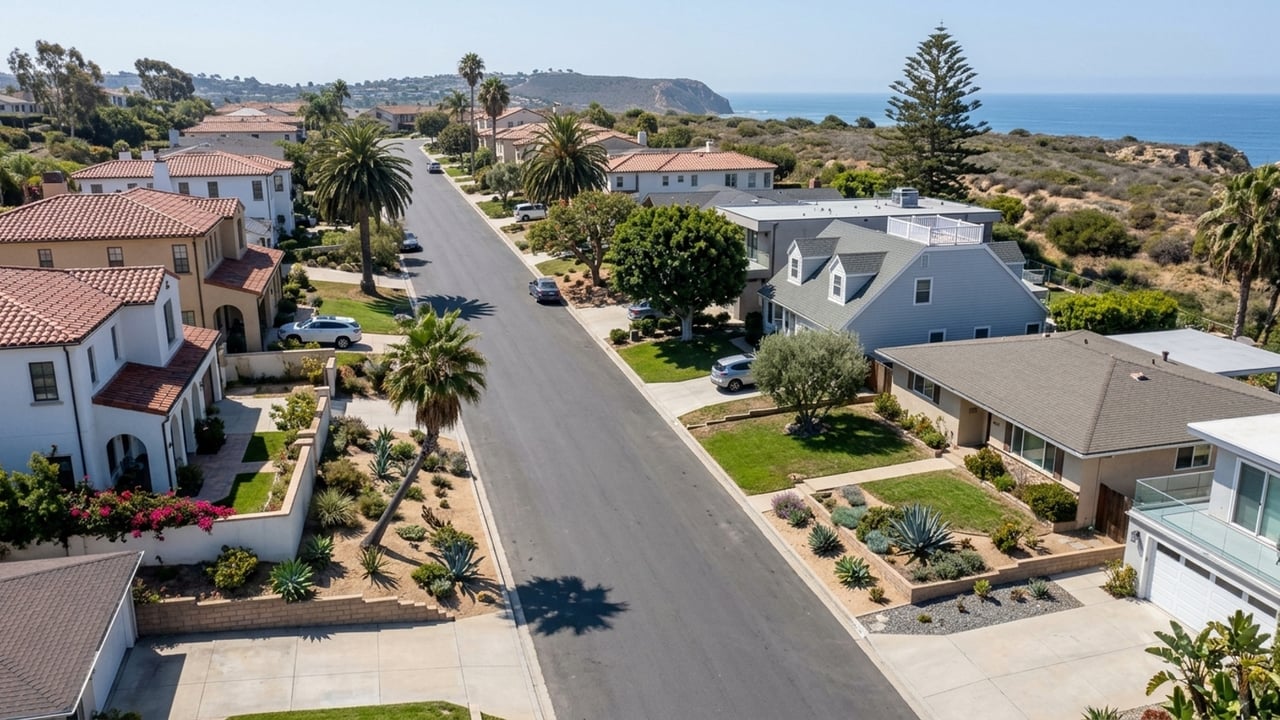
The median sale price for a home in Dana Point, CA, sits at $2,099,000 over the 90 days ending September 30, 2026. Because commissions are calculated as a percentage of the sale price, high property values mean that even a fraction of a percentage point translates to tens of thousands of dollars in fees.
Rule changes at the national and state level have also shifted how these fees get handled. Since August 17, 2024, offers to pay a buyer's agent no longer appear on MLS listings, moving those negotiations directly into purchase offers. Sellers now have more decisions to make about how they structure and negotiate agent pay before a property goes on the market.
Key Takeaway
Commissions in Dana Point are set by agreement, not by law, and cost about $10,500 for every half point at the citywide median price. If you're selling a house, you should negotiate what the fee buys, pricing strategy and negotiation terms, before chasing the lowest rate, since single-family homes sold furthest under list price. If you're selling a condo, the list-to-sale gap is smaller, which makes the rate itself the stronger lever to push on.
Who This Guide Is For
You're preparing to sell a Dana Point home and want to know what commission will cost, who pays which side, and what terms are negotiable before you sign a listing agreement.
Current Real Estate Commission Costs in Dana Point
Each commission point costs about $20,990 on the median Dana Point home. Rates aren't set by law and are entirely negotiable between the seller and the brokerage. To see how these fees fit into the bigger picture, review the steps for selling a home in Dana Point.
For house sellers, pricing and negotiation terms are the bigger lever. The median house sold at 97.9% of list, a gap of roughly $50,000, which is about two commission points. Condos sold at 99.2% of list, with nearly a third going over asking, a gap of about $11,000, less than one point's $13,850, so condo sellers have a cleaner case for negotiating the rate itself.
Commission Costs for a Single-Family House
Single-family homes in Dana Point reached a median sale price of $2,421,535 over the 90 days ending September 30, 2026, up 21.1% year over year. At that price, one commission point costs about $24,215. The lowest commonly negotiated fee for one side of the transaction comes out to roughly $60,540. Because values rose sharply over the past year, the same commission percentage now costs about a fifth more in actual dollars than it did a year ago.
The median Dana Point house sold about 2.1% under its list price, which is roughly $50,000 left on the table. Cutting a point from the commission rate saves around $24,000, but a weaker pricing or negotiation effort that widens the list-to-sale gap can wipe that out quickly.
Commission Costs for a Condo
Condos in the city sold for a median of $1,384,858 over the same 90-day period, up 24.9% from a year earlier. Each commission point on the median condo costs about $13,850. Condo prices rose faster than any other property type, so total commission dollars paid by sellers rose right alongside them.
Almost a third of Dana Point condos sold above list price in the last 90 days, and the median condo sold only 0.8% under asking, about $11,000. That gap is smaller than the cost of one commission point, so your net calculation is more straightforward than on the house side. Condo sellers also face HOA document and transfer charges that come out of proceeds alongside the commission, so it's worth accounting for those separately.
Where to Start Your Negotiation
The trade-offs you face depend on the type of property you own and the help you need. These questions are worth working through before you sit down with an agent:
- Are you selling a house or a condo? For a house, look closely at the list-to-sale gap and weigh the rate against the likely sale price. For a condo, starting with the listing rate or comparing a flat-fee option makes more sense.
- Will you offer to pay toward the buyer's agent up front, or handle it as a term in each offer? Decide this before you list.
- Do you need pricing, staging, and marketing help, or mainly MLS exposure and paperwork? Confirm what the fee covers first, then decide whether a discount model fits your situation.
- Do you know your bottom line after all seller costs? Estimate your net proceeds before agreeing to any fee structure.
Who Pays the Agent Fees in Dana Point Today?
MLS rules that took effect August 17, 2024, removed offers of buyer-agent compensation from listings. Any MLS participant working with a buyer must now enter into a written buyer agreement before touring a home in person or virtually. That changes how sellers handle compensation for both sides of the transaction.
Paying the Listing Agent
The seller pays the listing brokerage under the terms of a written listing agreement, typically out of sale proceeds through escrow at closing. The fee can be structured as a percentage of the sale price, a tiered rate, or a flat dollar amount. Get each agent's commission and scope of services in writing so you're clear on what you owe.
The rate is only one term in that contract. A long listing period or a broad safety clause can obligate you to pay the broker even after the listing ends. Read the agreement's term, cancellation language, and protection-period clause before you sign anything.
Paying the Buyer's Agent
Buyers now sign a written agreement with their own agent covering that agent's pay. A seller may still agree to cover some or all of that fee, either directly up front or as a concession requested in a purchase offer. Offering buyer-agent compensation can widen your buyer pool; leaving it to individual offers keeps the amount flexible.
Declining to contribute up front doesn't make the cost disappear. Buyers who want their agent's fee covered typically include it as a concession request in their offer, so treat it as part of your negotiation budget rather than a guaranteed saving.
How to Negotiate Your Real Estate Fees
Citywide, homes sold at a median 98.3% of list price over the 90 days ending September 30, 2026. That's about $35,700 under asking on the all-homes median, which is more than one and a half commission points. Pricing and negotiation shape your net proceeds just as much as the rate does, so you should negotiate the scope of services alongside the fee itself.
Confirming What the Fee Covers
Service lists can look identical on paper. Ask agents to detail exactly what their proposed fee includes: professional photography and video, staging, marketing reach, open houses, and transaction management. Verify who handles escrow follow-up once a contract is signed.
Before committing, check the agent's license status on the California DRE public lookup. Comparing agents purely on services won't tell you much about their pricing instincts, so ask each one to show how they arrived at a list price for comparable recent sales near your home.
Comparing the Fee to Your Final Sale Price
The median Dana Point home took 47 days to sell over the 90 days ending September 30, 2026. With a little over three months of supply on the market, buyers have time to compare properties and negotiate. A strong pricing strategy matters because a wider list-to-sale gap can cost you more than a slightly higher commission rate.
Citywide data only gets you so far. Your specific home's list-to-sale gap could be larger or smaller than the median. Ask for the list-to-sale history on comparable recent sales near your home, not just the citywide ratio.
Using Flat-Fee and Discount Listings
A flat fee or lower percentage rate typically covers MLS exposure and basic paperwork. Marketing, showings, and negotiation are either reduced, sold as separate add-ons, or handled entirely by the seller. This model fits best where the list-to-sale gap is historically small, which in Dana Point is currently the condo market.
A flat-fee listing still doesn't settle the buyer's side of the equation. Buyers' agents still need to be paid by someone, and if you're handling showings and offer negotiation yourself, price in your own time and any additional a la carte fees.
Commissions and Additional Seller Closing Costs
Commission is usually the largest line item when selling, but it's not the only expense deducted from your proceeds. Ask the escrow officer for an estimated seller net sheet before closing so you have the full picture.
Escrow fees, taxes, and loan payoffs all reduce the final amount wired to you, and knowing those figures early lets you set a realistic target net.
Other Seller Closing Costs
Orange County's documentary transfer tax rate is $1.10 per $1,000 of consideration when net consideration exceeds $100. Dana Point doesn't impose a separate city transfer tax; it receives a share of the county's collection. You'll also pay escrow and title charges as agreed in the purchase contract, any loan payoff, and HOA document and transfer fees if you're selling a condo.
Unless an exemption applies, California real estate withholding on Form 593 is 3.33% of the total sales price. Who pays escrow and title fees is negotiable, so your actual costs depend on the terms you accept from a buyer.
Estimated Net Proceeds on a $2.5 Million Sale
For illustration only: on a hypothetical $2,500,000 house sale, a listing-side fee at that rate equals $62,500. If you also agree to pay the same rate toward the buyer's agent, that adds another $62,500. From there you'd subtract the county transfer tax, escrow and title charges per your net sheet, and your remaining mortgage balance.
Dropping the listing side to the lowest common negotiated rate saves $12,500 in this scenario. But if a weaker negotiation results in a 1% wider list-to-sale gap, that costs you $25,000. This example uses illustrative rates rather than a Dana Point average, and California withholding can hold back part of your proceeds at closing, so confirm your exemption status with escrow early.
Dana Point Sale Data at a Glance
Real estate commissions are calculated based on the final sale price of the home. These recent market figures outline the baseline costs:
- Median sale price, all homes: $2,099,000, up 16.6% year over year (113 sales, 90 days ending 2026-09-30)
- Median sale price, single-family homes: $2,421,535, up 21.1% year over year (69 sales, 90 days ending 2026-09-30)
- Median sale price, condos: $1,384,858, up 24.9% year over year (36 sales, 90 days ending 2026-09-30)
- Median sale-to-list ratio: 98.3% all homes, 97.9% single-family, 99.2% condos (90 days ending 2026-09-30)
- Share sold above list price: 28.8% all homes, 26.5% single-family, 31.4% condos (90 days ending 2026-09-30)
- Median days on market: 47 all homes, 50 single-family, 44 condos (90 days ending 2026-09-30)
- Months of supply: 3.4 all homes, 3.2 single-family, 3.6 condos (90 days ending 2026-09-30)
- Active inventory: 126 all homes, 73 single-family, 42 condos (90 days ending 2026-09-30)
Dana Point Real Estate Commission FAQs
What Is the New Law on Real Estate Commissions in California?
California AB 2992 took effect January 1, 2025, requiring a written buyer-broker representation agreement before a purchase offer is executed. Agreements are capped at a three-month term, must address compensation, and apply to all property types. Nationwide NAR settlement changes also took effect August 17, 2024, removing offers of buyer broker compensation from the MLS, though commissions remain negotiable and are not fixed by law.
Is 3% Normal for a Realtor in Dana Point?
No rate is standard or set by law in Dana Point or anywhere else in California. At the citywide median, a 3% fee for one side of the transaction would cost $62,970. Negotiate a rate based on the specific services the brokerage provides.
Is 2% or 2.5% a Good Commission for Selling in Dana Point?
Whether a rate is good depends entirely on what the listing agreement includes. On the median condo price, a half-point difference between the two rates equals about $6,925. Compare the scope of services in writing before deciding which rate offers the better value for your sale.
How Much Does a Real Estate Agent Make per Sale in Dana Point?
Agents don't receive the full commission directly. Under California Business and Professions Code Section 10137, compensation must be paid to the employing broker, who then splits it with the agent before the agent pays their own business expenses. At 2.5% on the median condo price (36 sales, 90 days ending September 30, 2026), the gross commission to the brokerage is about $34,621 before any splits occur.
What Is the 80/20 Rule for Realtors?
This usually refers to a commission split where the agent keeps 80% and the brokerage keeps 20%. Under California law, a salesperson may only share compensation if it's paid through their responsible broker. Splits vary widely by brokerage depending on the level of support, marketing, and resources provided to the agent.
Do I Still Owe a Commission If My Listing Expires or I Cancel?
You might owe a fee if your agreement includes a safety clause and you sell the home to a buyer the agent introduced during the listing period. The California residential listing agreement requires a specific number of calendar days to be filled in for this protection period, which often ranges from 30 to 180 days. Review the term, cancellation, and protection-period language carefully before signing.
Can I Deduct Real Estate Commission When I Sell My Home?
Yes. Selling expenses such as commissions reduce the amount realized when calculating the gain on your home sale. Per IRS Publication 523, you subtract selling expenses, including real estate agent fees, from the selling price to determine your amount realized before calculating any taxable gain. Confirm your specific tax situation with a qualified tax professional.
Sources
- Redfin: Data Center
- California Civil Code Section 1670.50
- NAR practice changes to take effect August 17
- California Business and Professions Code Section 10137
- California DRE Public License Lookup
- Orange County Documentary Transfer Tax
- California Form 593 Real Estate Withholding
- C.A.R. Residential Listing Agreement
- IRS Publication 523