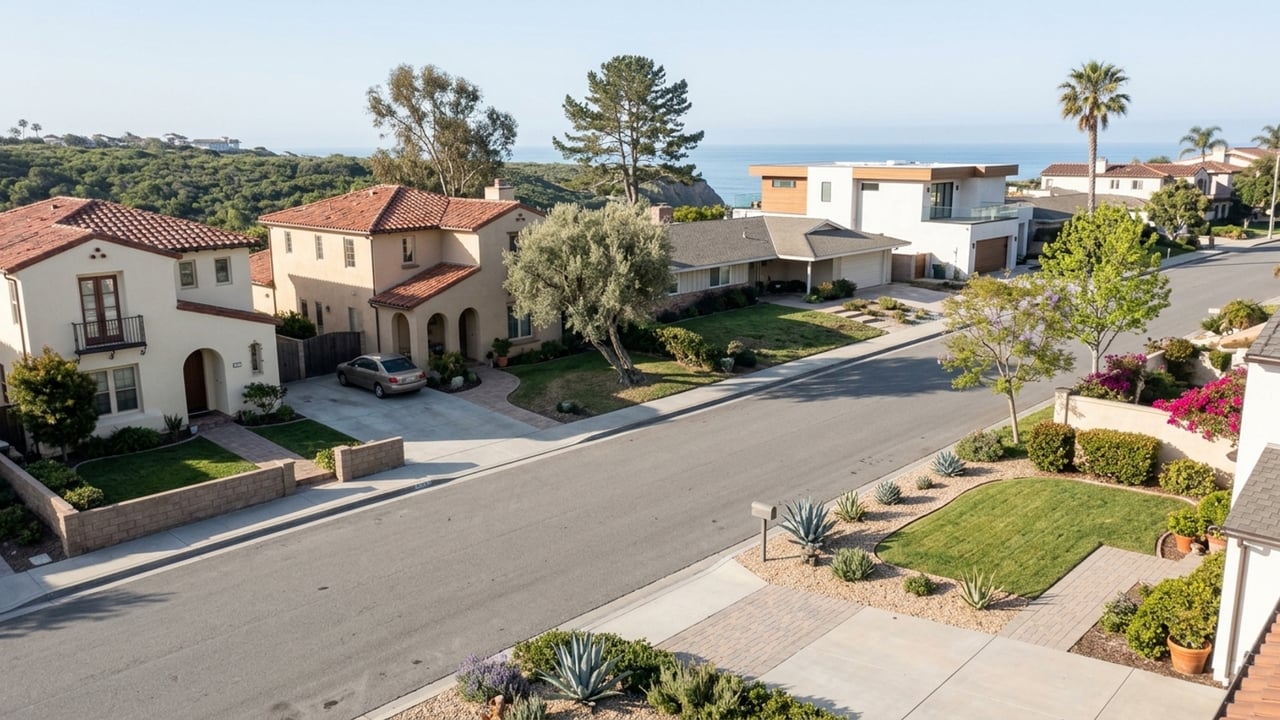
Selling property in coastal Orange County means managing buyer expectations just as much as preparing the physical structure. Buyers paying current prices expect a property to pass an inspection, appraise without issue, and meet insurance requirements.
When a house falls short of those marks, buyers ask for credits or price reductions that cut directly into your final proceeds. The most profitable pre-listing projects are often the ones that prevent those negotiations from happening in the first place.
Key takeaway
To raise what your Dana Point home sells for, spend first on repairs, permit cleanup, and presentation that take away a buyer's reasons to negotiate. A remodel or added space can pay too, but only for owners with time to get permits and after those basics are done.
Who this guide is for
You own a Dana Point house or condo, expect to sell within the next year or two, and are deciding which projects are worth paying for before you list.
What increases home value in Dana Point?
Dana Point's market is already adding value for owners, as the single-family median rose 21.1% year over year. The median house still sold at the lowest single-family ratio after 50 days, which equals roughly $50,900 below asking on a median-priced home.
The spending that pays most before a sale removes a buyer's reasons to negotiate: inspection items, permit gaps, insurance questions, presentation, and price, rather than funding a large remodel. You can review current market trends and the selling process on the local housing market page.
Dana Point home values at a glance
- Median sale price, 90 days ending Sept. 30, 2026: $2,099,000 all homes; $2,421,535 single-family; $1,384,858 condos
- Year-over-year change in median sale price (same window): +16.6% all homes; +21.1% single-family; +24.9% condos (condo figure based on 36 sales; 90-day medians can swing with the mix of homes sold)
- Median sale-to-list ratio (same window): 98.3% all homes; 97.9% single-family; 99.2% condos
- Share sold above list price (same window): 28.8% all homes; 26.5% single-family; 31.4% condos
- Median days on market (same window): 47 all homes; 50 single-family; 44 condos
- Median price per square foot (same window): $1,096 all homes; $1,183 single-family; $1,065 condos
- Months of supply (same window): 3.4 all homes; 3.2 single-family; 3.6 condos
- Homes sold and active inventory (same window): 113 sold and 126 listed, all homes; 69 sold and 73 listed, single-family; 36 sold and 42 listed, condos
Fixes to make before you list
Buyers with seven-plus weeks of market time inspect thoroughly and use the findings to ask for credits. A pre-listing inspection lets you choose to fix issues, offer a credit, or price it in before hitting the market. These low-cost maintenance items protect your listing price by removing obvious targets for negotiation.
You can ask your inspector to check coastal wear items such as corrosion on railings, window hardware, and exterior HVAC components.
Repair what a buyer's inspector will find
If you want to sell within the next few months without a large outlay, this is where to start. Inspection findings are the most common reason buyers negotiate the gap between list price and final sale price.
One catch: anything the inspection turns up becomes something you have to disclose. Fixing every item can cost more than the credit a buyer would have asked for.
Check permits on past work
Enclosed patios, garage conversions, and added bedrooms are common in older coastal homes. Buyers' agents and appraisers compare permitted square footage with what they see, and unpermitted space may not be counted at full value. Request the property's permit history from the City of Dana Point before listing to see what the city has on file.
Legalizing old work can mean fees, opening walls, and extra review in the coastal zone. Sometimes disclosing the work and pricing for it is cheaper than fixing it.
Document the roof and fire hardening
Buyers shop for homeowners insurance during escrow, and a hard-to-insure home loses buyers. Gather the roof age and permits, receipts for ember-resistant vents and defensible-space work, and look up the parcel's designation on the CAL FIRE Fire Hazard Severity Zone map. California's Safer from Wildfires rules require insurers to offer discounts for specific wildfire mitigation steps.
Ask your insurer which steps qualify for a discount and keep receipts for that work. Paperwork helps a buyer get quotes, but it cannot guarantee coverage or a price, and the parcel's fire hazard designation is not something you can change.
Prepare the home for photos and showings
Paint, lighting, landscaping, decluttering, and professional photos decide whether a listing draws competing offers. About 28.8% of all homes sold above list price recently, and strong visual presentation helps push a property into that category.
Presentation cannot rescue an overpriced listing. Staging is paid up front whether or not the home sells quickly.
Remodels and added space: when they pay off
Land drives much of a Dana Point property's price, which changes the math on large additions. Projects that try to add value rather than protect it require a longer time horizon to complete the work and secure approvals.
Before planning a major project, get local contractor bids instead of relying on national remodel return averages.
Kitchen and bathroom updates
At these price points, buyers who plan their own remodel respond better to a modest refresh with new surfaces, fixtures, and lighting than to a full gut done to the seller's taste. According to the 2025 Cost vs. Value Report, the Pacific region shows the highest average remodeling ROI of any U.S. region. In this region, a garage door replacement recouped 262% of cost at resale, while an upscale primary suite addition recouped only 18.6% of its $390,895 cost.
A major remodel rarely returns its full cost at sale. It can also push back your listing date by months.
Adding square footage or an ADU
If your horizon is two-plus years and the lot has room to build, this is the biggest long-horizon option for houses. The single-family median of $1,183 per square foot shows exactly why permitted living space commands attention. Property owners interested in building an ADU must review the City's ADU Ordinance No. 25-04; properties in the Coastal Overlay Zone are regulated as "Second Dwelling Units" under the Local Coastal Program.
Coastal development permit review and construction can stretch past a one-year selling plan. Buyers and appraisers may also value an ADU differently from main-house space.
How to increase condo value in Dana Point
Condos already sell near list, so the owner's levers are narrower. The median condo sold for 99.2% of its list price at a median $1,384,858, leaving an illustrative gap of just about $11,100 to recover.
Spending should stay light, focusing on paint, fixtures, and flooring within HOA sound rules. You can review the types of homes page to compare condo and townhome details.
Upgrades inside your unit
Get written HOA architectural approval before any interior work begins. Since the price gap is small, large interior renovations often cost more than you stand to gain in negotiations.
The building's exterior, amenities, dues, and reserves drive value as much as your interior does. None of those are yours to change.
HOA documents, reserves, and loan approval
If you want to sell a condo with the fewest escrow surprises, start here. Request the HOA disclosure package, including the budget, reserve study, pending special assessments, and litigation, before listing so a buyer's lender review does not stall escrow. Ask the HOA for current dues and check the complex's FHA approval status on HUD's condo approval search, as this status widens or narrows the buyer pool.
You cannot fix an underfunded reserve or a pending special assessment. You can only disclose it early so it does not end the sale late in escrow.
Pricing your Dana Point home
Price is the value decision with the biggest dollar effect, and it costs nothing to adjust. The all-homes median sale price of $2,099,000 mixes condos and houses, and 90-day medians shift with whichever homes happened to sell.
Recent sold comparables of the same type, size, and location are the real benchmark. The single-family segment, for example, recorded a sale-to-list ratio of 97.9% over the same 90-day window, so segment-level data gives a more precise baseline than the citywide figure.
Compare against your own segment
The citywide median mixes houses and condos, so it can mislead either way. Before you spend anything, compare against your own segment to get a realistic list price.
In thin segments such as ocean-view or gated homes, there may be only a few comparable sales. A single unusual sale can swing your estimate.
Why an overpriced listing loses value
The median single-family house already takes about seven weeks on the market to sell. A listing priced above its comparables sits longer, draws lower offers and price cuts, and can give away more than a remodel would add.
Pricing low to start a bidding war works only when your segment has active buyers. Otherwise, you simply sell for less.
Which projects should you do before selling?
Your property type, your timeline, and your home's current condition determine where to spend money before listing. You can narrow down your choices by answering a few basic questions about your situation.
- Do you know what a buyer's inspector would find? If you have no recent inspection, start with repairing what a buyer's inspector will find before any cosmetic spending.
- Was any room, patio, or garage converted or added without a permit? If you're unsure, check permits on past work before planning a remodel, because new work on top of unpermitted space compounds the problem.
- Is it a house or a condo? Condo owners should focus on HOA documents and loan approval, since those matter more than finishes there.
- Are you listing within six months or in two-plus years? Short timelines point to fixes and pricing, while longer ones open up adding square footage or an ADU.
A local real estate agent can help you walk through recent sales in your segment to see exactly what buyers are paying for. This comparison ensures you don't overspend on upgrades that your specific neighborhood won't support.
Dana Point home value FAQs
Are home values going up in Dana Point?
In the 90 days ending September 30, 2026, the median sale price for all homes rose 16.6% year over year. Condos saw a 24.9% year-over-year increase during that same period. That condo figure is based on 36 sales, and 90-day medians can swing with the mix of homes sold.
Is Dana Point, California, an affluent area?
Home values in the city are high, with the all-homes median price sitting at $1,096 per square foot in the 90 days ending September 30, 2026. The median sale price for a single-family home is over $2.4 million. You can review the pros and cons of living in Dana Point to compare local cost of living factors.
Is now a good time to sell a house in Dana Point?
In the 90 days ending September 30, 2026, Dana Point had 3.4 months of supply and 126 active listings across all home types. This level of supply generally indicates a balanced market where sellers have some room to negotiate but buyers still have options. You can read more about the selling process on the local real estate page.
What is the best month to list a house in Dana Point?
Based on four years of CRMLS data for Orange County, December consistently records the annual low in price per square foot, while the spring market from March through May consistently produces the highest prices. South Orange County markets like Dana Point carry higher price points year-round and may show a less pronounced seasonal swing than the countywide average. You can ask your agent for recent monthly days-on-market figures for your specific segment.
Do home improvements raise property taxes in California?
Per the Orange County Assessor, new construction is taxable under California law, but it does not trigger a reassessment of the entire property. The market value of the new construction is added to the property's existing Proposition 13 base year value, and it is subject to a one-time supplemental assessment upon completion. You should ask the Orange County Assessor how a planned addition would be reassessed before you build.
Do I need a coastal development permit to renovate in Dana Point?
A Coastal Development Permit is a discretionary review of development plans for a proposed use, structure, or activity located within the City's Coastal Zone. All development projects in the Coastal Zone require CDP approval unless specifically exempted, and the current application fee is $1,633.00. You should confirm with the city planning department to see if your specific parcel and project require review.
Do I have to disclose a pre-listing inspection report in California?
Sellers in California must provide a transfer disclosure statement to buyers outlining known material facts about the property. You should consult a real estate attorney to confirm exactly which inspection findings fall under these seller obligations. This is not legal advice, and disclosure rules can depend on the specifics of what the inspector finds.
Do solar panels affect a Dana Point home sale?
Solar panels can impact a sale depending on whether they are owned or leased. California Business & Professions Code Section 7169 requires that a solar energy system disclosure document be provided prior to completion of a sale, financing, or lease, covering the impacts that lease terms will have on the sale of the home. You should confirm whether any solar system is owned or leased, and get the lease transfer terms in writing from the solar company.
Sources
- Redfin: Data Center
- City of Dana Point: Request Records
- City of Dana Point: Planning FAQs
- City of Dana Point: Accessory Dwelling Unit Permit
- Orange County Assessor: New Construction
- City of Dana Point: Fire Hazard Severity Zones
- California Legislative Information: AB 1
- JLC Online: 2025 Cost vs Value Report
- Just Appraisals Inc: Best Time to Buy or Sell
- California Legislative Information: BPC 7169
- HUD: Condominium Lookup